
Poetry by Beth Kanell
A Sense of Proportion
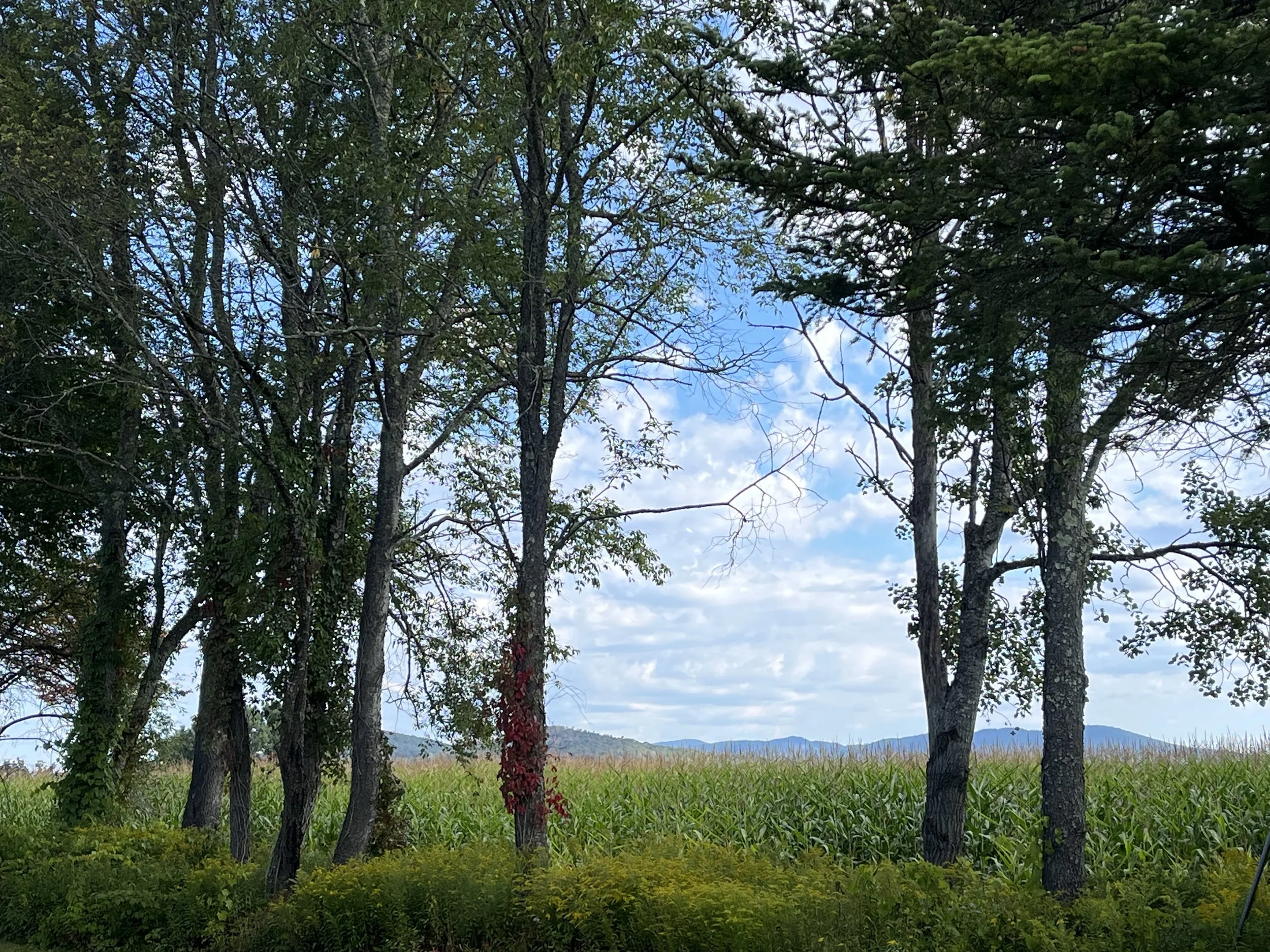
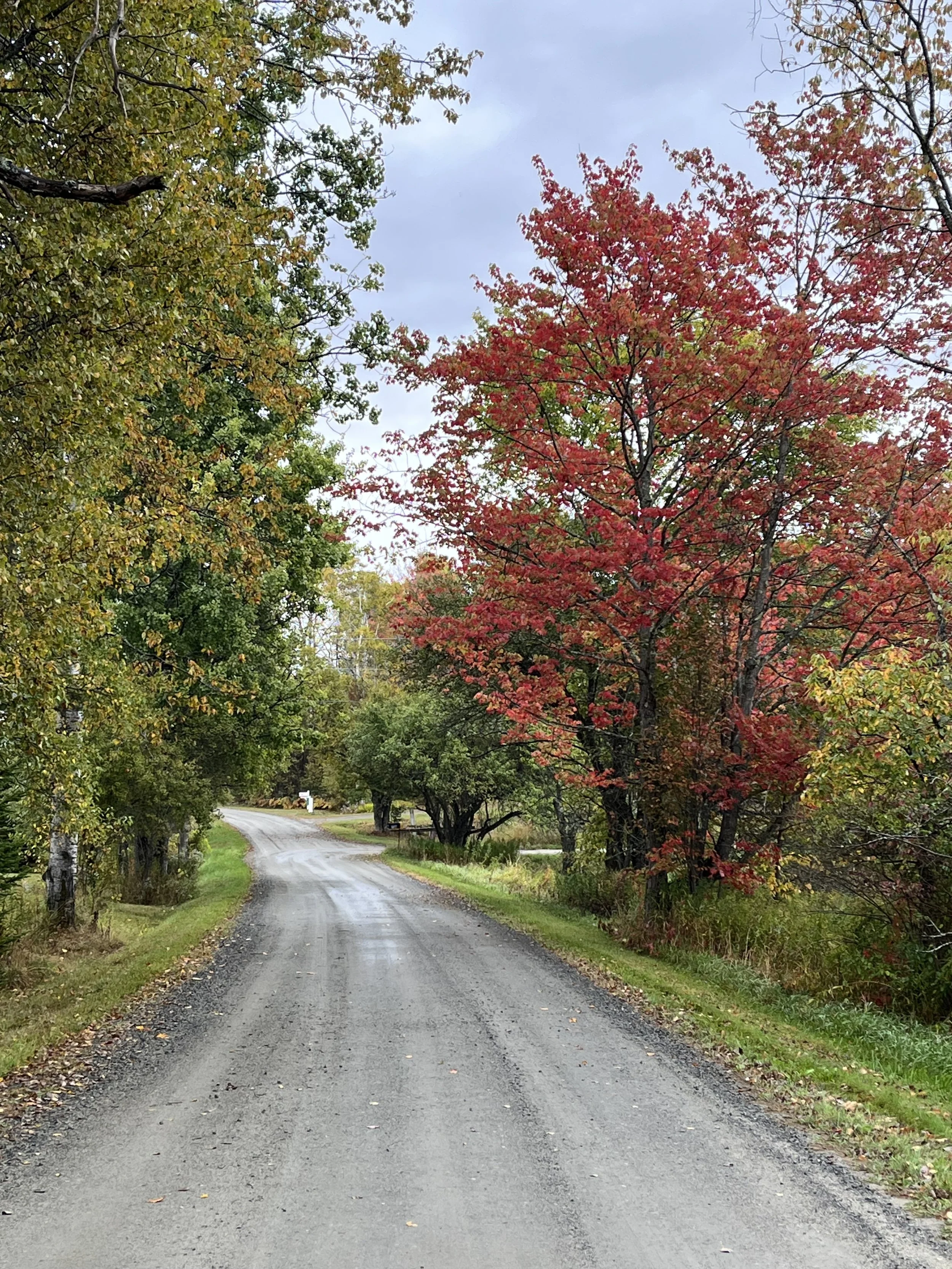
Each morning I take a walk. The dirt road rising up the ridge
stretches my legs, my aging knees, the lazy lower lungs, until
the rest of me—strength, courage, persistence—wakes up. Clouds
call for attention. Fragrances of cedar and spruce and wet soil
remind me: this body
holds and irrigates a brain, which sizzles, struggles, survives.
Yesterday’s grief grows no larger today. Face your challenges,
I tell myself, there’s good work ahead. When a chunk of white quartz
teases my left foot, I accept its offer, pick it up, carry this
reminder, because it can be
nearly two billion years old. Nothing I wrestle with compares
to a thousand times a thousand times a thousand, which is what
one billion means. Walk it down a dimension: The Strait of Hormuz
with its steep rock cliffs, its coastline pierced by mysterious valley,
formed a mere thirty-five million years ago
—mere? I write the line of zeroes, picture continental plates
sliding, colliding—what I recall of Persian history, of Greek gods,
the heroic and profitable sailing ships, it’s all slipping toward
this new fractured moment on the cliff edge of world war,
fragile within each day’s news.
Back up, I tell myself. Get some proportion. Fifty-five million
years ago, Sirenians evolved—water versions of gray elephants,
plant eaters, massive, the manatee and the dugong. There are about
seven thousand dugongs in the Strait of Hormuz, sleepy eyes,
childlike nostrils just above the surface
lazing in warm coastal waters. See where my chunk of quartz has led:
from sharp-edged crystal, to distant ocean, to ten-foot-long dugongs
I’ll never see in person. Dugongs had a Russian cousin, but the sea cow
dropped into extinction in twenty-seven years of hunting. When I reach
the end of my walk, I’m still
wondering about Sirenians. How many will vanish, if one mine explodes
in the newsworthy Strait of Hormuz? Breakfast cannot dispel grief,
though it’s anticipatory, future-led, off the timescale in the other direction—
the dugongs may survive. The pearl mussels? The seagrass? Quartz,
my question. A pebble in proportion.

Moonshot as She Finishes Radiation
Goodbye, goodbye. The “facts of life” are strange: not
so much the bodily positions that follow deep kisses, the force
surging, demanding a conjunction of parts and galaxies—
fold along the dotted line, insert penis or tongue here—
remember instead the po’faced embryo, eyes sealed,
mouth not yet craving salt, drifting weightless on its cord
of oxygen and pulse. I think of those four astronauts
(did you watch him lie on air? notice how her hair
drifted free in weightless delight?) tethered and tech’d
witnessing Earthrise for the first time. I suspect that each,
wedding ring or not, tends a long strand of connection
unreleased, unrelenting, distant prayer cupped around
fierce throbbing muscle in the chest. Outer-space bond
weightless as bodies, potent as umbilical. My mother said
if there is no fertilized egg implanting, the uterine lining
sloughs off: pours in five-day flood between your
thighs, and that’s the end for another month. We watched
Christa McAuliffe’s cells disperse in flame, in smoke,
toward galaxies only numbered, not named. Hic transit
Ovum Five Hundred, last potent dwarf star (very dwarf)
wishful, “I could have been your child.” Etymology
frustrates me, the mystic trembling curtains of menopause
undecorated by the sparkle of painted fingernails. Tiny
babies have tinier fingernails; some books tell the parent
“nibble the sharp edge away, safer than scissors”—love
intensified, exploding in the heart, dust of a secret galaxy
silent and glowing. Radiation pulses and enters, no,
has entered, those dim red passages within. Perhaps today
the last cancer cell rolls onto its back and dissolves. Perhaps
that happened last week, and today’s energy beam sears,
scorches, along a lovely line of vacancy. Goodbye, to the
technician who coaxes gently; goodbye, massive machine
carrying death and life aimed in fierce accurate arrows.
Goodbye, little cells who struggled urgently to multiply
and divide. Here is the math of zero, which is, of course,
infinity inverted. The space capsule spinning; interior
as free as flesh could ever long to be.