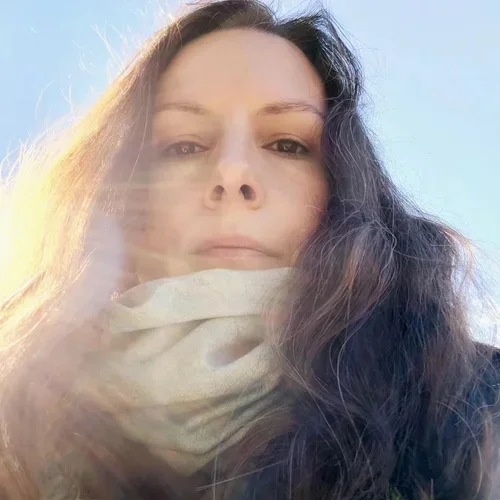
Edie Meade
ORP: Do you write or create with an audience in mind? If so, how do you consider the relationship between that audience and your work throughout your creative process?
Edie Meade: I have a degree in studio art and art history, though I always wrote and made music, too. Visual artists are always battling to get out of the sketchbooks and into the galleries. Musicians want to be heard. Writing, to me, is also not 'complete' until it's out in the world and read by somebody. Art's like an electrical circuit, I think, with the artist and audience necessary to each other.
ORP: What would you say is your most interesting writing and/or artistic quirk? Do you have any habits that you believe help or hinder your creativity?
EM: I get up at the crack of dawn and sit on my back porch with a blank book. Sometimes a poem turns into a story or a novel or a song, or they go the other way and feed off each other. I don't like to sever genres. They cross-pollinate all the time. I have poems that have song versions, and songs that make almost a soundtrack to novels. My husband, who makes music with me, calls all this art "the estate." It helps to think of it all in one estate. Nothing's ever a waste of time.
ORP: What is the most valuable piece of advice you’ve been given about writing or creating? What advice would you give to another writer or artist?
EM: In The Art of Memoir, Mary Karr says you should start composing a scene in "carnal terms": smell, touch, trying to locate yourself in that place. I like to get down to what I think of as "ashtray level," a child's height, with newness to the adult, known world, and not take things for granted. Never be cynical.
ORP: What do you hope readers (or your audience) will take away from your creative work?
EM: I think we are all thinking harder about what makes our voice different than a thieving machine's. Subject-verb disagreements, colloquial turns that are unique to our lived experiences, our class positions, our humanity. I hope readers can find something that sounds analog in my writing, and carry it with them after we part, a little heat-warped cassette tape. I'm giving this as freely as I can.