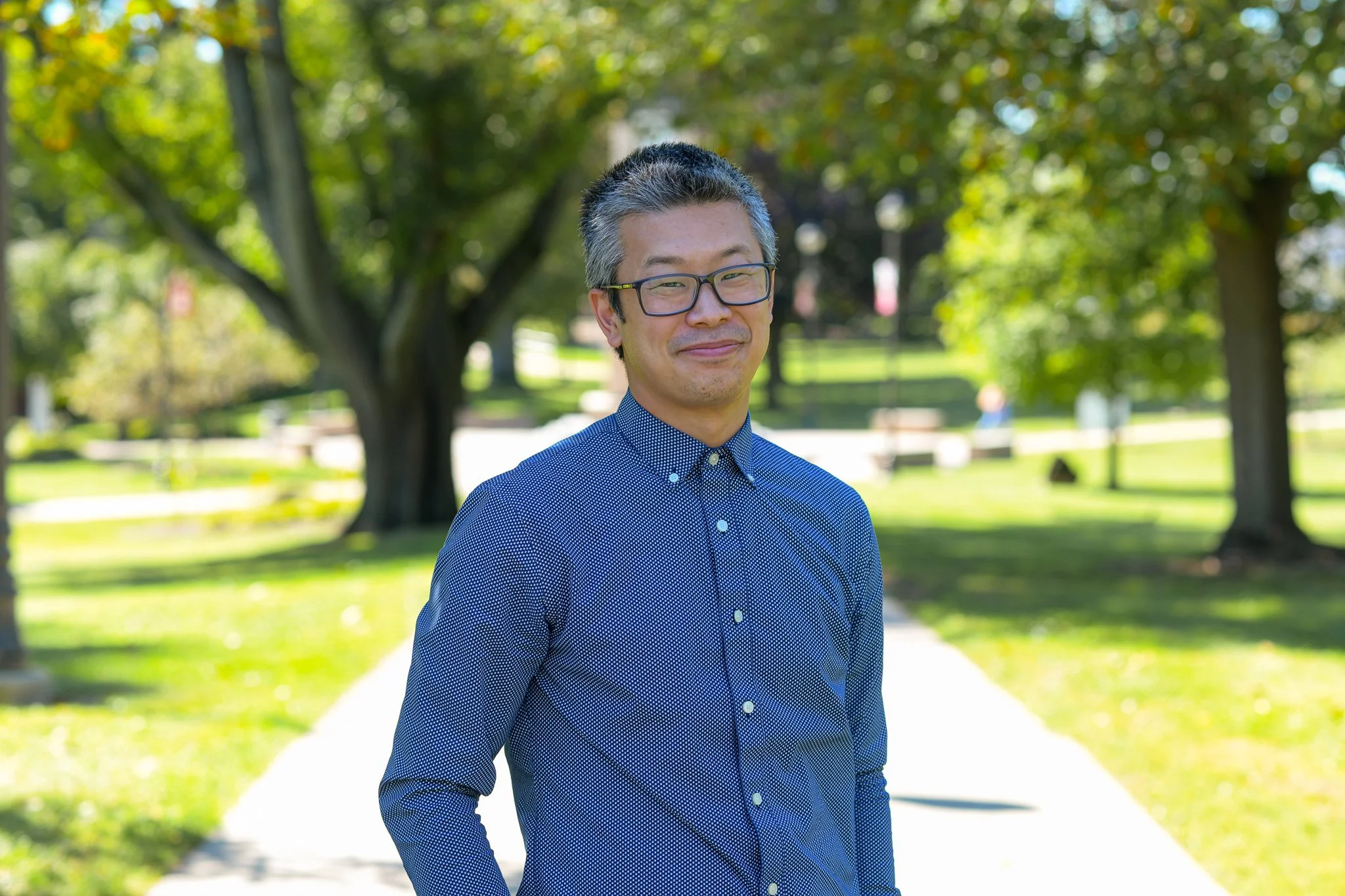
Jae Newman
ORP: What inspired you to begin writing or creating? Has that source of inspiration changed throughout your life?
Jae Newman: I wasn't a reader growing up. I watched a lot of bad television and movies. To this day, I think that my poetry (and my teaching when I'm in a classroom) is more influenced by music videos and visual art than anything else. The first book I read and felt floored by was Night by Elie Wiesel. I saw an interview where he, a Holocaust survivor, was able to tell a joke and laugh in a room with people. That's when I realized that writers were human, after all. That's when I realized they weren't just their names on the spines of books.
ORP: Do you write or create with an audience in mind? If so, how do you consider the relationship between that audience and your work throughout your creative process?
JN: I do have a first reader. Some friends from graduate school (Shout out: Spalding MFA in Writing) have been terrific sounding boards for early drafts of things. Ten years ago, almost every poem I wrote was written with my wife in mind as the "you" of all my work. She's still there in many poems, but Fishbones, my new manuscript, has a decidedly different audience in mind. It is an audience of readers and listeners who see and feel the discrepancies between authentic, meaningful spiritual lives and our own cultural collisions with gatekeepers who want to control who has access to love, community, and self-worth. Some poems are written to the gatekeepers. Some are written to people who feel displaced culturally or spiritually.
ORP: Who do you consider to be your creative ancestors and contemporaries for your art and/or writing? How does your creative work converse with theirs?
JN: The first writer I really engaged with was Li-Young Lee. I saw him on a cover of Poets & Writers while in college. Growing up, I didn't know a lot about other Asian writers or artists. Still, to this day, I'm learning how being Korean-American affects me, and how my work links up with other writers, who may or may not be either Korean or American. My current Rushmore of Poets: Rainer Maria Rilke, Tomas Tranströmer, William Carlos Williams, and Naomi Shihab Nye.
ORP: What does vulnerability mean to you as an artist and/or writer?
JN: Frost said that poetry started as a "lump" in the throat. In Hebrew, our being (nephesh) is often seen as coming from our throat, too. Vulnerability, to me, means that I'm exploring a space that however local and specific to me is, appears to be on the surface is really just a fragment of a larger hall where others, too, have the chance to hear and feel something familiar.
