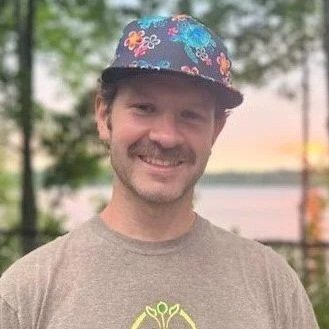
Pete Prokesch
ORP: What does success as a writer or artist mean to you?
Pete Prokesch: I like the saying "if you don't quit, you can't fail." If I feel the urge to create and keep doing it consistently, then that's success to me. I'm at my best when I'm focused on the process itself and not too concerned with the outcome or what I want the finished story to be like. In that state I feel the most open to beautiful surprises.
ORP: What does vulnerability mean to you as an artist and/or writer?
PP: A lot of times it means writing about the thing I'm most scared to write about. Usually that thing feels too dark or messy for me to explore. I feel like art has the power to transform that raw energy into something beautiful, and a lot of times it wasn't as ugly or as painful as it seemed. When I'm willing to work out something scary in the shadows that I don't quite understand, I feel like I'm vulnerable and trusting in a good way.
ORP: What would you say is your most interesting writing and/or artistic quirk? Do you have any habits that you believe help or hinder your creativity?
PP: I don't know if it's a quirk or a habit, but I work as a professional carpenter, and I find that helps my writing immensely. I use a completely different part of my mind and it helps me stay disciplined and grounded enough to finish stories. It also keeps my mind focused on craft in a different context. I've met some absolutely fascinating people in the trades that have inspired several of my stories. I tried an MFA program and an office job a few years back, thinking I'd have more time and energy write, but both were totally uninspiring for me. I quit both and returned to carpentry. I honestly think my muse prefers me in a toolbelt.
ORP: What books have you read many times?
PP: Lately I've been reading and re-reading Catcher in the Rye by JD Salinger. To me, it's first-person POV perfection. I've also read All The Pretty Horses by Cormac McCarthy a bunch of times. His dialogue is the perfect blend of humor and grit for me. And you can feel these bonds between his characters without even realizing how it happened.
I return to the short story "Barn Burning," by Haruki Murakami a lot, too. The sadistic character burning barns is so perfectly bizarre and strange and presented in the most seamless way. I find it fascinating.
I admire how all three of these authors write in pretty simple prose. My favorite teachers are these authors I read over and over again. They're these geniuses who make you feel like you can do it, too.
ORP: What is the most valuable piece of advice you’ve been given about writing or creating? What advice would you give to another writer or artist?
PP: I'm a big hip-hop fan, and I gather a lot of advice from rap lyrics that I write down and tack to a bulletin board for inspiration. I like the line from rapper Black Thought, "I am a walking affirmation, that imagination, focus, and patience, get you closer to your aspiration." And I also like the line from rapper CyHi The Prynce, "Wise words from my intuition, I grind for it, I ain't into wishin'." Advice that keeps my head down and present with my process rather than speculating on results helps me a lot.
As for advice for another artist, I'd say trust your unique vision and trust the work you put in. And find a way to support yourself that helps you stay creative, flexible, and free.