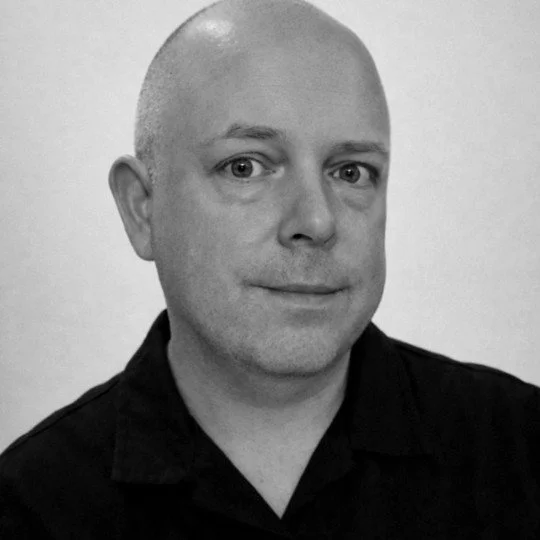
John Barrett Lee
ORP: What inspired you to begin writing or creating? Has that source of inspiration changed throughout your life?
John Barrett Lee: I always enjoyed writing at school, and one of my earliest memories is writing a Star Wars-type story in primary school and getting a good grade for it. I studied English and Creative Writing at university, but after some OK stories and bad poems, I stopped writing creatively for almost twenty years as life got in the way. I returned to writing after my cousin published her first children's book and encouraged me to start again.
ORP: Do you write or create with an audience in mind? If so, how do you consider the relationship between that audience and your work throughout your creative process?
JBL: Primarily, I write for myself, although I hope readers of literary short fiction in a more classical mould will find something of merit in my work. Remembering that there is an audience helps me rein in some of my more lyrical or pretentious instincts, as well as ensuring I'm not too dull, I hope.
ORP: What does success as a writer or artist mean to you?
JBL: The goalposts move all the time. Eighteen months ago, when I got back into writing short fiction, I would have said having a story published. Now, several publications and competition successes later, it's having my debut collection published by a quality independent press. One thing hasn't changed: I want people to read and connect with my work.
ORP: Who do you consider to be your creative ancestors and contemporaries for your art and/or writing? How does your creative work converse with theirs?
JBL: Somerset Maugham — largely forgotten now but a master of the short story form in his day, especially his stories of expatriate lives and men born out of place. Alice Munro for her psychological insight and ability to find the extraordinary in ordinary lives. Julian Barnes for his precision, wit, and intelligence. Hemingway and Carver for restraint.
ORP: Does writing or creating energize or exhaust you? What aspects of your artistic process would you consider the most challenging or rewarding?
JBL: It exhausts me and frustrates me, but it can be exhilarating when it clicks. The most challenging part is self-doubt: believing that the next idea is a story worth telling or reading. The most rewarding is when the dots connect and the story feels inevitable.
ORP: Do you know more than one language? How does this influence your art and/or writing?
JBL: Like Will, the protagonist of my story, I am an English-speaking Welshman, although I studied Welsh to some extent as a second language at school. I have the same complicated relationship with Welshness as Will: feeling both inadequate and slightly above its more petty, insular nationalism. I lived in Italy for four years and still speak Italian to a pretty good level, which helped me write Will's family life and his relationship with Monica.
ORP: What does vulnerability mean to you as an artist and/or writer?
JBL: One of the things about writing contemporary literary fiction rooted in real times and places is that some people think it must be true. Of course, it has to be true in the Hemingway sense, but it didn't actually happen. None of my fiction is autofiction, although all of it contains pieces of me. There's a sleight of hand involved in making something that didn't happen feel true, and if readers assume it did happen, that's probably a sign that the trick is working. As for vulnerability, I'm getting quite old now, so I care less what people think.
ORP: What would you say is your most interesting writing and/or artistic quirk? Do you have any habits that you believe help or hinder your creativity?
JBL: I'm either on or I'm off. I have a very poor routine: I can write for sixteen hours straight or not type a word for a month. When the muse is with me, I write for dear life; when it's absent, I convince myself I've run out of stories. I'm always surprised when another one comes.
ORP: What books have you read many times?
JBL: Captain Corelli's Mandolin. I'm very fond of de Bernières, despite his excesses. His characters feel utterly real to me, and he never goes easy on them. There are moments that are genuinely heartbreaking — real gut punches. I hope I can be that brave with my own characters. I also often dip into Maugham and Carver, for very different reasons, when I want to remind myself what good short fiction looks like.
ORP: What is the most valuable piece of advice you’ve been given about writing or creating? What advice would you give to another writer or artist?
JBL: The most valuable advice I've been given is about restraint. Don't say more than the story needs. Trust that the reader doesn't need a big Crayola drawing. My advice to another writer would be: you know when something is phony. If it is, change it. Imagine scenes as if they were memories, as if they really happened, and try to be emotionally true even when the events themselves are invented. Also, note down good dreams before you forget them. They might have a story in them.
ORP: What do you hope readers (or your audience) will take away from your creative work?
JBL: I don't necessarily want readers to take a particular message away. I hope they spend some time inside another person's life and perhaps come away with a sense that people don't always understand the significance of their own lives while they're living them.
ORP: How does writing/art influence your worldview, and how does your worldview shape your writing/art?
JBL: Writing has taught me to look at human nature more benevolently. People are absurd, contradictory and frequently disappointing, but also capable of great kindness and courage. I try to laugh when it's absurd and smile when it's good, and that outlook inevitably finds its way into my fiction.