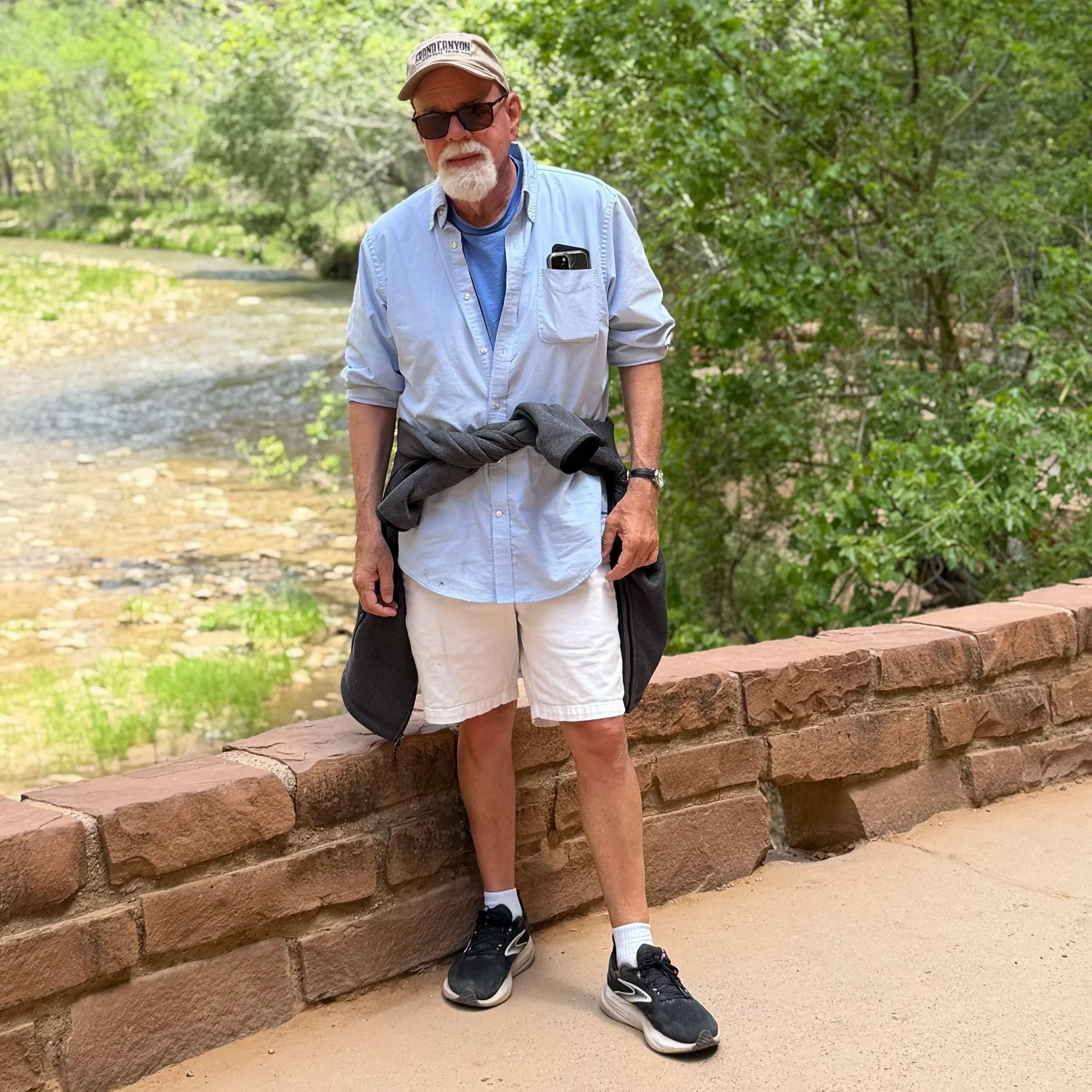
James Lilliefors
ORP: What inspired you to begin writing or creating? Has that source of inspiration changed throughout your life?
James Lilliefors: Childhood, with its many curiosities, was my initial inspiration. I began writing then. I recall completing a short “novel” at age 8 or 9, about a spy who was able to make himself invisible – standard fare for a kid at the time. I later made a career out of writing, working as a journalist and as an arts writer, while reading a lot of literature and poetry. After “retiring,” I wrote novels for ten years. Then, five years ago, my wife passed away, and several months later, in the aftermath of Hurricane Ian, I suffered a small heart attack and had to undergo triple-bypass surgery. During my recovery, as I learned to breathe and walk again, poetry helped bring meaning to my life. I’d always enjoyed reading it, but never tried writing poetry until then. After several weeks of it, and having a few poems accepted, I decided this was all I wanted to do. I now consider it my vocation and go to work each day.
ORP: Do you write or create with an audience in mind? If so, how do you consider the relationship between that audience and your work throughout your creative process?
JL: It’s important that poetry connects with readers; otherwise, you’re writing a diary. So, I don’t write for a specific audience but pay attention to what phrases and rhythms people respond to, and don’t. I welcome feedback, and rarely consider anything I’ve written entirely finished.
ORP: What does success as a writer or artist mean to you?
JL: Going on.
ORP: Who do you consider to be your creative ancestors and contemporaries for your art and/or writing? How does your creative work converse with theirs?
JL: The earliest poems were religious prayers and songs, and this tradition still gives poetry some of its power. I like poems with a spiritual or mystical dimension (and also a sense of humor). I’ve been influenced by a lot of writers and am always discovering new ones (new to me, that is). Some favorites include Louise Gluck, Robert Frost, Mary Oliver, Naomi Shahib Nye, Wendell Berry, Rumi, T.S. Eliot, Yeats, Emerson, Isaiah, Homer, Rilke, Langston Hughes, Jorie Graham, Billy Collins, Mark Strand, Charles Simic, Emily Dickinson. Bob Dylan was a big influence – not a “real” poet, perhaps, although he somehow won the Nobel Prize for Literature.
ORP: What is the most valuable piece of advice you’ve been given about writing or creating? What advice would you give to another writer or artist?
JL: "Live below the surface. Be friends with silence. Read.”