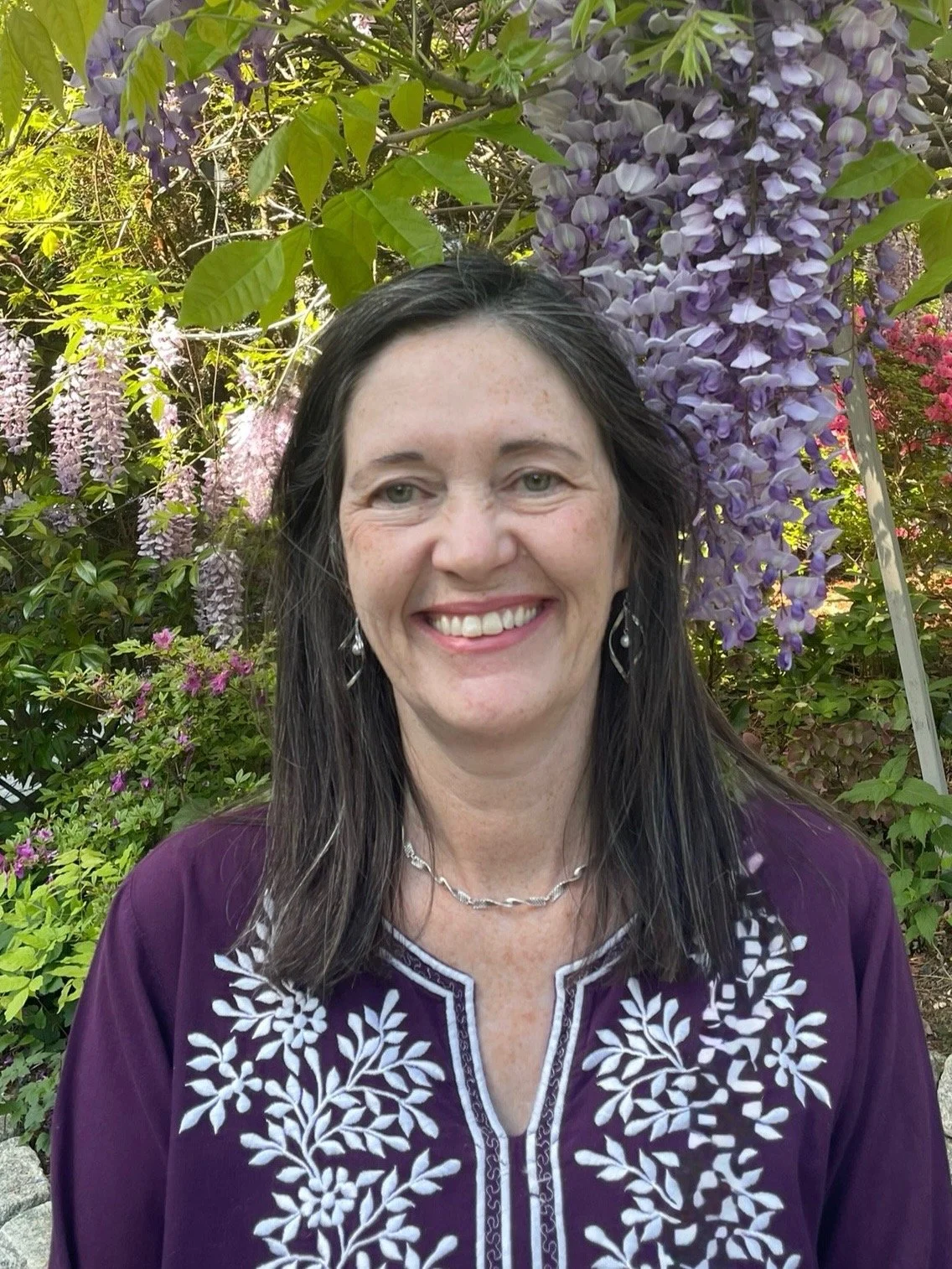
Kristin W. Davis
ORP: What does success as a writer or artist mean to you?
Kristin W. Davis: I find success in honing a poem until it’s both well-crafted and true, until it captures something seen or felt with precision and clarity and is expressed in a way that will connect with a reader or spark a feeling of recognition. A successful poem is one that enables the reader to feel something akin to what I felt when I made the poem, whether that is wonder or joy or anger or sorrow, as well as pleasure in the images or musicality of the words.
ORP: Who do you consider to be your creative ancestors and contemporaries for your art and/or writing? How does your creative work converse with theirs?
KWD: A good bit of my poetry is documentary, and the two poems published in Oyster River Pages are part of a documentary collection that centers on Willowbrook State School, at one time the largest institution in the world for people with intellectual and other disabilities. I have studied and admired the documentary poetry of Tracy K. Smith, Layli Long Soldier, Martha Collins, Philip Metres and others and have been inspired by the way in which those poets have used techniques like erasure, collage, deconstruction and interrogation to shape personal stories and archival documents into powerful poems. “Unimproved,” for instance, is a poem that responds to a document—an index card that is the entirety of my brother’s medical record at Willowbrook. Martha Collins’s poems in Blue Front that center on a particular word in a document were a model for this poem. Other poems in the collection respond directly to the content of a document, as Layli Long Soldier did throughout her collection Whereas. I’m grateful to those and other documentary poets who have demonstrated how poetry from archival material can illuminate the stories of those whose names don’t appear in history books, while also creating a moving aesthetic experience.
ORP: What does vulnerability mean to you as an artist and/or writer?
KWD: To me, vulnerability is the ability to express your truth in your writing despite any judgment you might face, despite the voices that tell you, “you can’t say that.” Recently I attended a reading where the poet read work that was brutally honesty about a difficult relationship, and I wanted to jump up and hug her because I felt not-so-alone in my own, similar feelings. Sean Thomas Doherty wrote in the poem Why Bother, “Because right now, there is someone / out there with / a wound in the exact shape /of your words.” It takes vulnerability and raw honesty to write those kinds of poems.
ORP: What is the most valuable piece of advice you’ve been given about writing or creating? What advice would you give to another writer or artist?
KWD: Write while it’s hot. Always take time to notice small things. Keep a notebook with you to capture thoughts, images, words, and lines as they come—and get back to them quickly before the inspiration goes cold.
