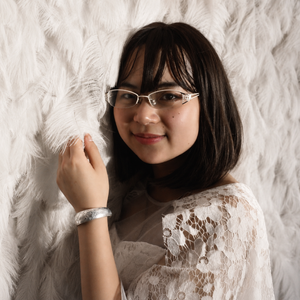
XIN GUO
Oyster River Pages: What inspired you to begin writing or creating? Has that source of inspiration changed throughout your life?
XIN GUO: Whenever I read someone else's work, I often find myself thinking, If this were my story, I would begin here, or I would tell it differently. That impulse has always been the starting point of my own writing. It is less about disagreeing with other writers than about discovering another possible way to tell the same story. That source of inspiration has remained remarkably consistent throughout my life. Even now, the books that move me most are often the ones that make me want to write. They remind me that every story can be approached from another angle. My writing usually begins with that curiosity: wondering what another version of the story might reveal.
ORP: What does success as a writer or artist mean to you?
XG: Success, to me, means freedom. Not only the freedom to speak honestly through my work, but also the freedom to keep writing without having to compromise what I want to say. It means having enough time and space to observe the world, to think, and to write at my own pace. If writing allows me to live that way, I would consider myself successful.
ORP: Do you know more than one language? How does this influence your art and/or writing?
XG: Yes. My native language is Chinese, and I also speak English and German. At first, I worried that the same subject might be understood differently across languages and cultures. I wondered whether certain ideas would remain trapped within their original cultural context, or whether readers from different backgrounds would see them as someone else's problem rather than their own. Over time, however, my experience as both a reader and a writer changed that perspective. I realized that many of the questions I care about are fundamentally universal, even if they emerge from different social and historical contexts. Readers are often able to recognize themselves in stories that take place far from their own lives. A novel set in China does not have to remain a story about China, just as an American novel is rarely only about America. The more I write, the more I realize that readers don't necessarily connect with a story because of where it comes from. More often, they connect because they recognize an emotion, a relationship, or a conflict that feels familiar.
ORP: What is the most valuable piece of advice you’ve been given about writing or creating? What advice would you give to another writer or artist?
XG: The most valuable advice I've ever received is that it is never too late to start writing. I think many people believe they have already missed the right moment—that they should have started when they were younger or had more time. But writing is not a race. Every stage of life gives you a different way of seeing the world, and those experiences become part of your work. I would give the same advice to another writer: don't wait until you feel ready. Writing itself is what teaches you how to write.