On the Yellow Mud Path Home
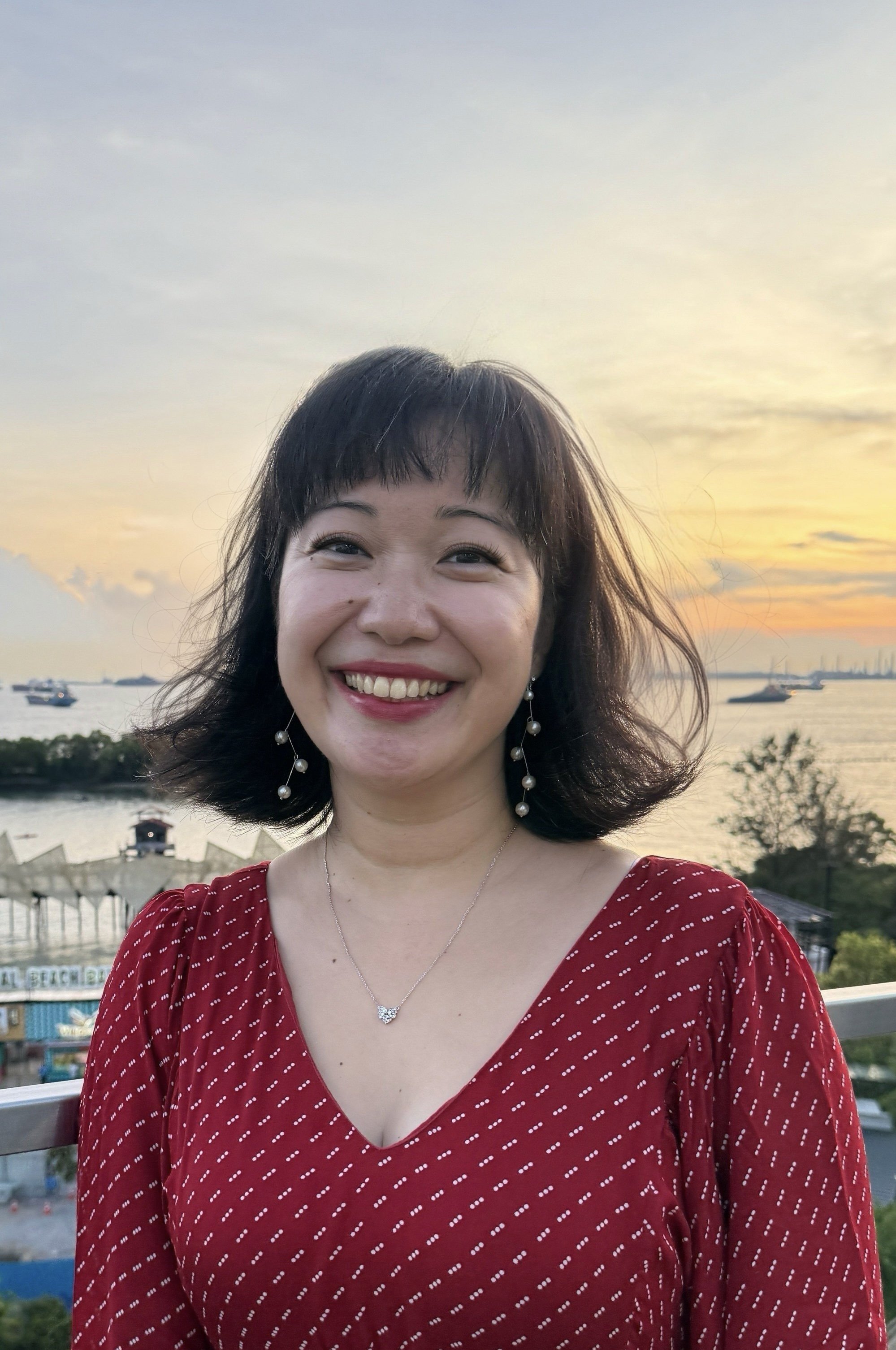
Amanda Ruiqing Flynn
Over the course of Singapore’s rapid development into a world class city state, I lost my home. As a four-year-old girl, when my impressions of the world were just beginning to shape and cement, I remember that home existed one day, but not the next. Gone was the corrugated iron roof, the cool concrete floor. Gone was the monsoon wind sweeping through the doorways, the hideout up the rickety bamboo ladder. Gone, all gone. I have no evidence that this home ever existed, except from within my vague and unreliable memories. But this home has refused to disappear from the corner of my mind that awakens when the rest of the world is quiet. Even now, it cohabits in my soul with that same innocent four-year-old.

I was born at the tail end of my home’s existence. An uncharacteristically yellow mud path squelched and slipped to a squat low rise kampung house, where two barely domesticated guard dogs and a chubby baby girl could be found. It was 1988 in Thong Hoe Village, Lim Chu Kang, the north-western part of Singapore. Walk down Lorong Jeran, Malay for “Fishing Alley,” and you will arrive at my home. Let me welcome you into my memories, flashing slide after slide on an old-fashioned projector. Jumping up and down on a bed, soft toys bouncing along with me. A black TV set, switched off, where I saw my own reflection in the glassy screen for the first time. The cool grey concrete floor—my playground, and my battleground. The first taste of strawberry ice cream on my tongue. My toy rifle, a gift from my Ah Gong, hanging proudly on my bedroom wall. Dogs barking. Mummy mummy mummy, where’s mummy. Uncontrollable sobs, I can’t find mummy. A lone child in an attap hut, crying nonstop. The first taste of loneliness. A red brick well, wild grass, bare feet, outhouse toilet. Independence, happiness, loneliness. This was my world.
My existence, though, did not begin in 1988, the year I was born. It began in 1962, when my grandmother was pregnant with my mother. While my mother’s foetus was developing within my Popo’s womb, eggs in my mother’s ovaries formed. One of them would be part of the future me. When Popo migrated from Malaysia to Singapore in 1965 and bought a piece of land in Lim Chu Kang through the recommendation of a distant relative who had made a success of it in this nascent country, I, a secret of the future, was also there. This is my history to tell; it is also not my history.
I am but a small part of my mother’s story; my mother but a small part of my grandmother’s,
my grandmother’s but a small part of Singapore’s.
If you compare Singapore’s history with the particles that make up its land, Singapore is but a tiny embryo gestating in the story of time.
I try to put myself in my grandmother’s shoes. How did a woman nearing thirty, four children in tow, move from Malacca, Malaysia to Lim Chu Kang, and push on with the everyday business of survival and living when she must have been homesick for Malacca? I heard our kampong had been situated in a bamboo forest. I heard that every day, Popo would pick tender bamboo shoots to sell. I heard that at the break of dawn each day she set up her stall at the hawker centre, brewed coffee, and sold it to the workers nearby. A home needed money, there was no question about it. People ate bamboo shoots, workers drank coffee, Popo needed to work. Where there was demand, there would be supply—she helped provide fuel for the rapid capitalist development of this fledgling island state.
A young girl, my future mother was also inadvertently swept up in the tides of economic pressure and change in Singapore. Each morning, she hoisted a metal bucket in her hands and walked to the well to collect water. Who cared about the snakes on the ground, the darkness of the sky, the strange sounds coming out of the forest? She had no time to care. It was 5am and her mother had already left for the hawker centre to start selling coffee to the workers.
As for me, I still remember that red brick well. I remember being carried many times to look inside that deep dark abyss. That well was once the source of my life as well as my terror.
A woman’s life often meets a crossroads when she is making a choice of what is best for her family, to provide them with a better chance of survival. I felt this acutely when I returned to Singapore to raise a family at 31, a foreign bride in my own place of birth. Wasn’t that what Popo did at 27? And my mother at 34, when we moved to England? Cycles of women carving out life on new ground. When my grandmother’s feet landed in Singapore, was it all hard work from daybreak to nightfall? Back then, just how difficult was it to survive? Time is muddy, I am my Popo, my mother, me.
Back then, Lim Chu Kang had a small outdoor cinema. If you walked straight up from the path next to Happy Garden Cafe, you would have seen a white and blue low-rise building. In the evenings on the weekend, when her four children were quietly sleeping at home, Popo and Ah Gong would sneak out of the house to catch a movie. As time passed, the children grew older, and Popo would take them along with her. Thirty cents each, but if you could sneak the kids in somehow, you could save yourself enough money to put towards a pair of school shoes.
Sitting on the rows upon rows of benches under the stars, cicadas chirped. Young men flirted. Young women ignored them and shifted up a seat. Memories that all the money and development in the world couldn’t buy back. No matter where you look in today’s Singapore, you will never again be able to find the simplicity of the Singapore that I inhabited back then. A child who is beginning to form an understanding of the world doesn’t care if a country is developed or not. I remember caring about my stone collection, the geckos on my wall and the soul of the world around me. On a particular Saturday night, I stood on the yellow mud path in Lim Chu Kang, stars filled the sky, and the night air filled my lungs. This moment was the beginning of my soul’s desire for itself. Under that star-filled sky was the first time I had a sense of self, a sense of Singapore.
Singapore’s cinemas are in trouble these days. Fifteen dollars for a ticket, another fifteen for some stale popcorn, no wonder people are flocking in hoards across the causeway to nearby Johor Bahru in Malaysia over the weekend instead just to catch a movie. It’s ironic isn’t it, that my grandmother came to Singapore for a better life, and yet I am planning to go to Malaysia to watch a movie. As the end credits roll, I will be hastily ushered out of the cinema, barely a moment to catch my breath—headfirst back into a shopping centre. No stars visible outside.
If the outdoor cinema that my Popo enjoyed is nowhere to be found now, neither is the Lim Chu Kang playground of my youth. My playground looked totally different from the lurid plastic playgrounds that flank the government public housing and private apartments today. The one I remember from my childhood was a simple crescent slab of grey concrete, from the ground rising to a raised curve in the middle, then down again. Kids would run up the slope on either side, then slide back down into the sand. If the same concrete playground appeared today in modern Singapore, or anywhere in the world for that matter, it would be hailed as an architectural wonder of minimalist design. Back then, it was simply the only playground I knew. To the left, in the hawker centre, Popo would be selling coffee. To the right, in the same hawker centre, I would be eating bowl after bowl of fishball noodles. Then back to the sandpit. My huge world.
In 1993, the Land Acquisition Act appeared as a letter on our doorstep. And just like that, my first home, and one of the few kampungs left in Singapore, was demolished. When my elders first stepped foot on this land, did they ever imagine that one day it would be the land that they would have to leave, that land that they could not bear to leave yet could never bear to return to? In decades to come, when the 99-year lease on the government public housing, or HDBs as they are better known, is up, there is a real possibility that many other people will feel the exact same way as I did that day. It is hard to own your life and land in Singapore.
When I returned to Singapore in 2019, having spent decades in both the UK and Taiwan, I could not identify myself. Nor could others. “Are you Singaporean?” “Yes.” “But you don’t sound it leh. You speak English like the Queen and your Chinese is like a Taiwanese. And your look is like Japanese.” “I’m Singaporean.” I tell them, unconvincing even to my own ears. But my home. Lim Chu Kang. It’s disappeared. I’ve disappeared.
I tried to find my way out into Singapore through food, culture, and language, searching and searching for the part of my soul that could latch on to home. In every shopping mall, advertisement, government propaganda poster, I was looking for how to get home. Where was that slippery and squelchy yellow mud path? There was a huge discrepancy between my individual desires and my surrounding environment. I felt with every fibre of my being how my daily life was being shaped by Singapore’s endless pursuit of a more expensive apartment, a newer car, better clothes, better better better. Were we there yet? I was worn down, and at my very core, yearning to be grounded in something more. My mind kept flitting back to my early childhood, desiring yet fearful of returning to Lim Chu Kang, afraid that the memories so vivid in my mind would disappear as soon as I saw the current state of the land.
In 2023, thirty years after being rehomed by the government, two years after my son was born, I finally summoned a courage borne out of desperation to take the 975 bus to Lim Chu Kang. The feeling that a thick rope was tying around my neck and pulling me further into the depths of a shopping mall, that I would never be able to claw my way out and breathe again, had been playing itself over and over again in my mind. I needed to breathe, to be somewhere undeveloped and unadvertised, unlauded perhaps. If I was drowning in this city, so would my child. And so this was how I found myself tilting his pram onto the 975 bus and parking it on the lower deck. I carried my son to the top deck. His eyes lit up at the panoramic view from the front seats, driver of his own destiny. I had a child. I was now Mother. I couldn’t drown.
After an age on the never-ending expressways flanking nondescript housing estates, boredom and exhaustion in my eyes and excitement in his, I saw the winding road, ever undulating, snaking from Old Lim Chu Kang Road to Neo Tiew Road. The scenery changed somewhat. It suddenly grew quieter, fewer cars. Trees flanked either side, an uneven road, bus shaky like my stomach. I waited for that pang of recognition, yet I felt nothing. Still, I waited. Still nothing. Because gone was the corrugated iron roof, the cool concrete floor. Gone were the monsoon wind sweeping through the doorways, the hideout up the rickety bamboo ladder. Gone, all gone. I had fabricated it all, these memories. But yellow. The same yellow. I could see yellow! I craned my neck. “Mummy, mummy, look!” my son shouted excitedly. Yellow excavators, yellow steamrollers. The sound of construction creeped nearer and nearer. His favourite.
Only now do I understand, no matter where in the world I settle, from the apple farms of Kent to the meandering mountain paths of Taiwan, I am inadvertently looking for that slippery and squelchy yellow mud path, the one that my shoes would sink into but still hold me up. The very foundation of me. I will never find it again, I know that much now. That mud has turned into sand, my tears have dried, and the ground cracks on. And I will remind myself of this foundation every so often—by running barefoot on sand, madly stuffing fishball noodles down my throat, watering my makeshift garden of terracotta pots. Buy bamboo furniture, eat bamboo shoots. No matter how wealthy Singapore is, I will never again find that patch of land, those two dogs, my childhood, nor that piece of my four-year-old innocence that was broken off and buried one day. Singapore to England, and then to Taiwan, then back to Singapore, I will forever be that orphan in search of “home” but ever lost. An orphan will never have a home to return to.
In the distance, I see a boy, walking down a road, gazing at a girl, walking down a yellow mud path. Both are possibly part of me. Lim Chu Kang—home. Now woodchips, sand, buried, sold. Industrial tires, a steamroller, mud caked with debris, heart lined with vague longing. The trees I imagined, fewer now. People, also fewer. I can only see my own shadow. And the figure of my child jumping up and down in excitement at the bulldozers.
I read once that after a child is born, some of their cells forever remain in their mother’s body. And so, my cells will forever remain a tiny embryo gestating in Lim Chu Kang.