
Fair Market Value
Hailey Winningham
The hammer slipped in Jonah’s palm for the third time that morning.
The sun had already climbed high enough to press its full weight onto the tin roof, and the metal answered with a slow ticking sound, expanding, complaining in its own language. Jonah wiped his hand on the back pocket of his jeans and set the nail again, squinting against the glare. The board he was replacing had rotted clean through along the edge, soft as bread left out too long. His grandfather had built the place by hand using the wood of surrounding trees, but it was now dilapidated.
He drove the nail in harder than was necessary.
The house had been in need of repair for as long as he could remember. There was always something: roof shingles falling off, porch steps sagging in the middle, gutters pulling loose from their brackets. He sometimes thought that if he ever fixed everything at once, the place might not recognize itself and simply fold in from the shock.
He shifted his weight on the ladder and glanced out toward the river. It moved slow and brown beyond the oaks, steady as a tune that had been in his head so long he stopped noticing it.
He used to think he’d be gone by now.
When he was seventeen, he’d taped college brochures to the wall beside his bed. Schools with red-brick buildings and wide lawns and libraries bigger than the entire footprint of this house. He’d traced the pictures with his finger, imagining himself crossing those lawns with a backpack slung over one shoulder, late for something important.
He had been good in school. Better than good. His teachers told him so when the report cards came out. His mother, who taught third grade down at the elementary school, never bragged about him outright, but she left graded essays of his on the kitchen table where visitors might notice.
“Don’t get too big for this place,” she’d say whenever he talked about leaving. But there was pride tucked beneath the warning.
His father had just smiled and said, “Go where your feet take you, long as you remember how to come back.”
That was before the coughing started.
Jonah climbed down the ladder and dragged it a few feet to the left. The grass in the yard had gone patchy where the shade fell thickest. He set the ladder again and climbed, the old wood creaking beneath his boots.
The doctors called it chronic. Chronic meant expensive. Chronic meant months measured in prescriptions and follow-up appointments. Chronic meant Jonah stopped filling out housing forms his senior year and started picking up shifts at the hardware store instead.
He hadn’t minded at first. It felt temporary. Everything did at eighteen.
He could defer for a year. Save some money. Help out until his father got stronger.
But chronic had a way of sticking around.
His father’s hands, once thick and steady, had thinned. The muscles in his arms softened like they’d forgotten their job. There were mornings when even walking from the bedroom to the porch left him winded, chest rising and falling too fast.
Jonah drove another nail through the board and let the hammer rest against his thigh.
Inside, he could hear the faint murmur of the television. His father liked to keep it on low during the day, not so much for watching as for company. The house sounded different when it was silent. Too aware of itself.
His mother would be at school until four. She left each morning before seven, coffee in a travel mug, papers stacked in her canvas bag. She’d taught three generations of children in this county. Sometimes former students waved at her in the grocery store and called her by name with the same mixture of fear and fondness they’d had at nine.
She had once told him she thought teaching was a kind of stubborn hope. You poured knowledge into small, distracted bodies and trusted some of it would stick.
Jonah wondered what she thought had stuck to him.
He pried up another warped shingle and tossed it down into the yard. The air smelled of sap and sun-warmed dust. Sweat crawled down the center of his back.
Two weeks earlier, the acceptance letter had arrived.
He’d known what it was the moment he saw the return address. The university crest printed in dark blue ink. His full name spelled correctly.
He’d carried it inside like something fragile.
Full scholarship. Tuition covered. Housing arranged. A semester abroad in Europe—lectures in old stone buildings older than this entire county, professors whose names sounded like they belonged in books, weekends spent in different countries instead of chores.
The letter said he needed only to cover airfare and food. It used phrases like immersive experience and global perspective. It congratulated him for his academic promise, as if promise were something that could be folded and mailed.
He had read it three times that night.
He had stood at the kitchen sink and imagined a version of himself walking beneath cathedral ceilings, listening to languages he didn’t understand yet echoing through the halls. He pictured himself seated in a centuries-old lecture hall beneath vaulted ceilings ribbed with dark wood, light spilling through stained glass and pooling across long wooden tables scarred by generations of other hands. He would take notes beside students who spoke three or four languages without thinking about it, nodding along as professors quoted philosophers he had only read about in library books back home. He imagined getting lost on purpose—turning down narrow alleys lined with laundry-strung balconies, eating bread still warm from a bakery window, standing in museums before oil paintings so large they swallowed him whole. At night he would sit in small cafés with a notebook open, listening to conversations he half-understood, practicing foreign phrases under his breath until they felt less like borrowed sounds and more like something he owned. In those dreams he was careful but not small, quiet but not invisible—just another young man with a future wide enough to step into. Imagined writing letters home from a place where no one knew who he had been at seventeen, or eighteen, or twenty-two.
Twenty-two.
He drove the hammer down again, each strike sharp and clean. He had told no one about the letter. Not his mother, who already carried enough worry in the lines around her mouth. Not his father, whose pride might twist into something like guilt. Certainly not the boys at the hardware store, who still asked him if he planned to “ever get outta town.”
He had always said, someday.
Someday was a word that bought time.
He finished with the shingles and climbed down, hauling the ladder back toward the porch. The steps sagged in the middle, and he made a mental note to reinforce them before winter. There was always something else.
He crouched to examine a soft patch along the bottom rail and pressed his thumb into it. The wood gave easily.
He imagined not having to fix it. Imagined a life where the only maintenance required of him was showing up to class and reading what was assigned and arguing about ideas instead of roofing nails. Where he would write letters and talk to his parents over phone calls.
He cringed at himself. The thought was betrayal.
From inside, a cough rattled down the hallway.
Jonah stood and wiped his hands on his jeans again. He stepped through the front door and found his father in the recliner by the window, a blanket folded across his lap despite the heat.
“You about done up there?” his father asked, voice thinner than it used to be.
“Just about,” Jonah said.
His father nodded toward the porch. “You don’t have to do it all today.”
Jonah shrugged. “It won’t do itself.”
That had become his answer for most things.
He stepped back outside before the conversation could stretch into something heavier and sat down on the porch.
The river glinted between the trees.
When he was younger, he’d sworn he’d never live his whole life within sight of it. He had thought staying meant failing, like the river itself might rise one day and expose him as someone who had never tried.
Now he wasn’t so sure.
Staying had become its own kind of labor. He fixed what had broken. He carried what needed carrying. He learned the rhythm of inhalers and insurance forms, of lesson plans spread across the kitchen table at night.
He told himself that the scholarship was an escape hatch. A way out that didn’t require slamming a door.
But leaving would still mean leaving.
“Jonah!” His father’s voice carried thin but clear through the open window.
“Yeah?”
“Can you go check the mail?”
Jonah looked toward the rusted mailbox at the edge of the yard, the sun flashing off its dented side.
“Sure,” he called back. He wiped his hands once more and started down the steps.
Jonah was twenty-two and still there. He told himself it was temporary. Everyone did.
The envelope was taped to the mailbox, white and clean against the rusted metal. He stood there longer than he needed to, the metal cold under his hand. Good news didn’t arrive taped to things like warnings.
Inside, the paper was thin and official, the words pressed tight together like they didn’t want to be there. Survey. Easement. Reassessment. Acquisition.
He read it twice before the meaning settled.
Someone had decided that the land was useful now.
The river, it turned out, was valuable—valuable enough to be measured and divided and spoken about in rooms Jonah had never been in. Valuable enough to be called an opportunity.
He drove into town later that evening, the acquisition notice left on the kitchen table for his parents to read. Town was small enough that everyone called it Town without naming it. A post office with a flag that never quite unfurled. A feed store that smelled of grain and oil. A diner that smelled like grease and coffee no matter the hour.
Main Street sagged gently in the middle, brick buildings leaning into one another the way tired men did at the end of a shift. Half the storefronts were empty now, their windows dusted over, old lettering still visible beneath newer paint that had already begun to peel.
He found Whitmore at the diner where he ate dinner every night for the past five years.
Whitmore always sat in the back booth, near the window, where he could see who came in and who left. He wasn’t rich, not exactly, but he had money in the way that mattered: land, investments, a last name that carried weight even when it wasn’t spoken.
Jonah slid into the booth across from him. The vinyl stuck to the back of his jacket.
“I got a letter,” Jonah said.
Whitmore stirred his coffee slowly, the spoon clinking against the mug. He didn’t look surprised.
“Most folks did,” he said. “Or will.”
Jonah pulled the paper from his pocket and flattened it on the table. The edges curled immediately.
“They say the land’s under reassessment,” Jonah said. “That the river access changes things.”
Whitmore nodded. “There’s talk of development, and Town needs as much money as it can get.”
Jonah stared at him. “And where does that leave us?”
Whitmore finally looked up. His eyes were pale and assessing, like he was measuring Jonah against something invisible.
“Depends,” he said. “On what your folks can afford.”
Jonah laughed once, sharp and humorless. “You know what my folks can afford.”
Whitmore didn’t disagree.
Outside, the sky hung low and gray, the kind that pressed down on the town until everything felt smaller. Jonah left without finishing his coffee. The bitterness followed him anyway.
On his way out, he passed a framed photograph near the register—some ribbon-cutting ceremony from years back. Whitmore stood smiling beside the Johnsons.
The Johnsons.
Everyone knew the Johnsons.
They owned the biggest houseboat on the river, docked a few miles downstream where the water widened and slowed. It was three stories tall, white and gleaming, with a rooftop deck and string lights that glowed soft and gold at night. They hosted parties there every summer: catered, loud, spilling laughter across the water like it belonged to them.
Of course, they weren’t worried.
Why would they be?
The Johnsons didn’t live on the river the way Jonah did. They floated above it. The river was a backdrop for them, a feature. If the water rose, they rose with it. If the banks changed, they drifted elsewhere. Development only made things easier: more docks, better access, prettier views.
Jonah imagined the notice taped to their mailbox and almost laughed. As if anyone would dare.
The porch light was already on when he pulled into the yard.
Jonah didn’t remember turning it on that morning.
He stepped inside and found his parents at the kitchen table. The government letter lay open between them, its edges curling from having been folded and unfolded too many times. His mother’s reading glasses rested low on her nose. His father sat with his forearms on the table, shoulders rounded forward as if bracing against weather no one else could feel.
They stopped talking when he entered.
“You went into town,” his mother said.
“Yeah.”
His father nodded toward the paper. “They’re not bluffing.”
Jonah leaned against the doorway. “Whitmore said most folks got one.”
His mother let out a breath that sounded practiced. “They’ve reassessed the property value. With the river access and the development talk…” She tapped the number printed near the bottom of the page. “We can’t afford this.”
The words hung there, flat and final.
“There’s got to be something,” Jonah said. “An appeal. A delay. A payment plan.”
“We asked,” his father replied quietly. “They were polite about it.”
Jonah laughed under his breath. “Polite.”
“That’s how it works now,” his mother said. “They don’t push. They just price you out.”
The kitchen felt smaller than usual. The refrigerator hummed. The clock over the stove ticked loud enough to count.
“So that’s it?” Jonah asked. “We just let it go?”
His father met his eyes. There was no anger there. No fight either. Just a kind of weary clarity.
“Son,” he said, “sometimes you can’t outwork what’s coming.”
Jonah felt something tighten in his chest.
His hand was still holding the folded acceptance letter. He hadn’t realized he’d brought it in from the truck.
His mother noticed first.
“What’s that?” she asked gently.
He looked down at it, as if it might explain itself.
“Nothing.”
She tilted her head. “That doesn’t look like nothing.”
He hesitated, then stepped forward and placed it on the table beside the government notice. The two envelopes looked wrong next to each other — one heavy with loss, the other thin with possibility.
His father reached for it.
“This the school thing?” he asked.
Jonah nodded.
His mother read over his father’s shoulder this time. The silence stretched, but it felt different from before — less like suffocation, more like reckoning.
“A full scholarship,” she said softly.
Jonah stared at the wall behind them. “Tuition and housing. I’d just have to cover flights. Food.”
“To Europe,” his father added, almost testing the word.
Jonah shrugged. “For a semester. After that, I’d come back and just transfer the credits.”
Neither of them spoke for a moment.
Then his mother said, “You should go.”
The answer came too fast. “No.”
Both of them looked at him.
“No?” his father repeated.
Jonah gestured toward the other letter. “How am I supposed to leave when this is happening? What if I come back and it’s all gone? What if I miss the last summer here? The last anything?”
His voice surprised him. It sounded younger than he meant it to.
His mother folded her hands on the table. “Everything is always becoming the last something,” she said.
He shook his head. “That’s not the same.” How could he let his family home be destroyed? It may not have been fancy, but it had been his safety net.
He had spent so long wanting to escape because he wanted the opportunity to experience new things before he could forget his dreams. But he still always planned to come back. Leaving now would mean accepting that everything he knew would permanently be changed.
His father leaned back in his chair, studying him.
“You think staying will stop it?” he asked.
Jonah didn’t answer.
“You think if you stand in the yard long enough,” his father continued, “you can hold the river in place?”
The image stung. “I just don’t want to lose it,” Jonah said. “Not while I’m gone. Not without being here.”
His mother reached across the table and rested her hand over both letters. “Listen to me,” she said. “Home isn’t something you guard by standing still.”
He swallowed.
“It changes whether you leave or not,” she went on. “It changes because time changes it. Because people get older. Because the world decides it wants something different than it did yesterday.”
His father nodded slowly. “You can’t anchor your life to a place just because you’re afraid it might drift.”
Jonah felt the truth of it and hated it at the same time.
“If you stay,” his mother said gently, “stay because you want this life. Not because you’re afraid of what it’ll become without you.”
The kitchen clock ticked again.
“And if we lose the house?” Jonah asked.
His father gave a small, tired smile. “Then we lose a house.”
“It’s more than that.”
“I know,” he said. “But it’s not you.”
Silence settled, but it wasn’t suffocating now.
His mother squeezed his hand once before letting go.
“Places don’t wait for us to be ready,” she said. “And neither does the rest of the world.”
Jonah looked at the two letters side by side: one told him the land was no longer secure, the other told him the world was open. For the first time, they didn’t feel like opposites. They felt like the same sentence.
In the weeks that followed, men came with clipboards and orange flags. They marked trees and drove stakes into the soil. They talked in low voices, nodding to one another like they were agreeing on something obvious.
Jonah watched from the porch.
No one asked him anything.
One afternoon, he drove past the Johnsons’ dock on his way home. Music drifted across the water, something light and cheerful. A woman laughed, sharp and bright. The houseboat gleamed in the sun, untouched, unbothered.
Jonah tightened his grip on the steering wheel.
That night, he sat at the kitchen table, staring at the letter. The words felt unreal, like they’d been written for someone else and misdelivered. It spoke of opportunity, of growth, of the kind of future that assumed you could leave a place without it collapsing behind you.
He imagined the river without him. Imagined the house empty, the coffee cans rusting beneath the leaks. Imagined the land parceled off, renamed, marketed. Imagined himself somewhere far away, trying to explain where he was from without sounding like he was apologizing.
At night, the river sounded louder. Or maybe Jonah was just listening harder.
When the letter came confirming the acquisition, it didn’t use the word eviction. It said compensation. It said fair market value. It said opportunity for transition.
The number at the bottom wasn’t enough to buy another place near the water. It wasn’t enough to buy much of anything at all.
Jonah drove out past town, past the farms that had already sold, past fields where new signs promised ‘Coming Soon’. He parked by the river where it widened and slowed, where his father had taught him to fish with a line made from twine and patience.
The water slid past him, carrying leaves and small, broken things.
The day he packed, the house felt hollow in a way it never had before. The walls were thin without the weight of years pressing against them. He left everything but a suitcase behind.
He walked down to the river one last time. The water was high now, swollen from recent rain, moving fast and confident.
“I tried,” Jonah said.
The river said nothing. Instead, it continued to flow down the winding path.
“I guess you don’t really stay the same either, do you?” He asked, flicking the water with his hand.
When he turned to go, he felt lighter and heavier all at once. The land would change hands. The river would be named and marketed and photographed from angles that hid its scars.
But it would keep moving.
And now, finally, so would he.
He started the truck and drove away from the bend, carrying what he could, leaving the rest to the water and the weeds.

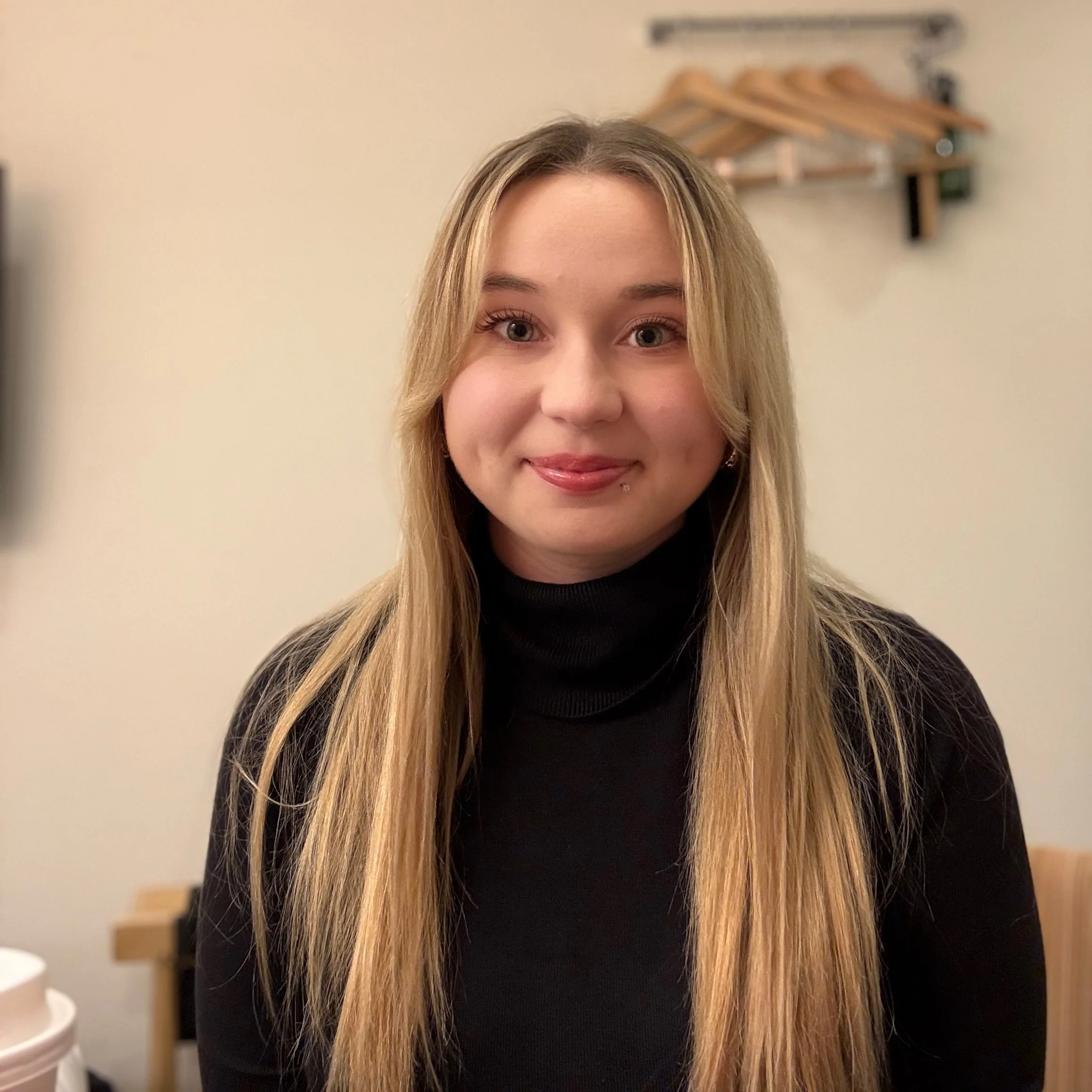
Hailey Winningham