The Everlasting flowers
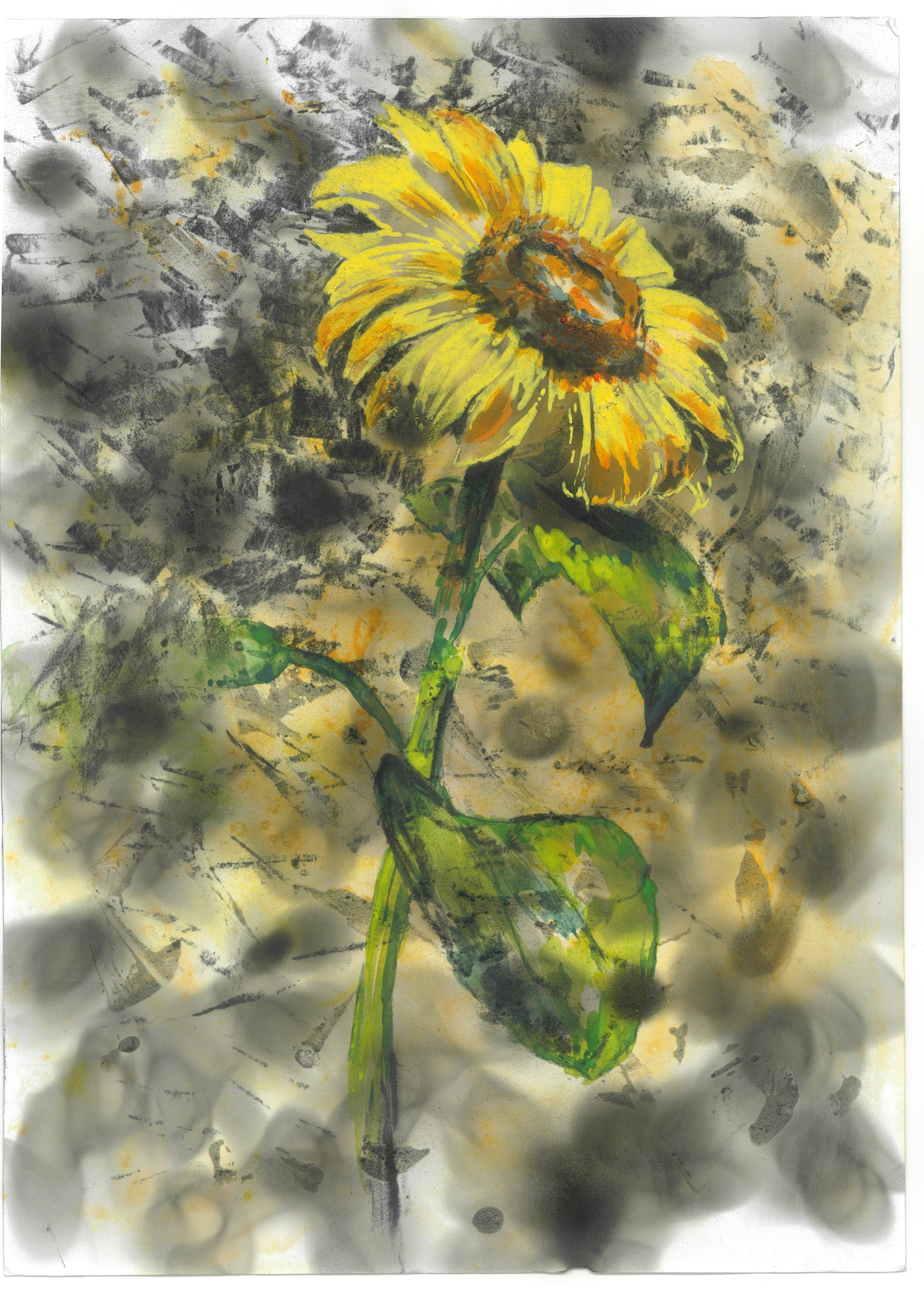
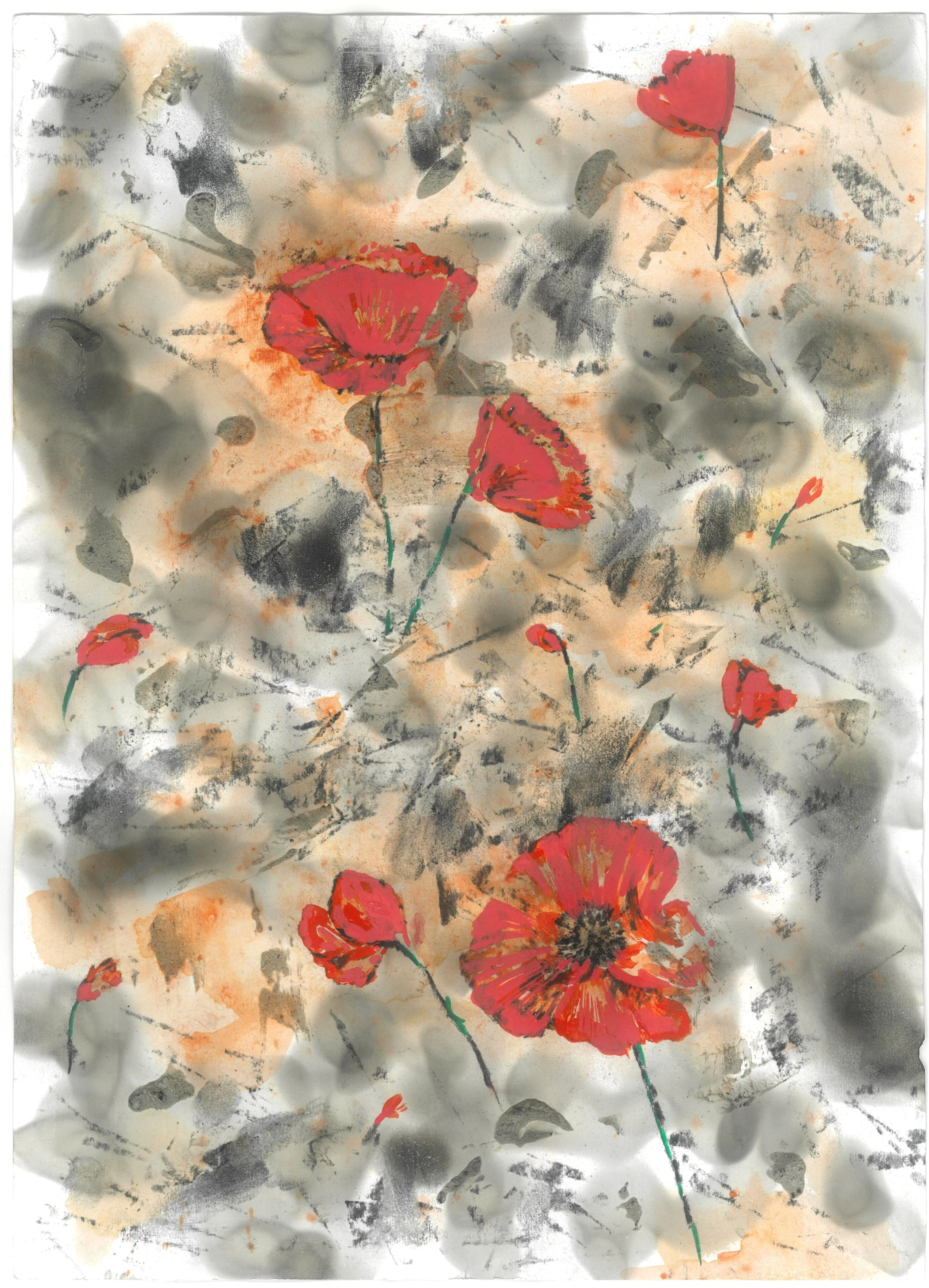
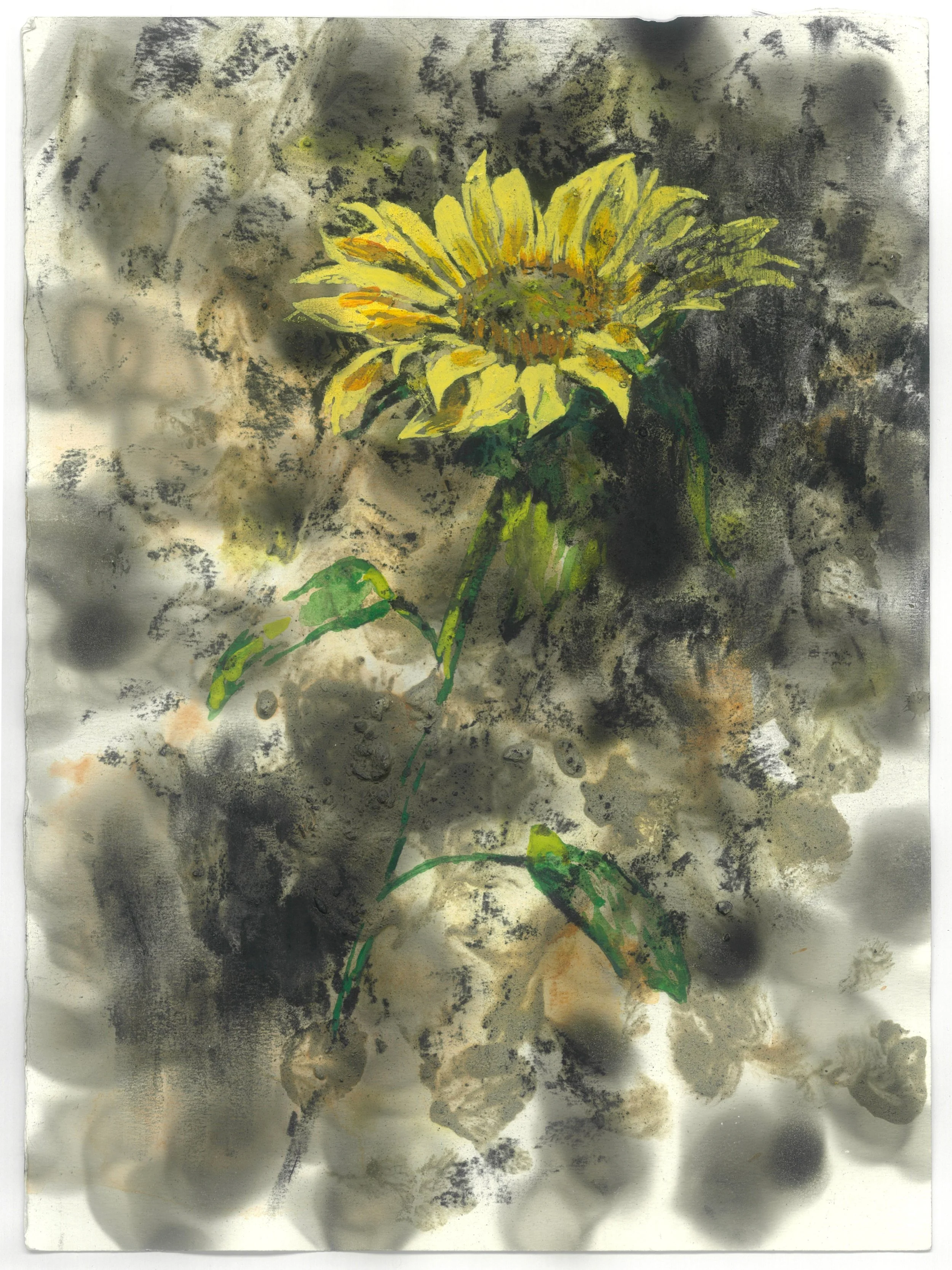
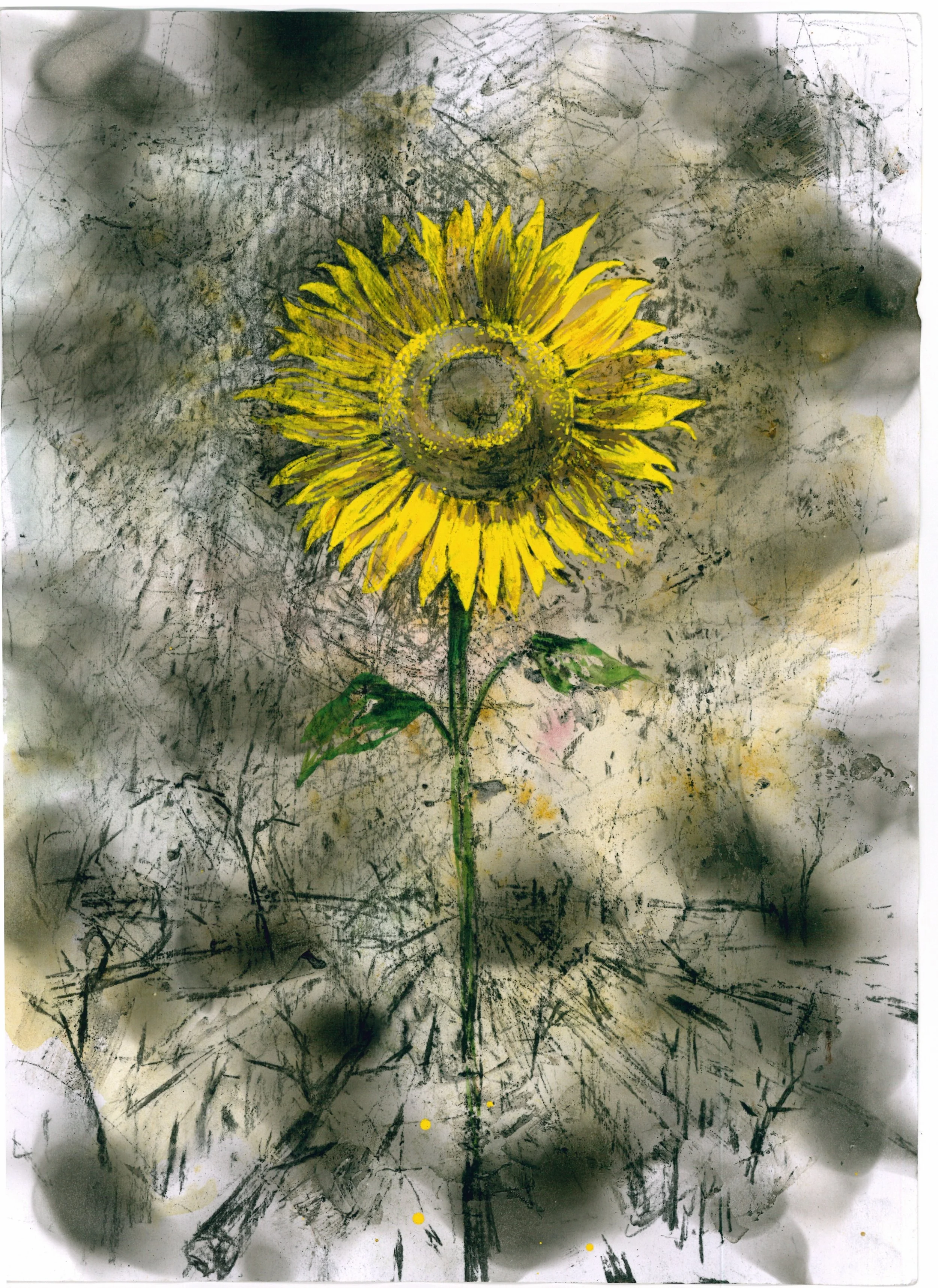
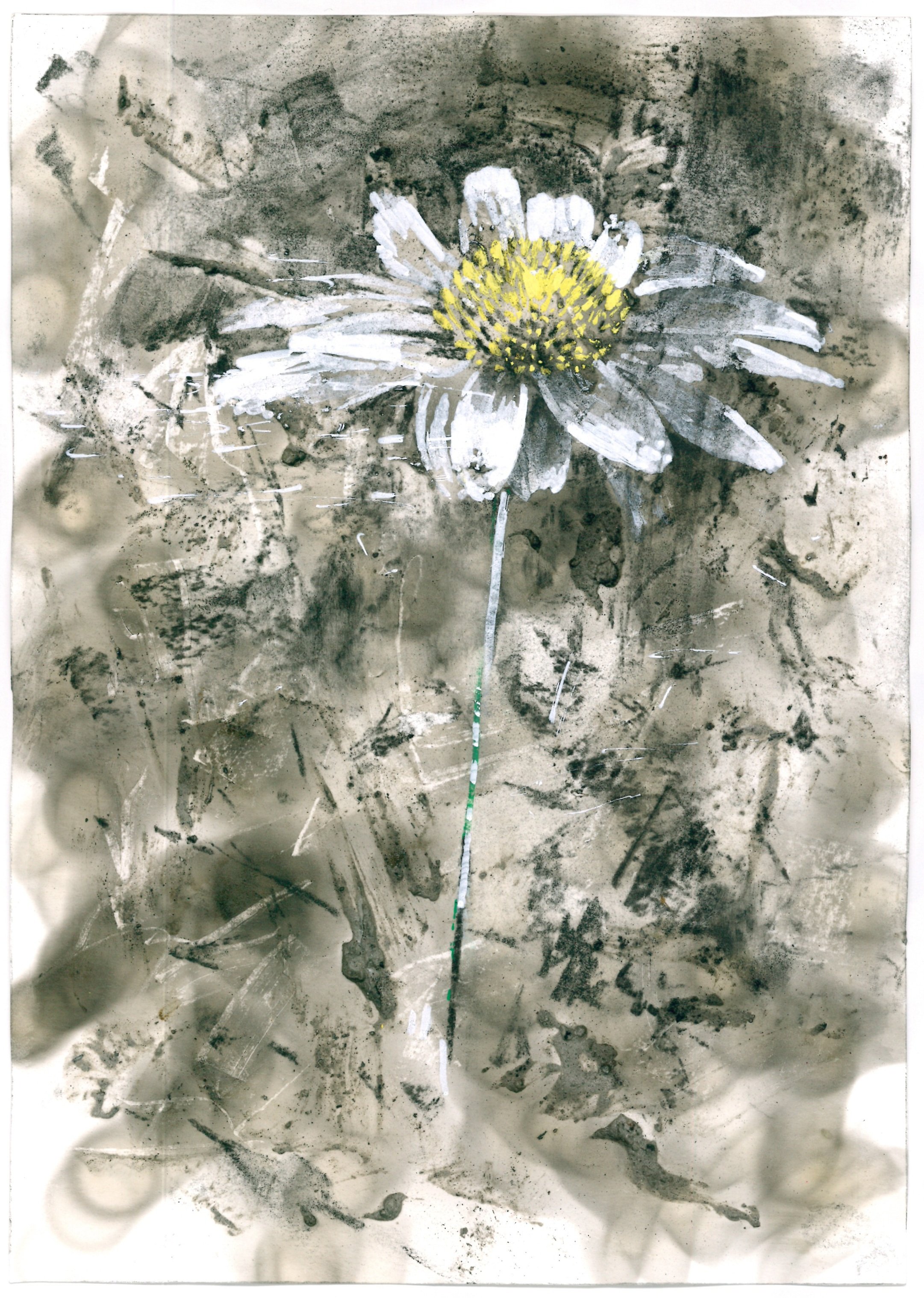
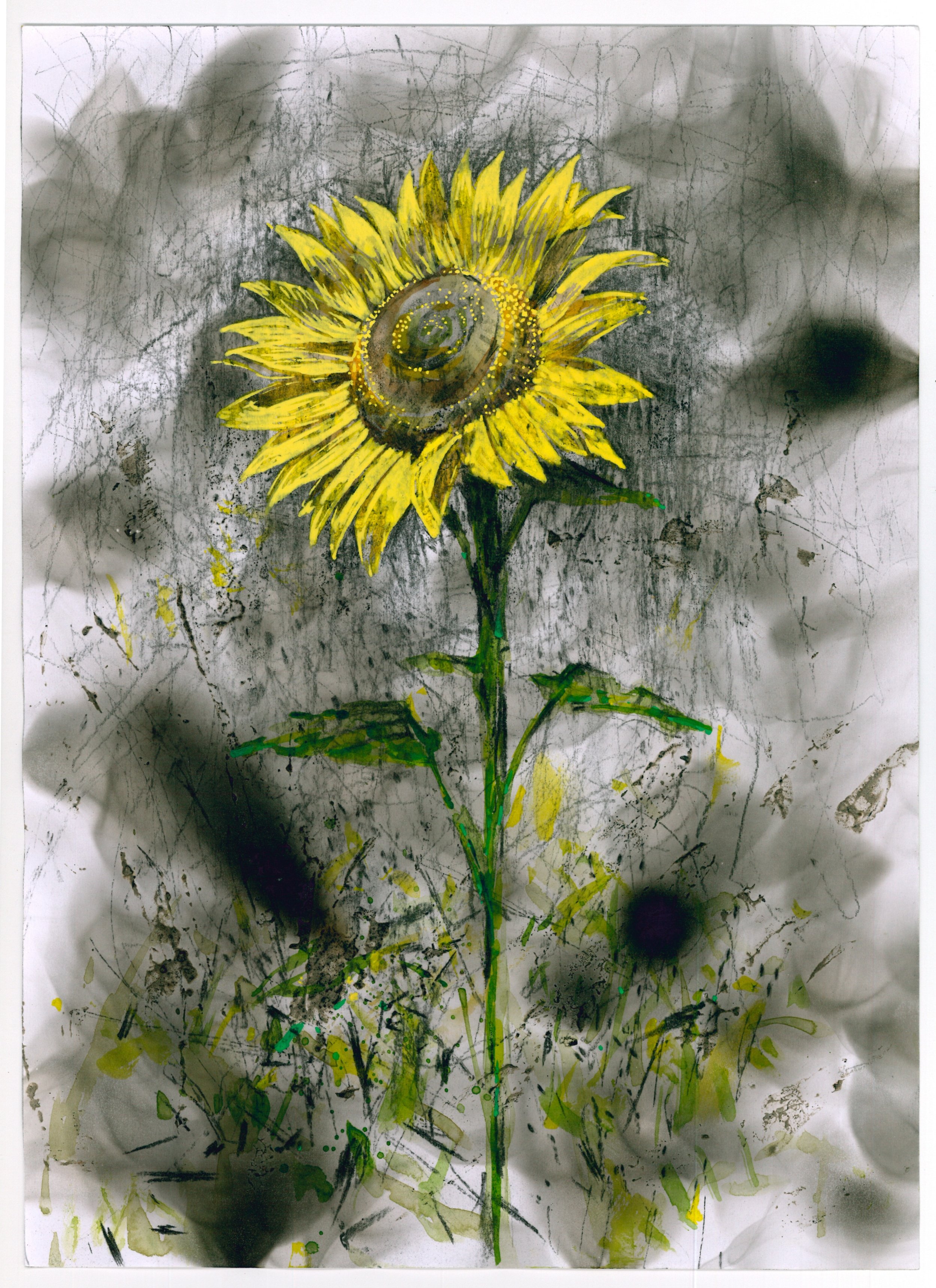
The narrative of the works arises primarily from the relationship between the subject matter, the materials, and techniques employed.
For their realization, shades of saturated colors were chosen, contrasted with the use of charcoal, ash, and traces of smoke produced by real flame. The latter remain suspended between their literal identity—as materials in themselves—and their poetic potential, which they acquire within the framework of what we call painting. They were applied to the surface in such a way as to function both as means of depiction and projection. At the same time, they continue to exist as presences. That is, as entities distinguishable by their inherent qualitative formal characteristics—named and semantically activated as signs.
The indexicality of these materials, as well as the range of associations they carry in their conjunction, converges on the idea of burning and the loss of forms—particularly evident in those areas of the works where the paper has been entirely consumed by fire. There, the limits of this pictorial language, as well as those of the material itself, reveal a paradox: they exist in order to attest to their own absence, while simultaneously elevating the adjacent saturated colors into a state of resistance.
Thus, the depicted forms are detached from the real objects to which they refer. They have become transmuted representations of a fiction—pictorially crystallized between fragmentation and wholeness. The flowers seem to stand amaranthine in their own world, and as symbols, in ours.
Georgios Merianos
Georgios Merianos studied Fine Arts at the University of Western Macedonia, Greece, and holds postgraduate degrees in Museology and Special Education. Since 2017, he has been teaching in primary, secondary special education, and adult education programs. His works are included in both Greek and international collections. In 2025, he was awarded third prize in a national painting competition.