
The Second Return to Craft
Alejandro Concas-Rivas
On a dairy goat farm in Michigan, a folk school revives handmade knowledge.
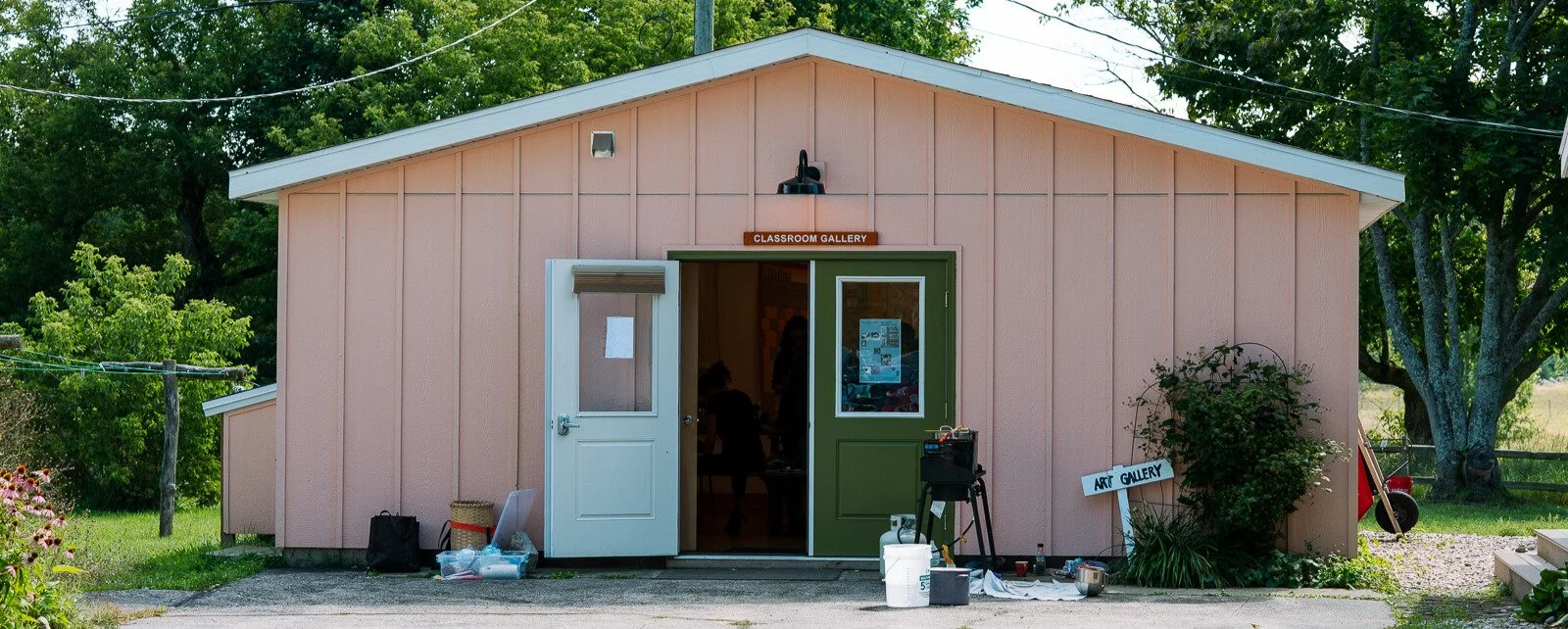
Photo courtesy of Green Door Folk School
In a culture defined by speed, convenience, and mass production, Kristina Schnepf is quietly building another model of learning.
On a dairy goat farm in Northern Michigan, her Green Door Folk School brings people together to learn traditional crafts as practices that reconnect them to materials, land, and one another. The folk school model is rooted in the nineteenth-century Danish educational philosophy of Nikolai Grundtvig, who envisioned a “school for life” centered on dialogue, shared experience, and cultural identity.
Craft has experienced renewed interest in recent years as people increasingly turn to handmade practices to slow down and reconnect. We may well be living through a second return to craft.
Craft revivals often emerge during moments of cultural upheaval. During the Industrial Revolution, critics such as William Morris promoted craft as an alternative to mechanized labor and the alienation of factory production. In Scandinavia, folk schools developed alongside political and social reforms, using craft and communal learning to strengthen democratic participation. Similar revivals have appeared after moments of crisis, including the post–World War II period and the social movements of the 1960s and 70s, when craft became a way to reclaim agency, rebuild community, and challenge dominant economic and social systems.
Craft has often been positioned as the antithesis of fine art, a distinction that reflects cultural hierarchies privileging intellectual contemplation over manual labor. Because craft objects are often functional and tied to everyday use, they have long been undervalued despite the skill, creativity, and cultural meaning embedded in their making.
In the conversation that follows, Schnepf reflects on the history of folk schools, the politics of handmade labor, and the surprising transformations that occur when people gather to make something together.
They don’t want us to know how good this feels.
Alejandro Concas-Rivas: Please introduce yourself to our readers. Your name, your role, where you are in the world, and what Green Door Folk School is and how it came to be.
Kristina Schnepf: I'm Kristina Schnepf. I am the founder and director of Green Door Folk School in Northern Michigan. A beautiful spot in the western part of the Lower Peninsula of Michigan that is primarily dunes, forests, and beautiful water. The school is on a small dairy goat farm in a little town called Cedar in Leelanau County.
ACR: Why a folk school and why now? What feels especially urgent or relevant about this model of learning in the current moment?
KS: I started Green Door in large part because I was personally looking for woodworking classes. Ones that were not a degree program or something where you had to commit to do something long term. Where you were able to slow down, learn from an expert, get off YouTube, and figure out how to work specifically with the wood, the tools, and the community.
In looking for those classes, I found folk schools.
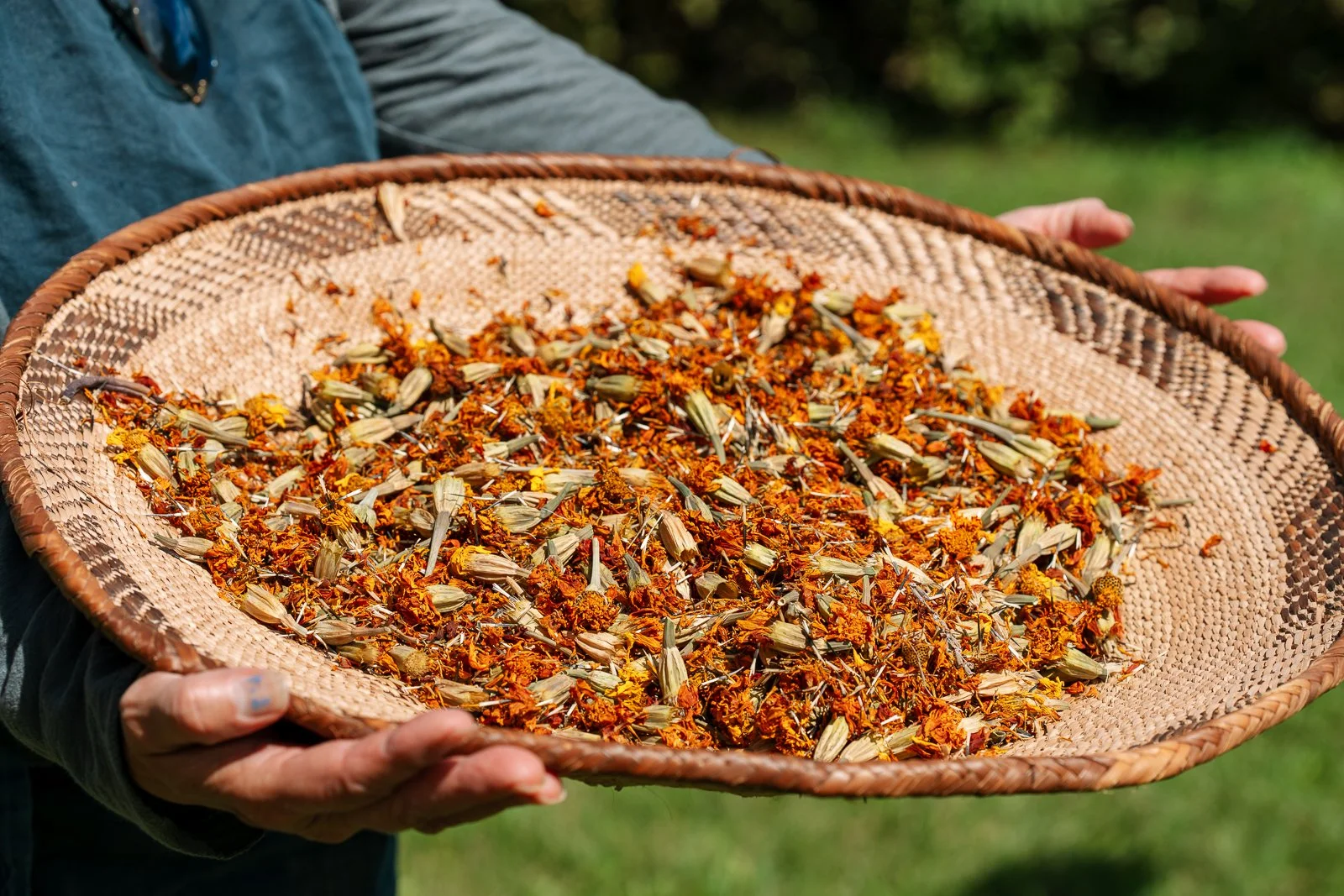
Photo courtesy of Lil Jes Photography
ACR: In our earlier conversation, you mentioned William Morris and Nikolai Grundtvig as thinkers who responded to cultural upheaval through craft and education. How do you see their legacy carrying forward in Green Door Folk School today?
KS: Both Morris and Grundtvig were really focused on bringing craft back to the people. Whether it was through architecture, furnishings, or through trade skills. They were really trying to bridge the divide between the elite and non-elite.
Your basic person should not have to be devoid of beauty and quality goods.
For Grundtvig, it was a time when the population was working toward democracy in what was a monarchy. All of the power was with the elite; the peasants and the rural folks had little. He saw an opportunity, I guess you could say, to build a middle class.
That's not what he called it, but bringing people into the middle through teaching trades skills, like blacksmithing and woodworking, so that people from the rural populations and the farming communities could have positions beyond their family farm.
As that kind of model moved into the United States, as it was imported by Scandinavian immigrants, it really became more about preserving those capabilities.
ACR: I love this idea of the top and the bottom of society being brought into the middle.
KS: Both Morris and Grundtvig had big visions. They were both closer to the elite than the rural population. They saw the poverty and the lack of opportunity for people in the lower classes, and really wanted to be able to bring capability, power, and beauty to the people.
The democratization of beauty.
It's why we're destroying the planet because we don't appreciate it, we don't understand the fundamental source of most of what we partake in.
ACR: In a culture built around speed, convenience, and constant attention capture, what does the handmade offer that our current systems do not?
KS: Imperfect beauty. We buy things on Amazon and they come to us, with perfect directional wood grains, or at least a veneer of perfection.
ACR: Particle board with a sticker of a perfect piece of wood.
KS: Exactly. But recognizing that imperfect beauty is the real beauty. The wood grain as it grew. The willow with the little knot. The color variations in wool. That’s the real natural beauty, rather than turning everything into a commodity that has to look and feel absolutely perfect.
ACR: I feel like perfection kind of gets boring after a while and little imperfections stop us in our tracks and give us pause. A glitch in the matrix.
KS: The handmade offers an imperfect beauty that our current systems do not. It offers personal fulfillment. I have never felt as fulfilled by buying a piece of furniture as I have by making one with the imperfections that exist in it, the errors, and the mistakes I made. I know they're mine. They're moments of learning and quirky elements of something beautiful.
No purchase is going to give you that fulfillment.
ACR: It more becomes a reflection of being human. We're all messy. None of us are perfect and that's what makes us unique and interesting.
KS: It's what makes our lives unique and interesting. What makes our homes, our food, unique and interesting. The other thing in regards to the handmade versus current systems is really just understanding where things come from.
Last week we had a hand spinning class with a drop spindle. This tool existed in some way, in every ancient culture because they had to make clothing. In order to weave, knit, prepare wool, or cotton. It had to be spun.
Every single culture figured out the exact same thing and built tools that are all remarkably similar when they had no connection, because it was the most efficient way to do it and it remains the most efficient (except for mechanization).
As humans on the planet, being so disconnected from the raw materials that make up our daily lives is not healthy. It's why we're destroying the planet because we don't appreciate it, we don't understand the fundamental source of most of what we partake in.
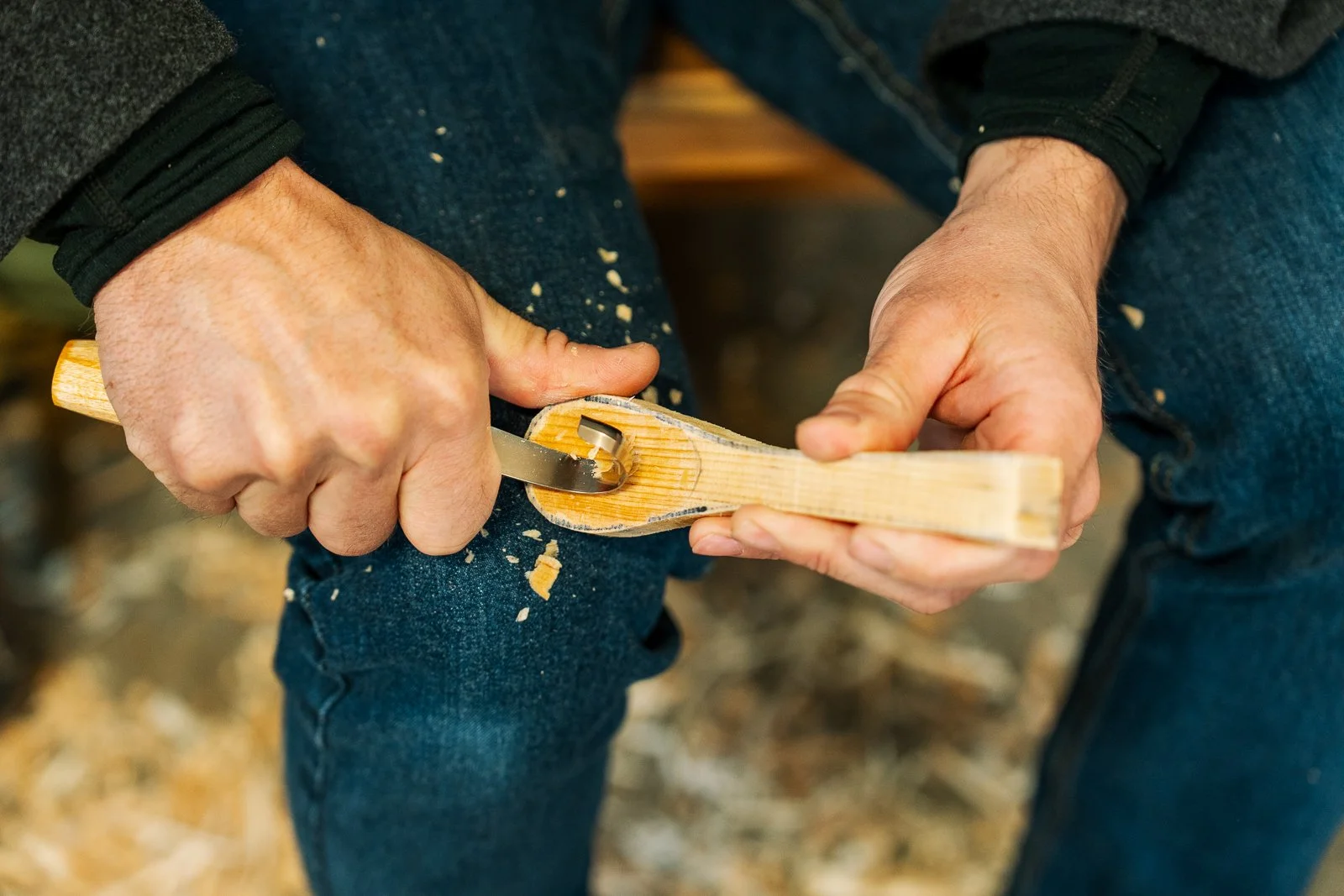
Photo courtesy of Lil Jes Photography
ACR: When you worked in corporate marketing, your role involved influencing attention and shaping behavior. Now you’re creating spaces that ask people to slow down and resist urgency. How do you reconcile those two chapters of your life? Do you see them in conversation with one another?
KS: I spent a 30-year career in corporate work, primarily on the commercial side of things, marketing and sales. I learned a ton about how the world works, how capitalism works, how people work together, and learned a lot about leadership. It was very helpful.
By the end of my career (and maybe it took me too long), I recognized the limitations of late-stage capitalism, particularly its extraction of labor and raw materials.
I really wanted my work to have an impact. More meaningful. More localized.
ACR: You had to learn the rules to break them.
KS: That is exactly true.
The willow will bend where you want it to. It is just waiting for you to tell it where to go. And your ancestors are the ones who know the way it should go. They are here with you. This is in you.
ACR: Have you witnessed moments of personal transformation inside a class? Shifts that aren’t about skill, but about identity, vulnerability, or belonging? What have you noticed in students that surprised you?
KS: Yes, most of our classes are a day or longer. I love the second morning when everybody shows up. They are all excited because they have learned something and they're going to do it again. They pick up their things and are light years ahead of where they left yesterday. The instructors are like, “All you have to do is sleep, and once you sleep, you will come back and be more capable.” It's actually so true.
I even see transformation within individual classes. In a spoon carving class, everyone was sitting there chatting. It got quiet, and one student says:
“They don't want us to know how good this feels.”
ACR: “They” meaning the robots in the Matrix?
KS: Exactly! It was one of those moments where everybody sat there nodding. You can't unfeel, so you carry that with you.
There was another time when an older woman, after two days with the group, she goes, “I don't know if I've ever felt so comfortable and welcomed in a group of people that I didn't know.”
“Even my family doesn't accept me the way this group of people did.”
ACR: That's beautiful
KS: Honestly, more often than not, it has less to do with the skill itself and more about the environment in which you're doing it. The speed. The sense of history. This past weekend, our basket weaving teacher said:
“The willow will bend where you want it to. It is just waiting for you to tell it where to go. And your ancestors are the ones who know the way it should go. They are here with you. This is in you. It may feel like a new skill, but it’s already part of you, because everyone comes from ancestors who wove.”
How can you ever be the same after that?
ACR: It's so true. All of our ancestry possessed some skill or craft. My family used to be farmers. It's funny because when I was young my mom and I, also my grandma, had a garden. There was always something that led us back to gardening. This was before I knew I had a hundred years of history being farmers. It is within us somewhere.
KS: We think we're so distant from it. We're like, “Oh, I'm not creative,” or, “I couldn't do that.” No, these are all skills that our people had.
ACR: It gives me goose bumps. I love it. I wanted to ask about your instructors. How do you choose the instructors who teach at Green Door? What values matter most beyond technical skill? Do you find them or do they find you?
KS: It's a little bit of both. We put out a call for instructors recently and we have gotten dozens of amazing people from across the country that want to come teach. The technical skill and the practice itself is important in getting people interested.
ACR: It seems like your people want something more nuanced than just typing a subject into Google and learning it.
KS: Exactly. In terms of instructors, the big thing is knowing how to accept people's reaction to having to be vulnerable. People aren't always good at being vulnerable. Sometimes, people get frustrated, sad, nervous, or scared. All kinds of emotions come up.
ACR: It's that emotion that lives in front of vulnerability.
KS: Yes, exactly. Being able to get people beyond that and accepting imperfection. You don’t need to walk out of here with the best basket ever. It's actually even more valuable to go: “Hey, look at this spot, I learned that I can't do this and I will never do that again.”
Helping people get to vulnerability and also just being calm, kind, and letting people learn at their own pace. It's an interesting combination of skills.
I see craft as very political, but it also can just be satisfying. Innately satisfying.
ACR: Is the act of making something by hand inherently political? In a capitalistic society shaped by mass production and constant consumption, do you see teaching traditional skills as a subtle resistance to that system—or is that reading too much into it?
KS: It is absolutely political. I wouldn't even say subtle resistance. I would say it's obvious resistance.
The more we know, the more we can do for ourselves. The less we need them. It's not like we're all going to be self-sufficient, but the more we can create local economies, the more we can support and serve each other.
I'm not advocating for less government support. But, what if we all serve each other? It's just a very satisfying feeling of not having to rely on a system that isn't necessarily looking out for your best interests.
I see craft as very political, but it also can just be satisfying. Innately satisfying.
ACR: You keep weaving this through-line of localization and I find it powerful especially in today's world of globalization where we can know what is happening across the world in an instant. But we don't even know what's happening with our neighbor next door.
Why do I need to know about this horrible tragedy on the other side of the world that does not affect me and that it is low-key detrimental to my mental health?
KS: Right.
ACR: Just go enjoy your next door neighbor.
KS: Maybe they just need a hug or want one of your extra chocolate chip cookies. There's so many things that have drawn us away from what as humans we were meant to do and be. We're best in clans of a hundred people. Yet, most of us don't have that.
ACR: On the surface people may say, “Oh, craft—it's like making something cute” but when you look closer, it's so much more profound and important.
KS: It really is. Honestly, there was a time I didn't fully appreciate it. I thought it was “nice.”
ACR: Something along the lines of: “that's nice for people who have extra time on their hands.”
KS: Exactly, and that's also another thing we need to highlight. All of these things are a privilege. This is a luxury and it's unfortunate. What if we were to localize more and be more of a community? Then we would be supporting and helping each other. So everyone had time.
We would not have fifty single moms in the same apartment building all not able to leave at 9:00 at night to get milk because they can't leave their sleeping baby. You'd have a clan of people that were working together and somebody going to buy milk for everybody.
Not in the short term, but I believe we can get closer to a society or an environment that works for us.
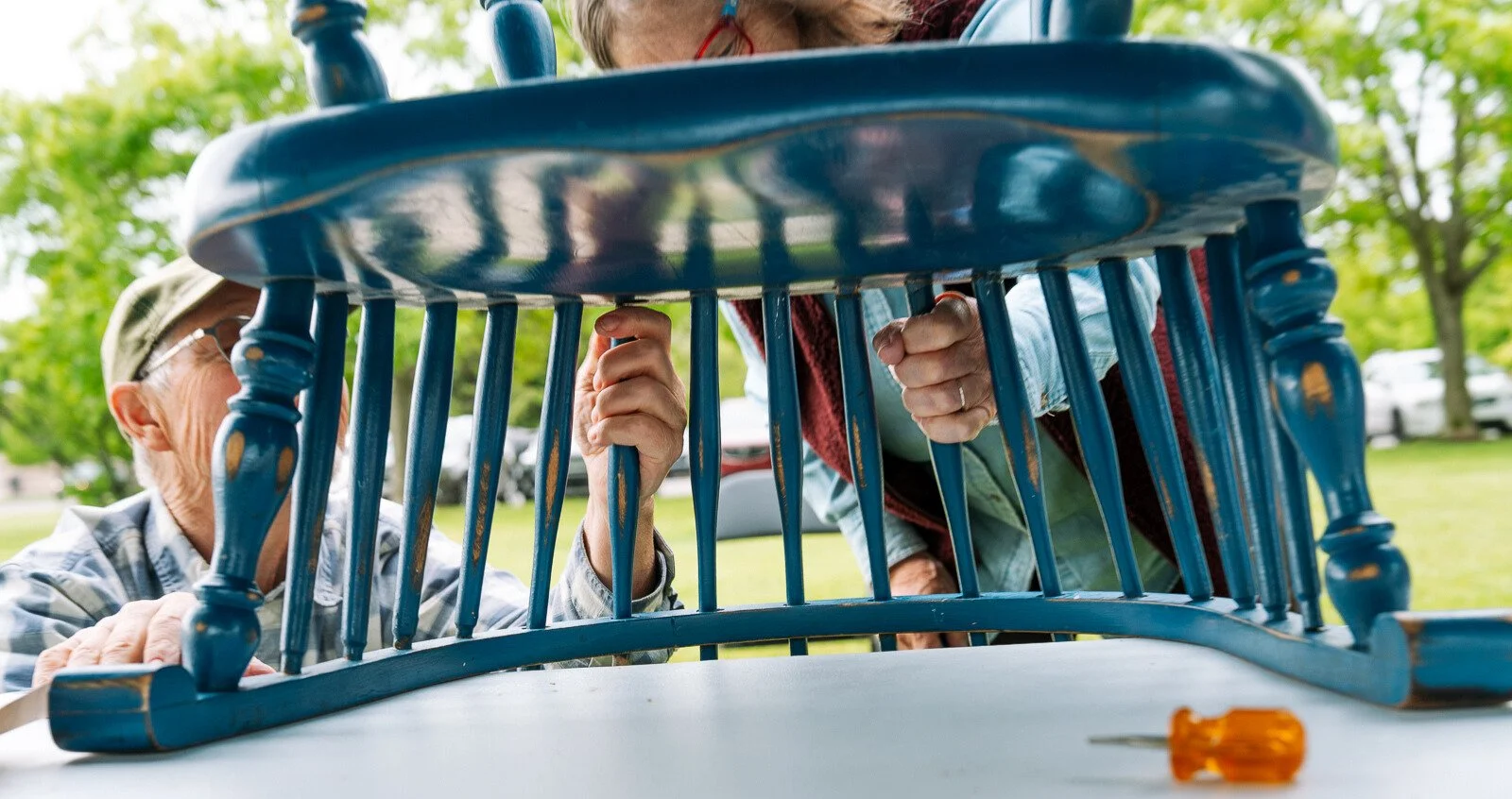
Photo courtesy of Lil Jes Photography
ACR: I definitely feel like there's a post-Industrial Revolution return to craft happening in our present moment. I don't even know how to articulate what I feel. A second return to craft? It seems like everyone needs it.
KS: I agree. I think COVID helped a lot of people figure that out. I mean all the bread bakers, the knitters, and watercolor artists that came out of COVID. People make light of it. Even in our classes people will introduce themselves as a COVID crafter.
No! You're an innate crafter and when given the luxury of time, it is the first thing you move to.
ACR: COVID just happened to be the catalyst.
KS: Exactly.
ACR: We're towards the end of our conversation, but I want to know what the future of Green Door looks like?
KS: Right now I'm super excited about spring and summer classes. We also do barn dances which are super fun. We also offer repair cafés, which are at the local library. People can bring their broken items or items that need mending and we have a group of fixers who will help them and teach them how to repair their item.
Neighbors helping neighbors.
The things I'd like to do are kind of a big capital project. One is putting a woodworking shop in place. It would be a resource with tools and not only be a class space, but a makerspace, and an open studio space for people in the community. So I'm excited about that.
We'd like to cautiously start getting into some kids programming. It's a significant move and requires a lot more personnel and planning.
These are our goals for the immediate future.
ACR: If someone feels drawn to this work, whether they live nearby or across the country, how can they engage with or support Green Door Folk School?
KS: Register for a class! We also have a folk skills guild. It is our version of a membership program, which is $60 a season. It helps us get a little bit of consistent income over time. Members receive more access to programs, certain programs for free, discounts on certain classes, and an additional how-to guide from one of our instructors each season.
If you want to make a donation, just send an email and I will gladly send you a Venmo request or take your credit card number. Also follow us on instagram @greendoorfolkschool
ACR: Well, I just want to thank you for your time and for your generosity in sharing your knowledge and your work. This is so inspirational and I hope everyone who is reading this will feel inspired in one way or another: to work with their hands or to take a pause.
KS: I hope so.
ACR: Thank you for doing what you're doing and keep doing it.
KS: Thank you.
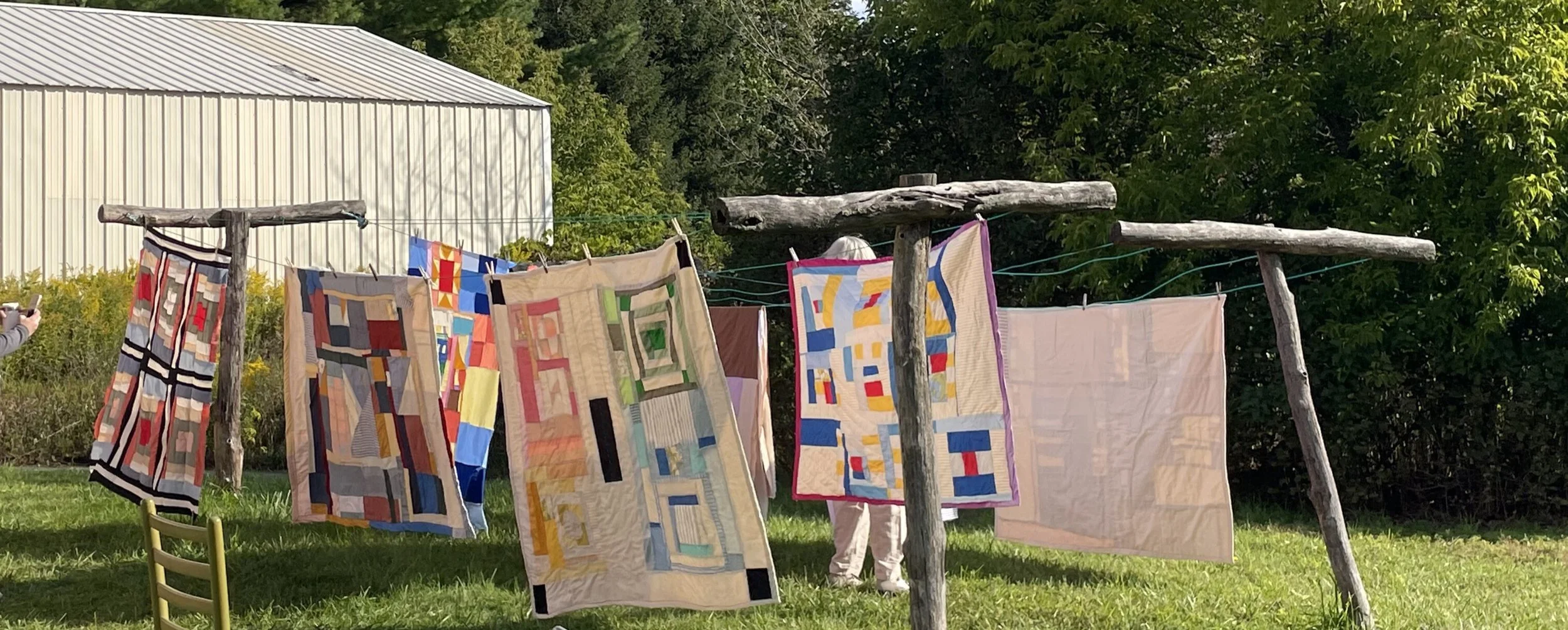
Photo courtesy of Green Door Folk School

Los Angeles–based art historian Alejandro Concas-Rivas earned his M.A. in art history from the University of California, Irvine, with a focus on ancient Egyptian art. He has studied art history in Paris, Tokyo, and the Caribbean—experiences that inform his global and interdisciplinary approach to visual culture. He is currently a content editor for an art gallery specializing in Andy Warhol and serves as visual arts editor for Oyster River Pages. A published author and artist, his work engages the intersections of art history, contemporary art, and media theory. In 2025, Alejandro was a publishing fellow with Los Angeles Review of Books, where he worked across editorial and production workflows. Before entering academia, Alejandro was a professional ballet dancer, visual artist, and live video artist. His background in art-making informs his approach to scholarship, and vice versa, blending creative practice with critical analysis.