
the weight of other people’s expectations
Jeffrey Ehijie
Certain experiences rattle me, like Annalise Keating's fury with the justice system in How to Get Away with Murder. Instances of injustice, big and small, have a way of lingering with me: I find myself examining the world before me. Sometimes they appear as huge, systemic failures. Sometimes they occur in the backseat of a stifling keke maruwa (tricycle).
It was a sunny afternoon, and I was on my way to my best friend Tonye’s house in Badore, within Ajah, near Co-operative Villa. The Ajah bus stop still pulsed with trade activities. A crazy world where noisy traders, passengers, and vehicles perpetually contended for space. The air was heavy with the pungent odors of feces, urine, and unmanaged waste, mixed with the bitter smoke of revving engines, that created a suffocating haze. I always walked briskly whenever I arrived at Ajah bus stop, as if the quicker I moved, the less the city could touch me.
I slipped into a keke maruwa loading passengers to Badore. The driver was struggling to fill the seats — unusual for Ajah, but the slow mid-week trickle of commuters explained it. It was Wednesday; Lagosians were already trapped in their offices. I wasn’t. I had nowhere to be. I was freshly unemployed, technically homeless, and unanchored in a city that punishes stillness. I had time to spare. Impatient commuters kept abandoning the ride for the sea of kekes waiting in line, their seats filling faster, already closer to leaving.
Just as I was about to abandon the ride myself, two men smeared in engine oil and mechanical grime slid in beside me. The pungent mix of gasoline and sweat assaulted my nostrils at once. Shifting to find room, I felt them press close like an invasion. Their dirty sleeves brushed my bare arm; nausea rose in my throat. My head spun; paranoia pulsed, out of proportion to mere sweat and strangers. Without a word, I stepped out of the keke. The driver shot a dirty look at me, but I owed him zero explanations. Some things are simply too exhausting to explain.
Almost a minute later, I was in another keke, finally heading toward Badore. The humid wind was slapping my face when I felt a tap on my shoulder. I turned slightly, just enough to see who was behind me.
“Bros, I bin wan ask — why you commot for dat keke?” the man asked.
For a moment, I was stunned.
Why did he care? Lagos is a survival city, where everyone minds their own business. Or so I believed. I turned completely around for a better look at him. He wore a tattered, ill-fitting blazer, like a missionary worn down by years of soliciting donations in crowded terminals. Beside him sat a woman and another man. I remembered him: he had argued over the fare with the first driver before boarding, then disembarked when the oil-stained men entered — just as I had.
“I don’t know. Don’t ask me,” I snapped and turned away.
That should have ended it. Instead, he and the man beside him unleashed a stream of insults. Their voices drowned in the clatter of the keke’s engine. Heat surged to my face. I wanted to retort, to silence them, but my voice stumbled and fell short. I was losing my mind. It felt absurd to defend something as simple as leaving a seat. I fixed my eyes on the blur outside, counting seconds like rosary beads until my stop arrived. The keke jerked to a halt. I stepped down, grateful for air that didn’t smell like fear.
If I were to confess that I left because I didn’t want strangers’ greasy skin pressed against mine, would they understand? Could they have grasped how something as insignificant as an unwanted touch can unsettle me? No. Lagos is not a city that allows space for such weaknesses.
That's when it hit me. It was never about the seat. It was about the hand that moves without asking. The assumption that your body is available — for contact, for comment, for correction. That your choices, your skin, your presence are subject to review by anyone who happens to be watching.
My body had known this longer than my mind wanted to admit. It knew it in the silence I had been carrying for months. It knew it in the way I'd started crossing streets to avoid groups of men. It knew it in the careful calculations I made before leaving the house — what time, which route, how visible.
It knew it most of all in a street in Igando, in the dark, in a half-built structure that smelled of wet cement and rotten waste. Where strangers had decided the same thing: that I did not belong to myself.
Almost four months before the keke incident, after spending Friday night with a friend in Yaba, I boarded a danfo bus the next morning to Surulere. I stopped at Aguda to buy the nylons my aunt had asked for. She needed them for her dry-cleaning business. Before going home, I made another stop at Festival Mall in FESTAC to spend a few hours with a date, pretending the city was gentle. We walked under bright lights. Ate. Laughed. Time moved easily there.
By the time I left, night had swallowed Lagos whole. On my way back to Egbeda, where I lived with my aunt, I entered a half-filled bus. The kind that smells of heat and tired bodies. Traffic slowed us to a crawl. Engines groaned. Conductors shouted without conviction. My eyelids sagged. I let them.
My route passed through Igando. A man I had been chatting with for weeks lived there — I texted him. He said we could meet at the bus stop. When his replies slowed, my stomach tightened, but my eagerness to see this through overruled caution. I dialed his number.
“I just got to Igando bus stop. Please — where are you?”
“Ah! You don reach?” he asked. “I think say I go finish wetin I dey do before you reach.”
“I no far from Igando, give me three minutes.” His voice came from the phone — he was still somewhere in Igando, not yet at the bus stop where I was waiting.
“Please let it be three minutes.” I said aloud to him.
He called minutes later.
“Since you don reach and I no want waste your time,” he suggested, “walk enter my street. I go meet you for inside.”
I hesitated. The night felt thicker. I agreed anyway. I walked into his street.
Suddenly, loud voices ripped through the night like a riot breaking loose. Feet rushed toward me. Before my body understood what was happening, I was surrounded.
One boy grabbed my backpack. Another pushed me hard. I fell. My palms hit the cold earth. They dragged me toward a half-built structure swallowed by bushes: cement pillars, the open wounds of an abandoned building.
A voice rose above the noise.
"If you know wetin good for you, bring out everything before I search you."
“We don catch you, homo,” another voice sneered.
My heart slammed against my ribs. I clenched my fists, trying to hold the avalanche inside. This could not be real. It felt like a badly scripted Nollywood film. Stories I once read online were now standing over me, breathing.
One of them leaned close. I smelled alcohol and sweat. His eyes were hard.
“Where you come from?” he barked. “Na oyibo you be?” “You no fit talk?”
I tried. My mouth failed me.
“As you fine reach, na man you dey do,” he hissed. “What a waste.”
His words struck like blows that bleached my face. My hands trembled as I emptied my pockets. I handed over my phone, wallet and the nylons. Ridiculous things to die over. Then my voice cracked. “I’m from Edo State.”
One of them laughed softly.
“Ahn ahn. Na my brother you be. Me sef na Edo I come from.” His tone changed. “Chai. I con dey do you this kyn thing, no fear. Nobody go touch you. Just relax. We go soon release you.”
I sat there, hollow. They mocked me. Threatened me. Then they began their work — taking control of my life. They reset my phone, emptied my bank accounts and broke into my social media. They borrowed money from loan apps in my name. And proceeded to call my contacts one after another. My life was spread open like meat on a table.
I begged them to stop. I begged them not to call my people.
A slap met my cheek.
“I no wan hear your voice,” one said, “unless we ask you to talk.”
I swallowed my words. Tears gathered. They called my aunt first, held the phone to my ear just long enough for her to hear my voice, then snatched it back and told her it was a kidnapping — a ransom. My brother and sisters called next, and I caught the negotiation in fragments: a name, a pause, a figure I couldn’t fully hear, never how it ended. Time stretched. Hours lost meaning. When they were done, they let me go — my savings, the money I’d spent a year setting aside to leave the country, gone with them. I stood barefoot in the dark. My chest burned. Sweat soaked my clothes. I stared at the road, like a wild field with no exit, trying to find my way home. I felt misplaced.
The Edo boy walked with me for a short distance. He spoke softly, almost kind: “No cry. You be man. Follow me. I go show you where you fit enter bus. No look back, just dey waka go. Forget wetin happen. If you like yourself, no tell anybody.”
On the bus, I did the opposite of forgetting. I cried, softly, then violently. My throat burned. My shoes, phone, wallet and my entire savings were gone.
On the ride home, I rehearsed different versions of safety in my head. My heart was beating too loud. Stomach churning, and eyes lost in deep confusion. When I got home, I explained to my aunt that I had been robbed by one-chance criminals. A lie I told everyone else, including myself until it sounded true.
After the attack, my aunt told me to leave Lagos for a while. I didn’t argue. I needed the distance. She gave me money to visit a friend in Oshogbo. I stayed away for two weeks. Then I returned for my second COVID-19 shot.
That evening, I stood in front of our gate. I knocked, no answer. I knocked again and again until night came. The evening air settled heavily on my skin. I slept outside.
In the morning, I borrowed a neighbor’s phone and called my aunt.
“Oh! You’re back?" Her voice was flat, like she'd been expecting this conversation.
"Yes, Aunty. I'm at the gate."
A pause. I heard her exhale.
"You cannot stay in my house anymore."
Her words landed like a slap I didn't see coming. I opened my mouth, but nothing came out.
"I cannot explain it to you," she continued. "But I don't want you stepping foot in my house."
I wanted to tell her, to confess everything, but the words wouldn't form.
"Let them know at the gate the things you need, I'll send them out," she said and hung up.
I sat on the curb, watching the gate. Thirty minutes later, it opened. My bags were brought out. Just like that. No warning. No explanation. I stood there, watching my life get smaller.
I would spend weeks turning it over: what she had been told, and by whom. My best guess kept circling back to that night in Igando — that somewhere between the calls and the threats, someone had told her what I was. The thought sat on my chest like a stone I couldn’t put down.
I had nowhere to go. Then I remembered my friend Meshach, who lived in Ojota. I called him and without hesitation, he took me in.
Homelessness sits quietly. It doesn’t scream. It waits.
I shared the flat with Meshach and his coworkers, but had a single room with Meshach. I moved carefully. Spoke less. Avoided questions. I became small in the room I shared with Meshach. When people asked if I was okay, I nodded, because words felt heavier than fear.
Meshach's kindness kept me alive. His home was warm. He never made me feel like a burden. But even in that safety, fear lived under my skin — a cold knot whispering: What happens if his boss finds out? What would happen to him because of me? The boss’s fury would be an avalanche — burying us both: Meshach, for breaking the company’s rule against housing anyone who wasn’t family, and me, for being the reason he broke it.
One evening, I was in the kitchen with Mr. Osagie, one of Meshach's coworkers. He was frying plantains, and the oil hissed. I sat at the small plastic table, pretending to read. It was the first time our paths had crossed; his shifts ran late, and I’d learned to keep to the room when he was home.
"Eh, this your cousin," Mr. Osagie said, nodding toward Meshach's room — the word Meshach had given him, the only word that made my staying make sense. "He never mentioned you were staying, we thought he was hiding someone else."
I laughed. Thin and brittle. "No. We’re just cousins."
"Hmm." He flipped the plantains. "I've never seen you around?"
I felt sweat prickle at my hairline. "I’ve been busy with work."
"Work," he repeated. He turned to look at me directly. "What kind of work do you do, anyway?"
I gave him the safest answer I could. I told him about my role as an executive assistant, and the freelance projects I've been doing as a side gig. He nodded, seeming satisfied, but I could feel him studying me — not just the answer, but the shape of the lie holding it up.
I stayed in the kitchen as long as I could bear, then excused myself to the room. My hands were shaking, less from the questions than from how easily they could have led somewhere else.
Later that night, I lay on the mattress and stared at the ceiling. I wanted to tell Meshach. I wanted to ask if he thought Mr. Osagie knew. But I couldn't put words to it. I couldn't risk making the suspicion real.
I tried to return to normal life. I couldn’t. Work piled up. My head stayed loud. Loan companies called every day. Their messages were sharp with shame. My phone rang like a threat, again and again. I ignored it.
One evening, I went for a walk. I needed air.
When the gate slammed shut behind me, my heart raced. Every footstep sounded like a pursuit. Every shadow felt dangerous. I walked fast. Then faster. Until I started running without meaning to. I ran through Ojota like I was being chased. When I got back to Meshach’s gate, it clanged shut behind me. The sound did not stay in Ojota.
Igando returned.
The cold ground returned — the one from that half-built structure, gritty under my palms.
My chest tightened. Loud voices. Air refused to enter my lungs. I stood there whispering, “Breathe. Just breathe.”
I pressed my back to the gate.
“This is not Igando,” I whispered. “Breathe.”
From then on, fear became routine. I stopped going out. Disappearing felt safer.
Outside, Lagos continued. People laughed on buses. Loud and unbothered. They joked on the streets. Nothing looked broken. I envied them.
I thought retreating indoors could protect me, but in a country obsessed with policing our existence, private terror rarely stays private. The headlines and timelines always find a way to drag our hidden lives back into the town square, turning our survival into public content.
One night, back in the room I shared with Meshach, my phone vibrated against the plastic table beside the mattress. Once. Then again. Then a rush of them, like someone knocking on a door I did not want to open.
I picked it up.
A video by @BBCAfrica was circulating on Twitter. The caption read: Kito: Blackmailing LGBT Nigerians. The thumbnail showed two men, faces masked to protect their identities, shoulders turned inward the way bodies turn when they know they are being seen.
I didn't press play. I didn't need to. I knew the shape of the story before it loaded.
The replies were already climbing.
My thumb moved on its own. Each scroll tightened something behind my sternum — a slow cinching, like a belt drawn one notch too far. The language in the comments was familiar. Not because I had read it before, but because I had already heard it spoken aloud in sermons, in bus park arguments, in the particular silence of rooms that had just decided something about you. Death penalty. Perversion. Hunt them. The words had texture. I felt them in my throat, in the back of my hands.
Then a verified account — checked blue, clean headshot, the kind of profile that signals credibility — tweeted: This behavior is against our culture. Parents must do better.
That one tweet climbed the fastest. People preferred it. It was violence dressed in the language of concern and the crowd recognised and rewarded the disguise.
Tolerant.
Someone had used the word as a complaint. I sat with it — turned it over. The accusation that we had been too lenient with people like me.
Meshach glanced up from the mattress. "You're scrolling again," he said. His voice was flat, but not unkind.
My phone had grown warm in my palm. I noticed this the way you notice your own breathing — suddenly, too late, because something has gone slightly wrong.
I thought about typing one sentence. Something plain and accurate. Violence is not justice. Seven words, maybe. I composed it twice. My thumb rested above the screen.
Then I imagined the notification arriving. My handle — lifted from context. My picture enlarged, circulated, tagged. I thought of my workplace. I thought of the men in the blurred thumbnail — men like me — how their faces were hidden and they were still not safe. How visibility worked here. How the crowd did not need your name to find you. Only your outline.
I deleted the draft.
The video autoplayed again. In the kitchen, Meshach cracked two eggs into a pan. The oil hissed sharply. The sound arrived from another world.
"They'll forget by tomorrow," he said through the doorway.
I wanted that to be true. I knew it wasn't. The forgetting was the crowd's privilege, not that of the men in the video. They would carry the comments into job interviews, into the careful silences of family dinners, into the back pews of churches they could not afford to leave, because leaving would be noticed and absence would be its own confession. The internet moved on. The people it named did not.
I turned the phone face down.
The ceiling. The slow tick of the fan. Meshach scraping his eggs. These things were still here.
My chest did not unclench.
It was Igando again — not the hands, not the cold earth — but that particular quality of being surrounded. The feeling that the circle had already closed and was only now making itself known. Except this time the circle was made of strangers who would never know my name, and it held fifty thousand people, and it was still growing.
I lay back on the mattress and stared at nothing. Even in the quiet, I felt watched.
I remembered something my aunt had said, months before she asked me to leave. One evening, she sat across from me in the sitting room, her glasses resting low on her nose. The ceiling fan pushed warm air in slow circles. She was reading an essay on her phone. She frowned halfway through.
"What kind of nonsense is this?" she muttered.
I leaned over slightly. The title glowed on the screen. “It's Obscene: A True Reflection in Three Parts.”
She read another paragraph, then shook her head.
"This world is becoming too sinful."
Her voice was casual, the way someone might comment on bad weather. But when she lifted her eyes from the screen, they landed on me. Not briefly. The room grew smaller.
Outside, a generator coughed to life in the compound. The sound filled the silence between us. She locked her phone and placed it beside her.
"These writers," she continued, "they encourage people to abandon culture."
I nodded slowly. The movement felt rehearsed.
"Yes, Aunty."
She studied my face a moment longer, as if waiting for something else to appear there. Then she stood, adjusted her wrapper, and walked to the kitchen. The conversation ended without ever beginning. But something in the room had shifted.
That was the first time I wished I had never trusted her with my laughter.
I thought about that moment now, lying on Meshach's floor. I thought about how many times I had disappeared into safety, into silence. How many drafts I had deleted. How many words I had swallowed.
But memory is a stubborn tenant that refuses eviction.
At night, it returned — replaying everything. The shouting. The slap. The whisper. The fake kindness. I asked myself what I did wrong. I blamed myself, repeating, “I should have known. I was stupid.” Guilt settled in and made itself comfortable.
I rebuilt slowly. Bought a new SIM card. Borrowed an old phone. I walked new routes to avoid familiar corners that felt like reopening a wound.
But the rebuilding did not reach every room. At work, I went quiet in ways that had nothing to do with discretion. I missed deadlines I would once have hit without thinking. I sat through meetings and said nothing, asked nothing. My mind kept drifting toward an exit — not just from the office, but from the country, toward some version of Europe where I didn't have to explain myself. The person showing up to work was a smaller version of the one who used to.
Soon enough, I lost my job.
At first, I was numb upon receiving the news of my termination. Then relief came, from ending an exhausting cycle of frustration and unfulfilment — the one I’d been sitting inside of for weeks without naming it. But the money mattered. The thought of losing my meager income terrified me.
I called Tonye and asked to come over. Soon, I was in a keke to Badore, Ajah.
Tonye listened as I recounted my ordeal to him. He handed me granola and chocolate. He rubbed my shoulders and said, “Pele.” I felt seen. I felt human. For a moment, I believed him. That I was not the problem.
The system was. The streets were. The silence was.
The wound still breathed. But something shifted. A small spark. A refusal to disappear.
And it stayed.
One experience made me more careful. It turned me into a living witness to the cold power games of Lagos. This is a city where privacy is a luxury. A city where every trip feels like a negotiation between survival and submission.
As I sat with these thoughts, I understood. My fear wasn't unique. It was systemic. Designed and deliberate. Our society has perfected apathy toward queer lives. Even when queer people are beaten, hunted, or when blood is spilled, sympathy rarely follows. Sometimes, the media claps. It celebrates violence. Sometimes, the crowd cheers. It mocks suffering. And with every headline, queer lives are pushed further into darkness.
The Igando night was not just about robbery. It was not just about violence. It was about power, the kind that determines whose pain is legitimate.
Those boys did not hesitate as they dragged me toward that unfinished building; they were not inventing cruelty. They were performing something they had already learned. From church pulpits, radio debates, headlines. From uncles laughing over beer and a country that had decided long ago that some lives needed correction. And correction, once spoken often enough, begins to sound like duty.
The law did not need to touch me directly. It did not need to arrive in uniform. It had already done its work on me silently.
I used to think violence started with fists.
But sometimes, it begins with approval, with laughter, with the sound of silence. And by the time the fists come, it is clear to everyone that the end was always going to be the way it was.
That is how prejudice survives. It dresses itself in tradition. It borrows the language of morality. And slowly, carefully, it redraws the borders of belonging until anyone standing slightly outside the line begins to disappear.
But what’s pressing hard on me is: Why must our humanity be negotiated? How does life thrive where existence is denied?
Because this violence does not end on the streets. Even homes are not immune. We are pushed out of safe spaces, have careers destroyed, see survival mocked, and identities jailed. And so, queer Nigerians learn to shrink. We practice disappearance. We learn that invisibility is survival. Yet invisibility is also a kind of death. It starts with pretending, ends with silence. And even silence has its limits.
That truth should not be radical.
I am weary of a society obsessed with control while real crises burn. My identity is not the nation’s greatest crisis. The real crisis lies in the hunger for control. The obsession with power. The willingness to erase life to feel important. These are the enemies. Not love. Not identity.
The purity of love should never be tainted with comparison to murder, theft, or cruelty.
Tonye listened to my thoughts without interrupting. The afternoon sun spilled through his room, caressing the tabletop, soothing the walls, and calming the sound of my voice.
When I finished, he moved a bowl of yam porridge towards me.
“You can carry Lagos on your shoulders, ehn,” he said.
I laughed, crisp and wry. His hand landed on my shoulder and whispered, “Pele,” once more.
The word landed like a warm breath in the silence.
As the night drew on, I rode a keke home towards Ojota. Past Tonye’s place, the street pulsed with the ordinary sounds of life: a woman haggling over tomatoes, a motorcycle engine roaring to life, Afrobeats booming through a speaker. Nothing in the city suggested that anything was broken.
The wind rushed against my face as we moved through traffic. The driver’s radio crackled with a news commentary. Two passengers argued over the state of the country under the current administration.
No one asked questions. No one watched me closely. And yet, my eyes moved on their own, checking the exits, studying the faces, mapping out distance to the road.
Some habits stay.
Lagos stretched before me, loud and restless and uncaring.
I tell this story now, not because I am brave, but because silence almost consumed me. The weight of expectation nearly drowned me. The expectations of how a man should love. How he should behave. How he should exist.
I still measure exits. I still scan rooms. But sometimes, in the middle of the noise, I let my shoulders loosen and take a deep breath. Not borrowed. Not negotiated. Mine. And for a brief moment, the air belongs to me.

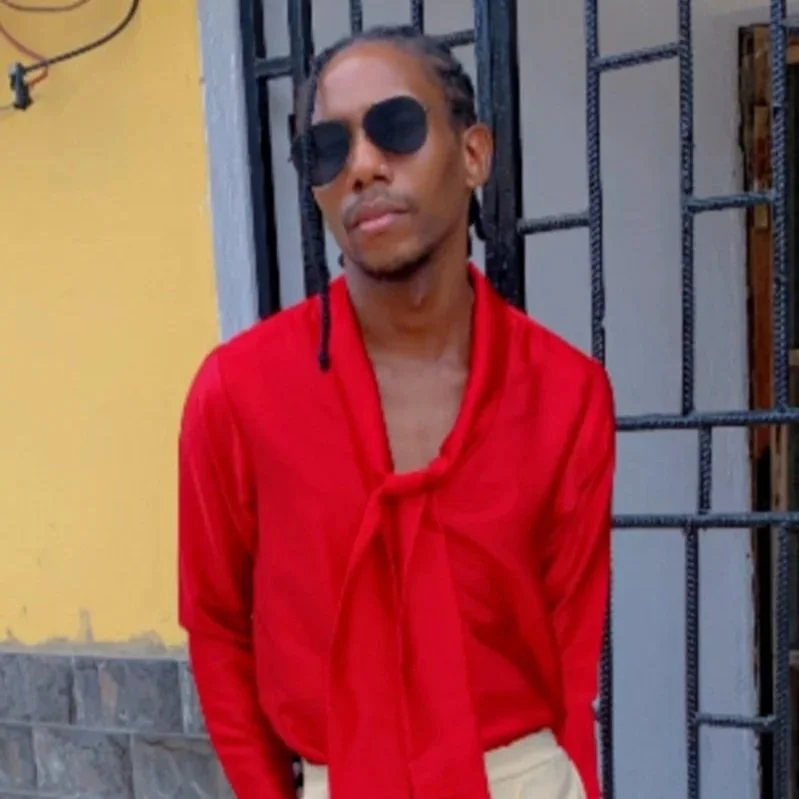
Jeffrey Ehijie is a non-binary Nigerian writer, journalist, and creative strategist whose work explores culture, identity, memory, sexuality, and social development. His short story, “The Shape of a Life After Tenderness,” was longlisted for the 2026 Afritondo Short Story Prize. His writing has appeared in The Kalahari Review, Minority Africa, Apogee Journal, and the Marked Anthology. He is a 2026 YouthRISE Media Fellow.