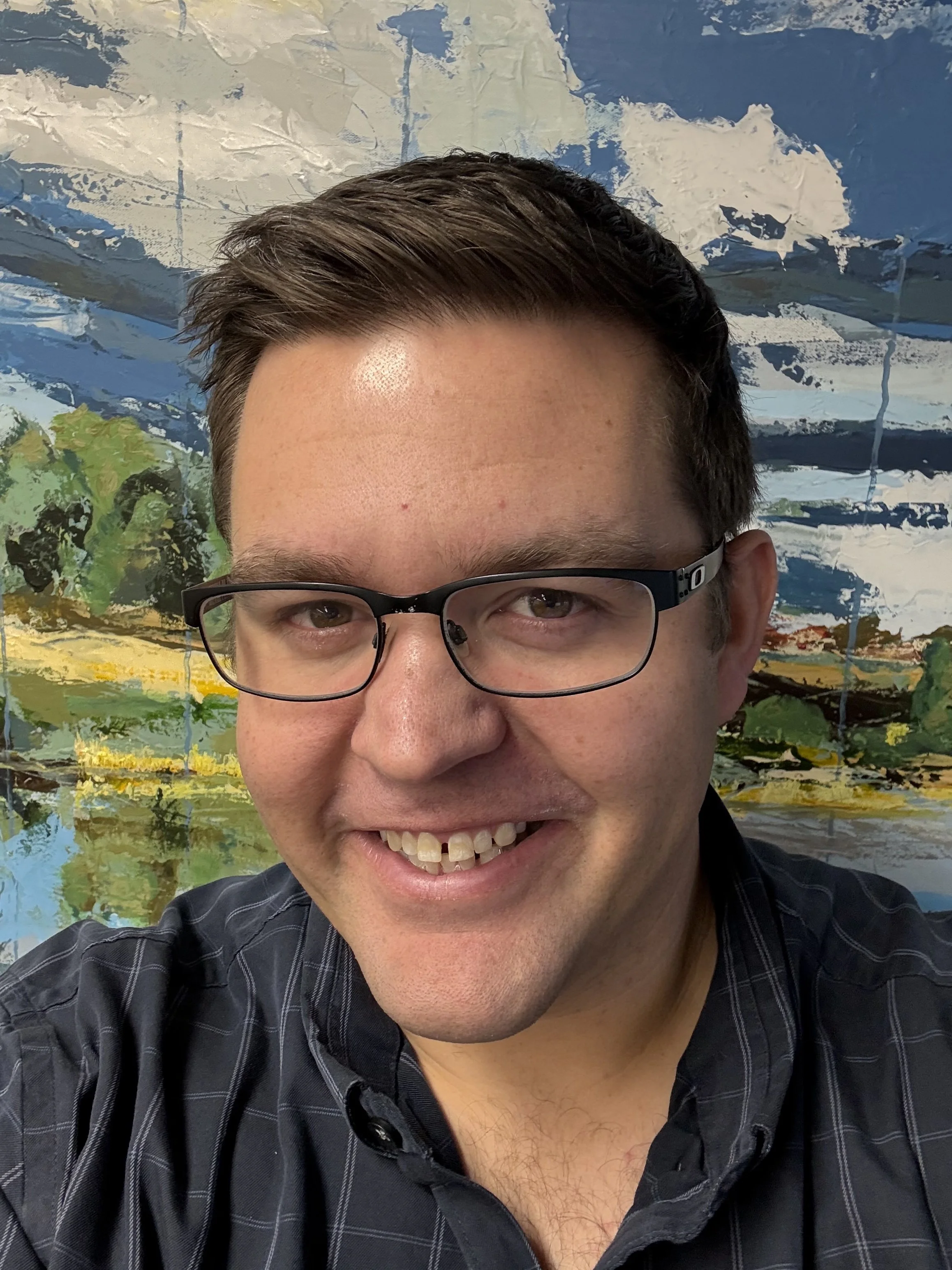
Cuyler Meade
ORP: What inspired you to begin writing or creating? Has that source of inspiration changed throughout your life?
Cuyler Meade: The experience of reading beautiful, powerful fiction is unique among life's many joys. The brain space reading words on a page or in your ears gives you to create your own reality alongside an author is an incomparable and invaluable means to deepen and enhance the human journey. I've always had big, deep feelings, and I've also always marveled at the possibilities of sharing and examining those feelings with other people the way authors do. Storytelling reveals truth—truth we cannot otherwise conceive of and truth we have always known but couldn't before express. To be a part of that process is an irresistible call for me.
ORP: Do you write or create with an audience in mind? If so, how do you consider the relationship between that audience and your work throughout your creative process?
CM: I don't have an audience in mind, really. I think one of the amazing things about writing is in most cases you can't know who will read your stories and what they will bring with them to mingle with your words. Certainly many of my stories draw on my experiences as a father and an insecure people pleaser, and if those stories speak to people with similar experiences that's lovely, but some of the best author-reader relationships are with people who are very different than us. Some of my favorite stories to read requires me to start outside and slowly, gently, allow the author to invite me inside. I enjoy that experience as a reader, and if I can give that to others in my writing, that's wonderful, too. If anything, I might assume of my readers that they are intelligent and thoughtful, and, perhaps, willing to think while they are reading. I think that's a fair assumption with literary short fiction especially, and so while I don't necessarily want to force my readers to work for their supper, I tend to assume a level of willingness and capacity to uncover meaning and significance beyond the words on the page.
ORP: What does success as a writer or artist mean to you?
CM: I would love to be able to write full time and sell my work to feed my family, mainly because it's the most fun thing I do and it would be so exhilarating to have that level of broad impact on readers all over the world. I know that's deeply unlikely but I won't let that stop me from dreaming! More realistically, I want my writing cause readers to experience something—anything, really—and to become through that experience somewhat more compassionate to themselves and to others.
ORP: Who do you consider to be your creative ancestors and contemporaries for your art and/or writing? How does your creative work converse with theirs?
CM: What a hard question! I'll list some influences among the greats, but I don't want to suggest I consider myself their descendants anymore than I am awed and inspired by their work. That would feel far too self-satisfied for me. But I'm inspired by George Saunders, Amy Hempel, Frederik Backman, Anthony Doerr, Raymond Carver, Tim O'Brien, Cormac McCarthy, Maria Semple and many many others. I am blessed to be friends with many incredible writers, and at the risk—no, certainty, really—of leaving some of my beloveds off, I'll hesitantly mention that Jaime Gill, Charlie Rogers, Michael Barbato-Dunn, Rachel Savage, Rio Lombana, and Indigo LaRue have particularly inspired me to try new things and explore new worlds. Contemporaries I'd love to one day call friends but for now I'm grateful to be acquainted with and watch with insatiable interest are Emily Rinkema and Matt Kendrick. My creative work converses with each more from halting embrace of that which they show me is possible than anything else.
ORP: Does writing or creating energize or exhaust you? What aspects of your artistic process would you consider the most challenging or rewarding?
CM: I think it's both! Shouldn't anything good do both? I adore the flow state that can sometimes come in the early stages of a storytelling process. It feels like magic is happening inside my brain. I struggle sometimes with the grind of the revision process though I know deeply how much it matters. This story went through both flow and grind, and it's better for it. Honestly, I love the part where you solicit early readers and edits because it forces friends to read your stories! This story benefited from many hard looks and tough decisions that couldn't have happened without good, talented friends.
ORP: Do you know more than one language? How does this influence your art and/or writing?
CM: I speak Spanish fluently as a second language and I do think it's helped me develop a different kind of love for any person who speaks another language. I've sometimes incorporated Spanish into stories out of affection, but more than anything I've always enjoyed the awareness of language itself that learning other languages grants.
ORP: What does vulnerability mean to you as an artist and/or writer?
CM: There are surely great stories that don't require the author to rip his or her heart out and smear it all over the page. The kinds I enjoy most are the other type though. I love feeling something with the author, and as an author I love feeling something with my readers. I believe storytelling is about telling the truth, and the truth is uncomfortable.
ORP: What would you say is your most interesting writing and/or artistic quirk? Do you have any habits that you believe help or hinder your creativity?
CM: I write a lot on my phone. It's slower but it gives me time slots that I can write that might not otherwise be able to. I'm extremely busy and have a ton of kids and often have to squeeze writing in within the margins. Honestly the fun of having a bursting idea while not being in the ideal space to record it is sometimes exhilarating. If anything hinders my creativity most it's that I get distracted too easily. It's hard to get into the nitty gritty sometimes!
ORP: What books have you read many times?
CM: I don't read very fast and I feel like there are so so so many books I want to read and so there aren't many books I come back to a second time. I did more when I was younger—I read Catch-22 several times in my teens, for example. But there are so many stories and I feel like I'll never read as much as I want so I usually move onto something new.
ORP: What is the most valuable piece of advice you’ve been given about writing or creating? What advice would you give to another writer or artist?
CM: My college creative writing professor, Catherine Rezza, taught me that something has to happen in the story. My friend Jaime Gill taught me that you don't get any points for being more mysterious than your readers can handle.
ORP: What do you hope readers (or your audience) will take away from your creative work?
CM: I hope they think and feel something. I hope they feel like they have a slightly better understanding of or interest in other people. I would love it if they learned something about themselves.
ORP: How does writing/art influence your worldview, and how does your worldview shape your writing/art?
CM: I feel like I understand people better because of stories I've read and written. I'm more curious and more empathetic. I feel like writing has allowed me to explore emotions or ideas in a kind of depth of consideration I couldn't otherwise.
My worldview is that every person matters. I'm deeply religious, and my faith is that every human being is a child of deity. Not a descendant, a child. One-to-one. I also believe there is no person so awful that they aren't redeemable, and no challenges so great that the person experiencing them isn't work weeping for and trying to help. Basically, everyone is striving for something, even the most selfish and harmful among us. I think in most cases that cruelty begets cruelty, and so most cruel people deserve compassion too. I believe the more we consider one another with compassion, the more we can treat one another as we deserve to be treated. That informs my writing because it means black and white good and evil stories are less interesting to me, because they are less true.