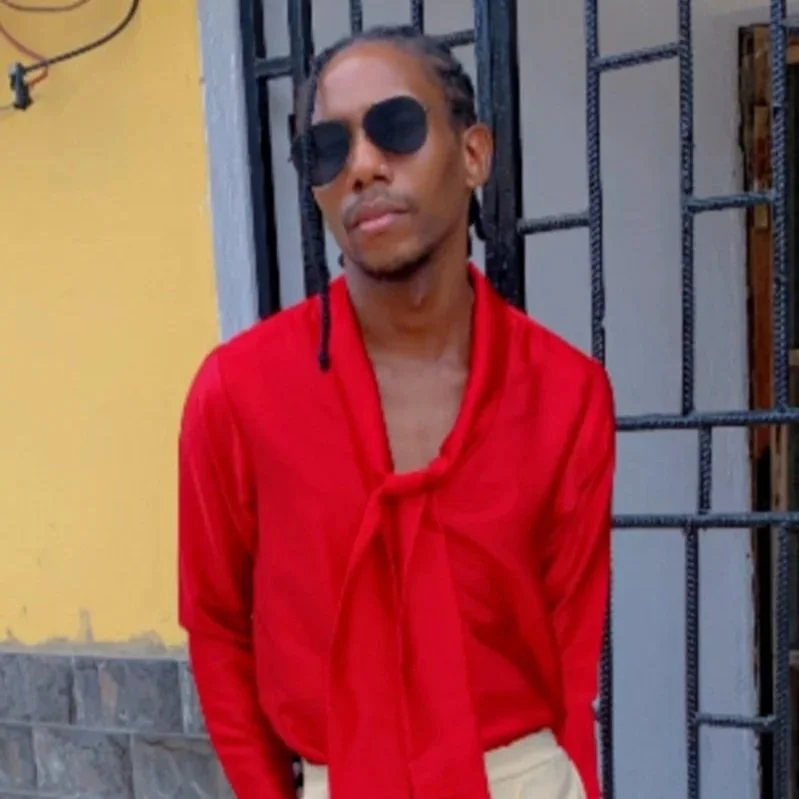
Jeffrey Ehijie
ORP: What inspired you to begin writing or creating? Has that source of inspiration changed throughout your life?
Jeffrey Ehijie: So many things have inspired me to begin writing, but at the heart of it is life itself and the art of living. I have always been drawn to the texture of human existence, the lived experiences, the highs and lows, the tenderness and difficulty, the things we survive, lose, desire, and become.
Writing, for me, began as a way of paying attention to life as it was happening around me and within me, and to documenting the very fabric of existence before those moments disappeared or became memory.
That source of inspiration hasn’t really changed, it has evolved with me. As I have grown older and experienced more of life, the questions I ask have become deeper, and so has the way I write about them. What once inspired me simply because it happened now inspires me because of what it reveals about people, relationships, culture, identity, memory, and the complicated art of being alive.
I think, ultimately, I write because life continues to give me reasons to look closer.
ORP: Do you write or create with an audience in mind? If so, how do you consider the relationship between that audience and your work throughout your creative process?
JE: I wouldn’t say I write with an audience in mind so much as I write with the community I represent in mind. Representation matters deeply to me, particularly in literature and art.
For much of my life, I grew up reading books and watching stories that rarely reflected the lived experiences of sexual minorities. That absence created a fragment in my understanding of myself and made it difficult to imagine that people like me could exist fully within the stories being told.
As I’ve grown older, I’ve had to work my way back through those absences, to find, create, and piece together the representations I needed but couldn’t find when I was younger. That experience has become an important part of why I write.
So, throughout my creative process, I think about the people who might see themselves in my work. I want my writing to create a space where someone who has felt invisible, misrepresented, or left out of the narrative can encounter something familiar and think: I am here. Someone understands this. My experience is worthy of being told.
ORP: What does success as a writer or artist mean to you?
JE: Success for me as a writer begins with successfully telling a story I believe in and bringing it to life in a way that feels honest and meaningful. Beyond that, success is having the privilege of finding readers who connect with, appreciate, and enjoy the stories I create. Knowing that something I wrote can move, resonate with, or stay with another person is what makes writing feel successful to me.
ORP: Who do you consider to be your creative ancestors and contemporaries for your art and/or writing? How does your creative work converse with theirs?
JE: I consider Buchi Emecheta one of my creative ancestors. Reading The Joys of Motherhood in secondary school introduced me to the power of African literature and its ability to illuminate the lives, struggles, and resilience of women. Richard Wright is another important ancestor; his memoir Black Boy showed me how personal experience can be transformed into powerful social and literary testimony. James Baldwin's work continues to shape my understanding of identity, belonging, love, and the courage required to tell difficult truths.
Among my contemporaries, I am particularly inspired by Eloghosa Osunde, whose debut novel Vagabonds! gave me confidence in my own voice and expanded my sense of what was possible in storytelling. I also look to Unoma Azuah, Khaled Hosseini, Akwaeke Emezi, and Ocean Vuong for their emotional depth, lyrical language, and commitment to exploring complex human experiences. Other writers whose work I deeply admire include Chimamanda Ngozi Adichie, Chukwuebuka Ibeh, Chike Frankie Edozien, and Ani Kayode Somtochukwu.
My creative work converses with theirs through its interest in identity, memory, gender, belonging, and the ways people navigate social expectations. Like many of these writers, I am drawn to stories that center marginalized lives and examine how personal experiences intersect with larger cultural and political realities. Their work has helped me understand that storytelling can be both an artistic practice and a way of bearing witness, and that understanding continues to guide my own writing.
ORP: Does writing or creating energize or exhaust you? What aspects of your artistic process would you consider the most challenging or rewarding?
JE: Writing energizes me. I feel most alive when I am writing, and there is a deep sense of joy in taking an idea and gradually bringing it to life on the page. For me, writing is both a creative and emotional practice, it helps me better understand myself and the world around me.
My artistic process often begins with sitting with an idea and allowing it to linger in my mind. I then engage with that idea through movement and dance, particularly to house, electronic, and Afro-house music. Dancing helps me think, connect with memory, and access emotions and insights that might not emerge through thinking alone. It creates a space where ideas can deepen and take shape before I begin writing. This process of discovery and connection is one of the most rewarding aspects of my creative practice.
The most challenging part of my artistic process is navigating practical and systemic obstacles, such as inconsistent electricity, limited internet access, and financial instability. These challenges can interrupt creative momentum and make it difficult to sustain a regular practice. Even so, I continue to return to writing because the act of creating remains a source of energy, purpose, and possibility for me.
ORP: What does vulnerability mean to you as an artist and/or writer?
JE: Vulnerability, to me, is honesty. It is the willingness to look inward, to confront what I discover about myself, and to share those discoveries with others. It requires openness to my strengths, joys and also to my uncertainties, fears, contradictions, and questions.
As a writer and artist, vulnerability means resisting the urge to hide behind perfection or certainty. It means trusting that the most personal truths can often create the deepest connections with others. Through vulnerability, I am able to write from a place of authenticity and invite readers into experiences that feel real, and emotionally resonant.
I see vulnerability as an act of courage and self-discovery. The more I engage honestly with myself, the more I can engage honestly with the world, and that honesty is at the heart of the creative work I strive to make.
ORP: What would you say is your most interesting writing and/or artistic quirk? Do you have any habits that you believe help or hinder your creativity?
JE: My most interesting writing quirk is dancing. Before or during the early stages of writing, I often dance to house, electronic, and Afro-house music. Movement helps me access ideas, emotions, and memories in a way that sitting still cannot. It allows me to think through a story physically as well as mentally, and often helps me discover connections that eventually find their way onto the page.
I consider this habit an important part of my creative process because it helps my creativity flow more freely. Dancing gives me energy, clears mental blocks, and creates space for reflection and imagination. Many of my ideas become clearer after I've spent time moving to music, making dance both a source of inspiration and a tool for creative problem-solving.
ORP: What books have you read many times?
JE: The books I return to most often are The Joys of Motherhood by Buchi Emecheta, Vagabonds! by Eloghosa Osunde, Purple Hibiscus by Chimamanda Ngozi Adichie, and Shakespeare's Macbeth.
ORP: What is the most valuable piece of advice you’ve been given about writing or creating? What advice would you give to another writer or artist?
JE: One of the most valuable pieces of advice I have received as a writer was to trust my voice more. I encountered this advice during one of Eloghosa Osunde's Instagram Q&A sessions, and it has stayed with me ever since. It reminded me that my perspective, experiences, and way of telling stories are valuable, and that confidence in my own voice is essential to creating meaningful work.
Another piece of guidance that has shaped my writing came from Ocean Vuong in an interview with Oprah. He spoke about approaching writing as a conversation with oneself. Although it was not offered as direct advice, the idea transformed how I think about writing and creativity. It taught me to engage with the page with curiosity rather than pressure, and to see writing as a process of discovery.
The advice I would give to another writer or artist is to remain open to learning from those who came before you. Listen carefully to the insights, instructions, and reflections of writers and artists whose work you admire. Their experiences often contain lessons that can help you navigate your own creative journey. At the same time, trust yourself enough to apply those lessons in ways that are authentic to your own voice and practice. Creativity grows through both learning and self-discovery.
ORP: How does writing/art influence your worldview, and how does your worldview shape your writing/art?
JE: Writing has profoundly influenced my worldview by helping me make sense of my experiences and heal from past wounds. Through writing, I am able to reflect on difficult moments, understand them more deeply, and transform them into something meaningful. It has also given me the courage to show up in the world as my authentic self, embracing my experiences, questions, and identity with greater honesty and confidence.
At the same time, my worldview is deeply shaped by my lived experiences, and those experiences naturally find their way into my creative work. The people I have encountered, the challenges I have faced, and the communities I belong to all influence the stories I am drawn to tell. As a result, my writing often explores themes of identity, belonging, memory, resilience, and self-discovery.
For me, writing and worldview exist in constant conversation. Writing helps me understand the world and my place within it, while my experiences and understanding of the world provide the foundation from which my stories emerge.