Metaphysical Bildungsroman: A Conversation with Susannah M. Smith
Carolyn Wilson-Scott
Susannah M. Smith’s third novel, The Alchemy of Paradise, is a hybrid Wunderkammer of a novel that traces the loss of a woman’s enchanted childhood, first through the sudden death of her father, and then through her mother’s subsequent withdrawal from an active role in her life. It’s a story that unfolds across a variety of narrative modes: aching lines of questioning, ardently-rendered description, lists that just might be poems, and quotations ranging from Emily Dickinson to Gray Gardens. The effect is beguiling, challenging, and spiritually expansive.
In the conversation that follows, Smith lets us in on what went into its making.

The Conversation
Carolyn Wilson-Scott: Susannah, I’m hoping that we can begin the interview with you describing The Alchemy of Paradise for readers not yet familiar with it.
Susannah M. Smith: The Alchemy of Paradise is a companion book to my last novel, The Fairy Tale Museum, and tells the story of an eccentric family and how they each create meaning through art, curation, and creative practice. It’s told through the perspective of the narrator, who is the daughter in the family, and it charts her progress of dealing with loss through the lenses of art, philosophy and mysticism, using alchemy as a structural framework.
As I wrote the book, I was thinking of it as a sort of metaphysical bildungsroman where texts, ideas, and images could layer upon one another, charting the narrator’s spiritual journey through these aesthetic lenses.
CWS: I’m glad you brought up the narrator, because her perspective was one of the aspects of the novel that fascinated me. She’s never named, and yet her mental and emotional states of being come across so convincingly. Could you talk a bit about how you achieved this?
SMS: I think there’s a type of magic that can happen with a first person narrator, which really allows access for the reader to identify with the voice, walk along with it, and sense through that perspective. At the beginning of the novel, when the narrator remembers using a magnifying glass in her childhood, investigating plants and different objects – it’s this kind of sensibility that’s part of her personality, to be curious about the material world.
I brought The Poetics of Space into the book at a few different points, and I think the phenomenological methodology that Bachelard uses — the idea of honoring our subjective experience of being in the physical world and interacting with it — permeated into the narrative perspective.
In a way, it’s a hard question to answer, but I really think it’s that first person noticing — the authenticity and immediacy of lived personal experience and how paying attention like this can connect us to life in a more vivid way. And this invites the reader to do the same.
CWS: In addition to the important role the physical world plays for the narrator, she is also a wide-ranging reader. In the wake of the loss in her immediate family, she spends a great deal of time in her grandmother’s library, taking in esoteric texts that include The Tibetan Book of Living and Dying and writings on alchemy. How do you see this material working in TAOP?
SMS: What interests me about texts like these is their underlying theme of transformation — that something — a substance, a human body — can pass through darkness, dissolution and apparent destruction and emerge as something else. That seemed deeply connected to the experience of grief and also to the narrator's own development.
The narrator is grappling with loss and death and trying to understand them. I think she is drawn to these traditions partly because they refuse to accept that the visible, material world is all there is. They allow her to experiment with different ways of understanding what has happened to her and what the world might actually be.
I think it’s common, when we come up against mysterious or impossible-to-process aspects of life, to fall back on some of these systems of thought or philosophies that have stood the test of time. They’ve gone through centuries of cultural use, and we think, well, maybe this can help me; maybe this is a way to decode my experience. Maybe it holds some keys to not only coping, but maybe even thriving.
CWS: Hearing you say “thriving” reminds me of the novel’s title: The Alchemy of Paradise. These ancient writings feel like they provide a way for the narrator to alchemize her grief — to turn that pain into something new.
SMS: Yes, I think that’s what’s so powerful about some of these systems: they have this rich symbolic depth embedded into them that we resonate with and that in some way helps our psychology. It’s like the system can say, “Oh, you’re dealing with death or entropy of some sort? Here’s an architecture to hold that and it’s been around for centuries.”
CWS: Another key aspect of the book is its non-traditional structure. It’s put together almost like a collage, in the way it brings together many different modes of writing, including prose poetry and even passages from your previous novels, as well as references to artists and thinkers from outside of the novel. Can you talk about the role this type of material plays in your creative process?
SMS: This collage-like approach to storytelling is a throughline across my three books. It’s been a really central way that I create, from the early days since I was a kid, when I would interact with books and scraps of paper and pull things together in one place, typically a journal.
I’m primarily a novelist right now; however, I’m aware that my novels are these compositions that include other genres. I love the fluidity and flexibility that the novel as a form allows, and I want to stretch it to fit my purposes. I also appreciate a good story. So I want to make sure there’s a balance between having a story in there that people can sink their teeth into and stay afloat on, while having these other elements that are compelling for me as a writer. I like the feeling that a book can be porous — that other voices, artworks, ideas, and even my previous work can enter it and alter the way readers experience it.
When I’m reading, I seek these types of hybrid genre books because I find them creatively inspiring. I like when I can’t quite get it, and I want to go back and sit with that. Those are the books that are going to stay on my shelf for longer, books that I keep and return to, almost like talismans. They have these different voices or thinkers layered in, that I then get curious about and I want to go read their work, and then that leads me down another rabbit hole. It’s this richness and depth of material that pulls me into greater investigation.
CWS: You’ve published all three of your books with independent presses. You might not be surprised that we at ORP are super interested to hear about this, and whether you have any tips and tricks for readers who might want to pursue indie publishing themselves…
SMS: I feel like this is such an individual path for everyone, but I'm happy to share my experience. I initially studied literature at university along with a scattering of creative writing classes and a year of visual arts. I did the traditional thing of getting bits of poetry, short fiction, and some visual art published in journals and at the suggestion of an aunt, applied for and was accepted to a five-week residential writing studio program at the Banff Center for the Arts, where I worked on my first novel, How the Blessed Live. This was pivotal in helping me to feel more legitimate as a writer and I remember the ID card had a little photo of me with the word "Artist" and that felt super affirming.
Soon after that, I moved to Toronto and got a job in an independent bookstore. I worked there with a handful of other aspiring and emerging writers, and it was there that I met Alana Wilcox, who went on to be the editor at Coach House Books and offered to publish How the Blessed Live. I had a wonderful first experience being published by Coach House. They have such a legacy of accomplished authors they’ve worked with over the years, and I got to see the first copies of my book come off the press, which was a great moment.
Working with Invisible Books on my last two novels has been an amazing experience. I’ve really valued the collaboration and opportunity to be so involved in the process. The team is incredibly supportive, and I’m very grateful to be part of that community.
If I had to give any sort of advice, I think it’s about committing to your path and seeking out environments where you’re rubbing shoulders with people who have similar interests, and then a lot of things can flow from that. I didn’t have a master plan; it was really a follow-the-crumbs situation and trusting that I was going in the right direction.
CWS: I’d like to close by emphasizing how much TAOP is a celebration of life, even as it’s dealing with death, and how beautifully these two strands come together in the book’s moments of metaphysical insight. I wonder if you could leave us with a story about how some of this insight came to be.
SMS: When I was writing the book I wanted to fully let myself go into spirituality. And I also wanted to write about death, because I feel these are two areas that get sidelined a lot in our culture.
After I’d been working on the book for about three years, I took a workshop with Sheila Heti, called What Do People See When They Read You? It was fantastic — she shared a lot about her own creative practice and processes, and was very generous.
But I was concerned because this was the month before [Heti’s book] Pure Colour was being published, and I realized there were some similarities between what I thought her book was and what mine was. So I messaged her, and she sent me the most wonderful response, which I’m going to read:
I know this same fear that you’re expressing, and I had it too, when I was writing Motherhood. Everyone thinks their book is being written by someone else, but it’s never the case. It’s just something crazy that happens to the writer’s mind. Some combination of fear and narcissism, and I guess, the fact that we all occupy the same earth together at the same time. So why wouldn’t someone else be writing our book?
And it calmed me down. It made me think, okay, okay, I can keep writing this book. In some way, it gave me permission to continue to explore these themes that I was really feeling strongly compelled toward.
CWS: That’s wonderful. Like you said, so generous.
SMS: It really was. Her response meant a lot to me.
CWS: I realized that I do have one final question. Can you tell us if you’re working on anything new?
SMS: I do have a story kind of percolating in the background. I’ve been taking notes toward a manuscript and am aware of a few ideas and themes, but I’m giving it a bit of space right now. Something’s bubbling away, and I’m not sure exactly what form it will take. I want it to be an exploration for me as both a reader and a writer, so I’m staying open to that and listening for the pull.
Bio
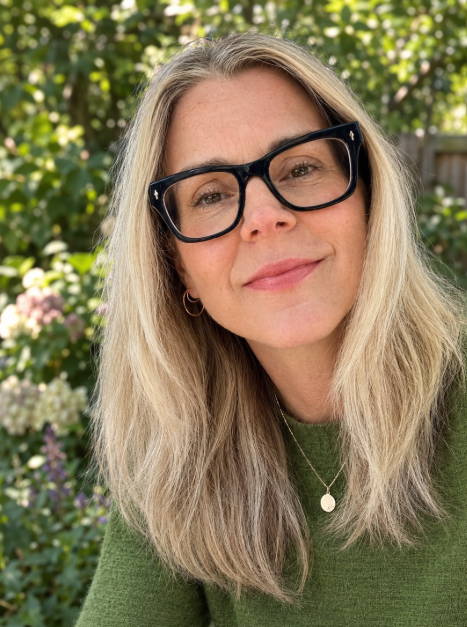
Susannah M. Smith is the author of the novels The Alchemy of Paradise, The Fairy Tale Museum, and How the Blessed Live. Her short fiction, poetry, and visual art have appeared in print and online publications.
She is an alumna of the Banff Centre Writing Studio program and has received grants from the Canada Council for the Arts, the Ontario Arts Council, the City of Ottawa, and the Toronto Arts Council.
Her interdisciplinary creative practice spans writing and visual art, and she lives in Vancouver, Canada, where she works as a textile librarian and archivist.
Find her on Instagram @susannah_m_smith