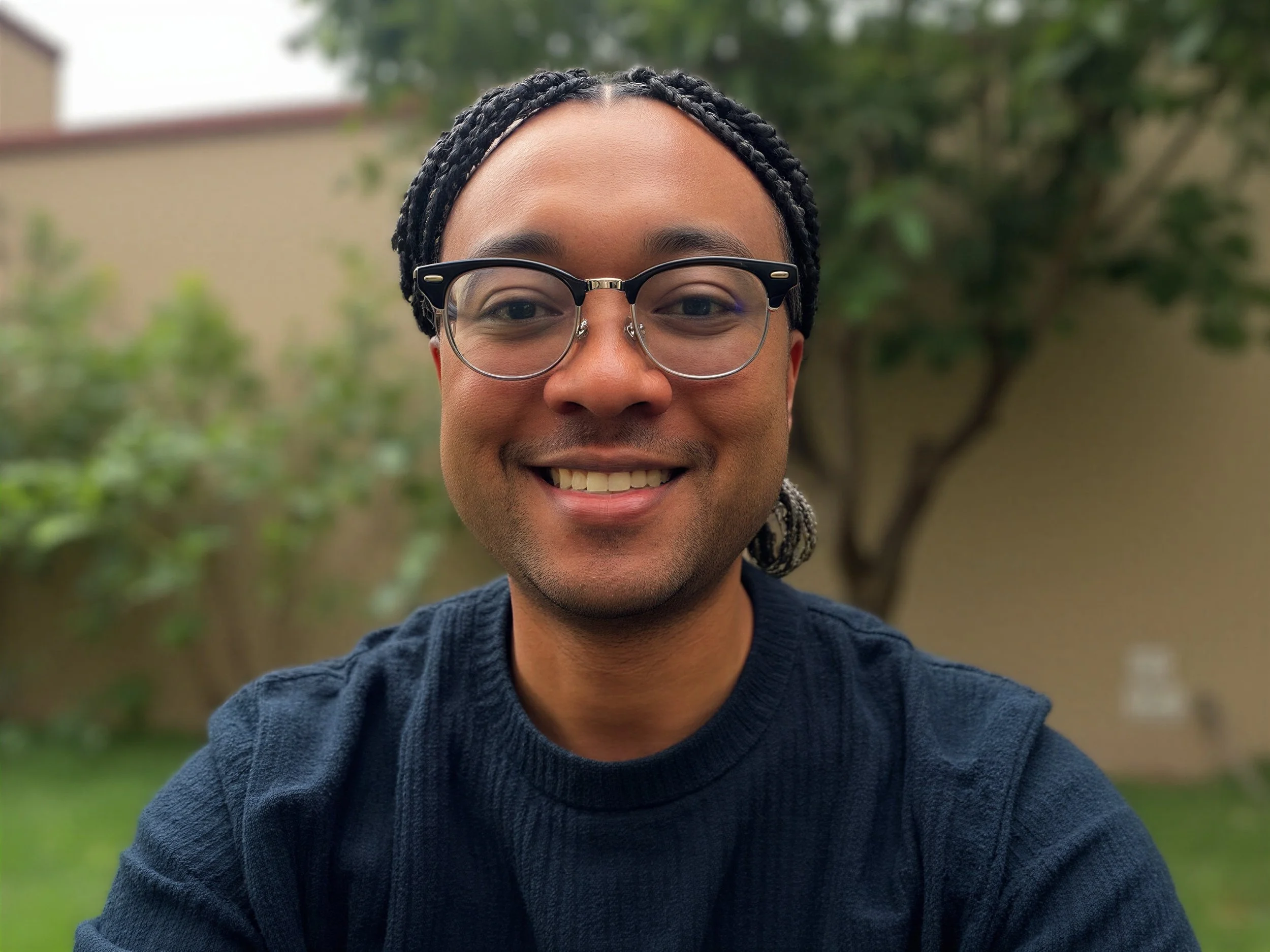
Reimagining Revolution: A Conversation with Paula Lehman-Ewing
jASON mASINO
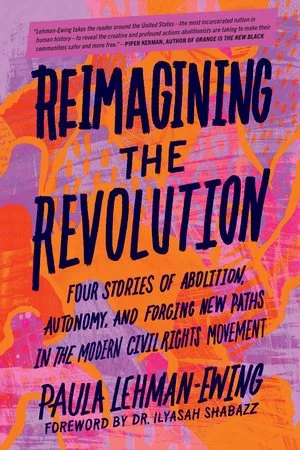
In Reimagining the Revolution, Paula Lehman-Ewing asks us to reconsider how communities, justice, and economies might look if we truly centered liberation. Drawing from the voices of incarcerated activists, organizers, and community leaders, Paula weaves a narrative that is both urgent and hopeful.
I met Paula at a writing workshop in Hawai‘i, where we quickly bonded over our shared commitment to justice-centered work. Over the years, that shared commitment evolved into an ongoing friendship rooted in both creativity and community work.
About Paula Lehman-Ewing

Paula Lehman-Ewing
Paula is an award-winning journalist and social documentarian whose work examines power, institutions, and the stories that shape public life. She has penned thousands of articles for major outlets, including BusinessWeek, Reuters, Forbes, and Fortune. In 2020, she relaunched the defunct newspaper for All of Us or None, a nationwide grassroots organization advocating for the restoration of rights for currently and formerly incarcerated individuals. Her work earned her the 2021 Silver Heart Award from the Society of Professional Journalists. Today, the All of Us or None newspaper reaches every prison in California and more than 160 yards across the country. Paula is also a volunteer mentor for PEN America, connecting incarcerated writers with outside professionals.
I read drafts of Paula’s book as it came together, but reading the finished book felt different. It activated me in ways I had not expected, and I know readers will feel the same. Naturally, I had plenty of questions for Paula.
The Conversation
Q: Early in the book, you describe “systems of oppression” and their origins. If you had to give a quick, big-picture summary of the so-called “race problem” from Bacon’s Rebellion to today, how would you concisely frame it?
The “race problem” isn’t about racial animus alone; it’s about how institutions repeatedly use race to stabilize economic and political hierarchies when they’re under threat. Bacon’s Rebellion is a story about caste, about how naturally poor whites and enslaved Africans could unite against elite landowners. In response, the latter group deliberately weaponized skin tone, something far less significant than economic status but also far more obvious, to fracture that coalition. Blackness was criminalized not because of inherent difference, but because division was useful. That basic architecture never disappeared. It evolved—from slave codes to Jim Crow, from redlining to mass incarceration, from “law and order” politics to predictive policing.
Q: In Chapter 3, Reimagining Communities, you write about Ivan Kilgore, who founded the United Black Family Scholarship Foundation and later launched REBUILD (Reinvest in Every Black and Underserved Institution to Liberate and Diversify). Could you share more about Ivan, this project, and how REBUILD is progressing?
Ivan Kilgore is someone who thinks structurally but acts locally—which is crazy when you think about his structure and locality: prison. From a maximum security cell in 2013, he began grappling with a question that sits at the heart of the book: why do so many “revitalization” efforts rebuild places without rebuilding opportunities for the people who live there? In answering that for himself, he created the United Black Family Scholarship Foundation as a vehicle for intervention before incarceration.
REBUILD is a big part of that intervention. Drawing on Ivan’s own experience as a construction foreman in Oakland—where he helped “revitalize” a downtown he ultimately couldn’t afford to live in—the program centers housing rehabilitation, trade-skills training, and community-controlled development in areas with high incarceration rates and large numbers of neglected properties. Interns and volunteers use housing and incarceration data to identify pilot neighborhoods, while residents are trained in skills like carpentry and plumbing so they are not just beneficiaries of development, but its architects.
Progress has been uneven, as it often is when you’re challenging systems that are designed to extract rather than reinvest. But the framework itself—circulating capital within communities rather than bleeding it outward—has only grown more relevant. As such, the most progress has been made in terms of the outside institutions collaborating with UBFSF and REBUILD. Last I checked, there are at least six educational institutions that are training and volunteering interns from their student bodies.
Q: In that same chapter, you include a poignant moment about Ivan’s daughter, who had distanced herself from him despite his efforts to offer long-term guidance. It highlights how resilience and wisdom from incarcerated people are often dismissed. How do you see this tension playing out more broadly?
That moment captures a quiet but pervasive tragedy. Incarceration doesn’t just remove people physically; it devalues their knowledge, authority, and lived expertise. We absorb the idea—often unconsciously—that someone who has been incarcerated has nothing to teach us about discipline, foresight, or leadership. Families internalize this too, especially children who are pressured to “move on” rather than integrate that wisdom. On a broader level, we see this when policies are made about incarcerated people without them, or when reentry programs ignore the strategic thinking people developed just to survive inside. We talk a lot about resilience, but we rarely trust it when it comes from prison.
Q: On page 63, in Reimagining Justice, you discuss how a town’s prison presence can actually harm its image and economy. Has anyone ever tried to leverage that argument, closing prisons as a way to boost local economies?
A number of abolitionist and community-based campaigns in California have explicitly challenged the idea that prisons are economic engines for rural towns. Groups like Critical Resistance, which is profiled in that chapter, along with broader coalitions advocating to close ten state prisons by 2025, point out that historically those facilities did not deliver stable, shared prosperity to their host communities—instead, they redirected public funds into corrections budgets at the expense of health care, education, housing, and other local needs. According to materials circulated by these coalitions at town halls and policy meetings, prisons in California often “worsened” local economies because resources that could have supported labor and social infrastructure were consumed by the prison system rather than circulating in community businesses and services. In this view, closure and reinvestment become not only a justice strategy but a development strategy—shifting money away from incarceration and into community-defined priorities.
Q: In Chapter 4, you explore Oakland’s 2010 gang injunctions. Reading it, I could not help but think of the current ICE roundups under today’s administration. Do you see parallels?
Absolutely. Both rely on the same logic: preemptive punishment based on association rather than action. Gang injunctions allowed entire neighborhoods—overwhelmingly black and brown—to be treated as criminal zones, where ordinary behavior became suspicious by default. ICE roundups operate similarly, collapsing identity into presumed guilt. In both cases, due process is weakened, surveillance expands, and communities are destabilized in the name of “safety.” What’s striking is how familiar the language is—prevention, threat reduction, public order—even as the targets shift. The mechanism remains the same.
Q: Chapter 5, Reimagining Capitalism, was one of my favorites. You include this forward-looking quote: “I cannot look at what happened 100 years ago, because my job now is to look forward: to help people like me, who look like me, who have the same hunger, drive, and that determination I have, to reach their goals and dreams in America” (p. 85). How do you respond to this vision of looking forward while still honoring historical lessons?
I don’t see those as opposing impulses. History isn’t a weight we carry; it’s a map. Ignoring it means repeating patterns we don’t understand. But staying frozen in it can also limit imagination. The quote you reference reflects a pragmatic orientation—how do we build pathways now, using the tools available, while being clear-eyed about why those tools were denied in the first place? Capital, when controlled by communities rather than extracted from them, can be a form of self-determination. The danger isn’t looking forward; it’s doing so without structural memory.
Q: In Chapter 6, Reimagining Infrastructure, you profile Heshima Denham and his work creating Community Safe Zones (CSZs). What is happening with that now?
What’s important to understand is that Community Safe Zones were never meant to stand alone—they’re one element of a broader effort called the Autonomous Infrastructure Mission, or AIM, which focuses on building parallel systems of safety, care, and accountability outside of traditional law enforcement.
After the police in Grand Rapids effectively dismantled the first CSZ, the work didn’t stop—it shifted. Bri Hawkins, who is profiled in the book and is now Heshima Denham’s wife, has been leading the rebuilding of CSZ with a much clearer understanding of the risks that visibility can bring. As a result, progress is being kept deliberately in-house. That’s not a retreat; it’s a strategic response to state suppression. In movements like this, survival often depends on knowing when not to narrate every step publicly.
At the same time, AIM’s reach has quietly expanded. Shortly after the book was released, organizer Adam Brashere shared that the Autonomous Infrastructure Mission saw an immediate 70 percent increase in membership. New chapters are now taking root in Louisville, Kentucky; Columbus, Georgia; and Stockton, California. What that tells me is that while CSZ may be less visible in the media right now, the underlying infrastructure—and the appetite for community-led alternatives to policing—is growing. The work is continuing, just not on the timeline or in the format that outside observers are used to seeing.
Q: Your book closes with practical steps for people at different stages of readiness. For those who feel ready to jump in, those who are hesitant but curious, and those who are nervous or afraid, what advice would you give to help them get started?
For those ready to jump in: pick one lane and commit. Depth matters more than breadth.
For those who are curious but hesitant: start by listening—especially to people whose experiences challenge your assumptions. Curiosity is already a form of participation.
And for those who are nervous or afraid: begin where you have the most agency. That might be in how you vote, how you talk to your family, or how you show up at work. Fear often comes from feeling overwhelmed. Small, deliberate steps build confidence—and momentum follows.
Closing
Reimagining the Revolution is available now from North Atlantic Books. Paula Lehman-Ewing’s work continues to spark critical conversations about abolition, liberation, and the communities we can build when we imagine otherwise. At a time when so many communities are being asked to survive systems that were never built for them, this book feels more necessary than ever.