Cart 0

 the stories

Text coming soon

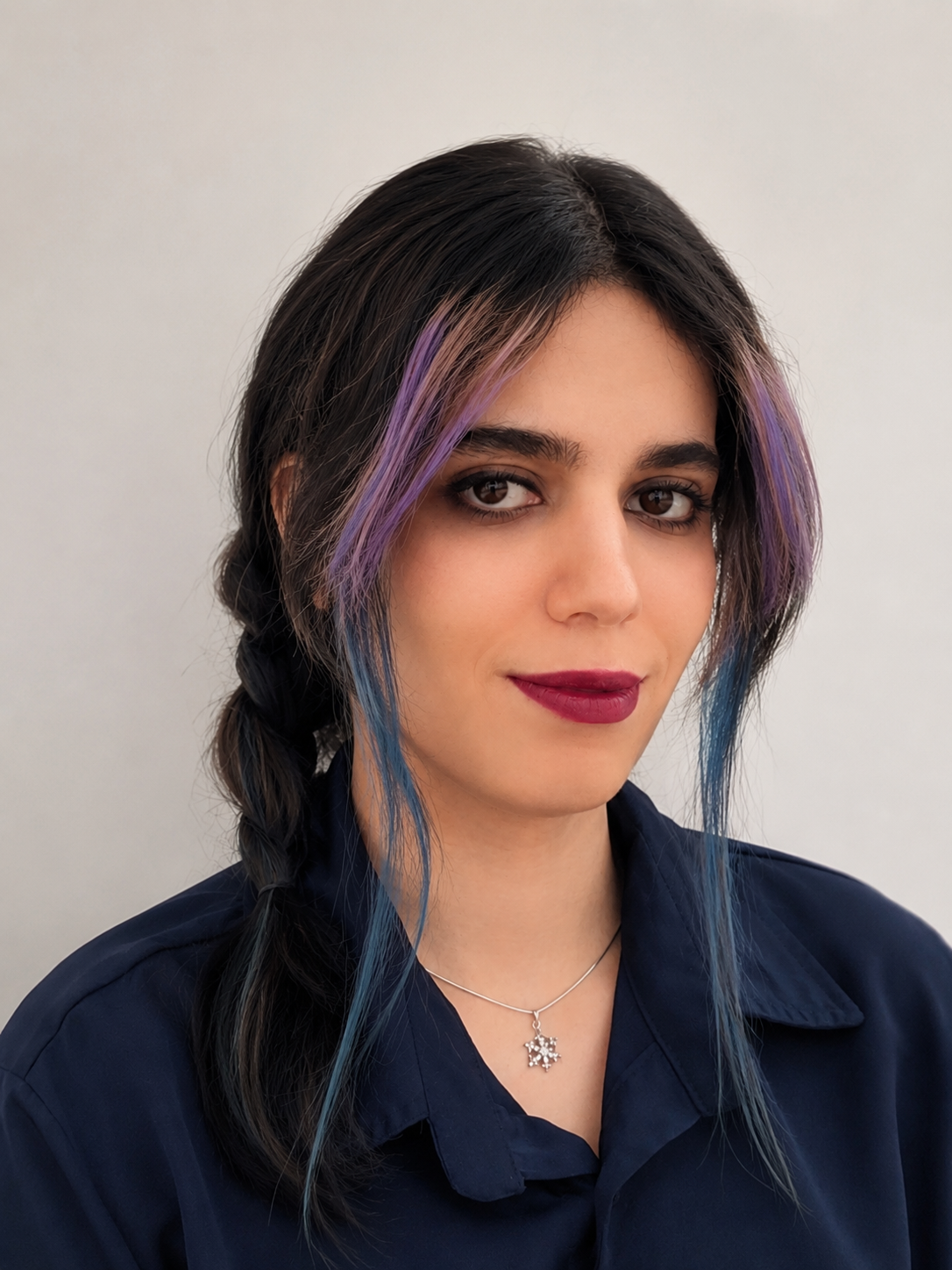
— Alaa El Fadel
Editor, Emerging Voices in Fiction

Depending on which dictionary you use, reading is defined differently. My favourite is: ‘Reading is the cognitive process of looking at written or printed symbols and understanding their meaning.’ (Study.com)

In this submission cycle, I have had the pleasure of looking at written work and deciphering its core meaning; indulging in the various worlds and metaphors presented. Every year, I am impressed with the work sent to us, with the creativity behind the telling of each story. I have enjoyed peeling back each layer to discover what lies within. Maya Angelou wisely said, ‘there is no greater agony than bearing an untold story inside you.’ I wholeheartedly agree. It was an honour reading the submissions and being a part of each storyteller’s journey.

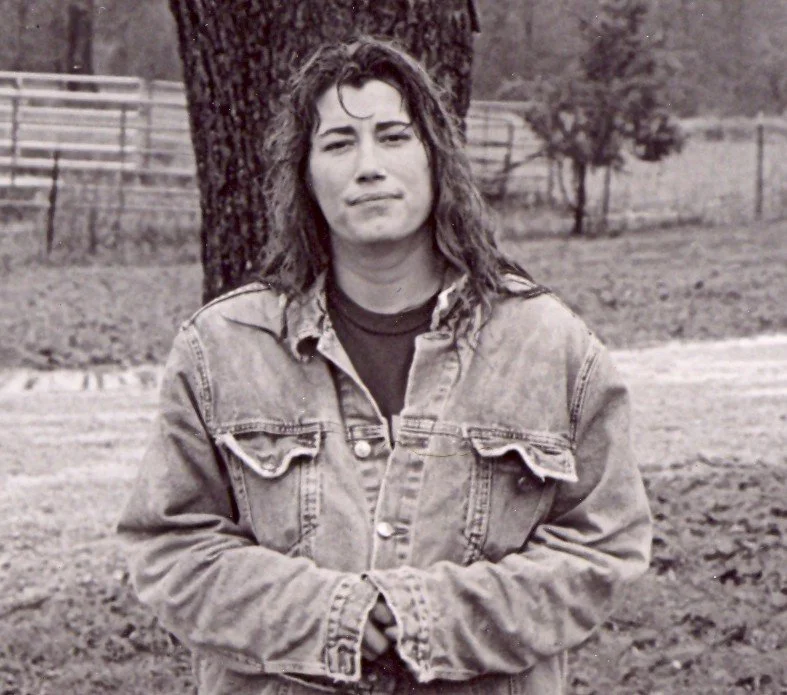
— Michelle Tanmizi
Reader, Emerging Voices in Fiction

Text coming soon

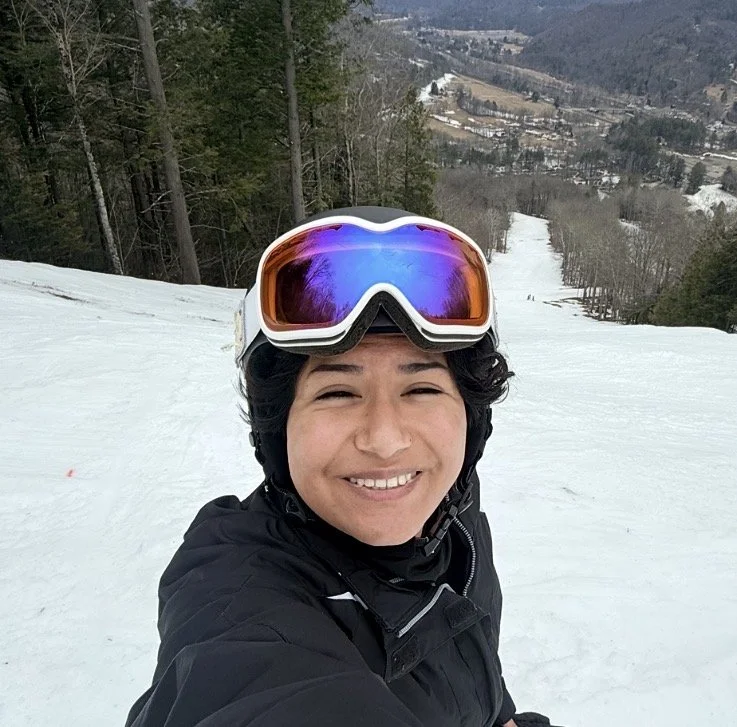
— Passant Eltarek
Associate Fiction Editor

Text coming soon

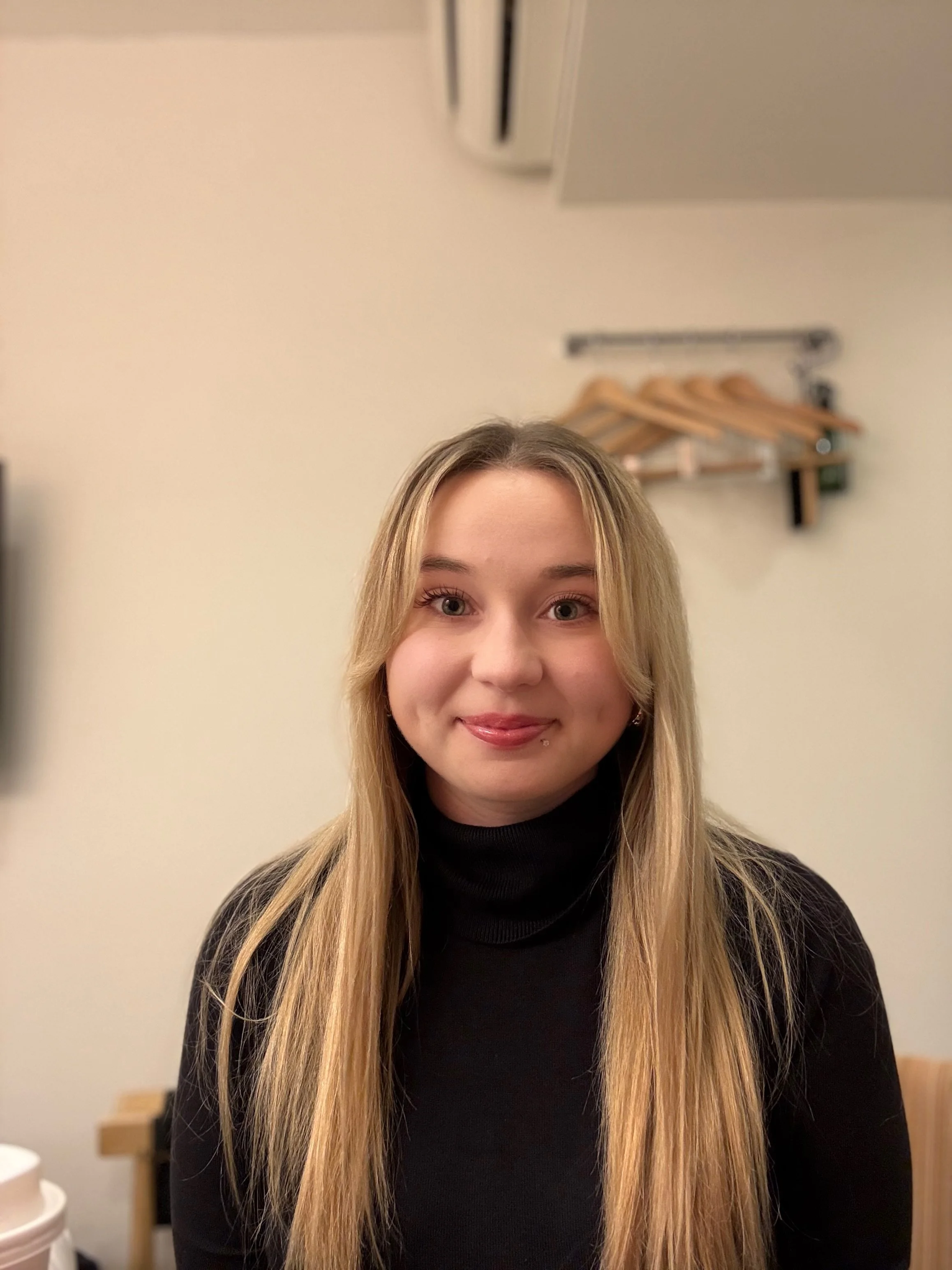
— Nidhi Arora
Fiction Editor


Image by freestocks-photos from pixabay.com

the creep

Sharon SY Lee

Bill’s face looks perpetually sunburned. His sagging cheeks are kissed with rosacea and a map’s worth of spider veins. His face turns redder at the sight of the pretty girl who walks towards the curb. He scrapes his thinning hair into place and flips down the sun visor to check his yellowing teeth for any traces of lunch. 

I approve of and thank you for all of the punctuation and grammar edits throughout this story.


The Creep

Sharon SY Lee


The Creep (excerpt)
Sharon SY Lee
 

Bill’s face looks perpetually sunburned. His sagging cheeks are kissed with rosacea and a map’s worth of spider veins. His face turns redder at the sight of the pretty girl who walks towards the curb. He scrapes his thinning hair into place and flips down the sun visor to check his yellowing teeth for any traces of lunch. 

His car is old and reliable, just like him. Bill pulls up to the curb where his rideshare passenger stands waiting with one hand on her hip. He is prepared to explain that there’s no use in trying to sit in the backseat; the door is broken, but the girl–fresh-faced, maybe in her early twenties–slips into the passenger side without a single glance his way. She adjusts her skirt, which has ridden up a little, and Bill marvels at her exposed thighs, which are thick and brown and muscled, like a pony’s. She smells of clean linen–a nice smell, unlike some of his other passengers, who douse themselves in cologne or perfume.

“I’m Bill,” he says, smiling and trying to catch her eye, which is hunting for her seatbelt instead of fixed on him. It annoys Bill mightily when riders do not bother to look him in the eye, when they treat him like a chauffeur. Such a muted beginning usually means that the ride will be silent the whole way. This passenger might as well have requested one of those self-driving cars instead. 

He tries again. He will be acknowledged today. “I’m Bill.”

She is turned away from him, facing the window, but he catches the glint of white earbuds nestled in her dark hair. It dawns on Bill that the girl is on the phone. Some passengers have forgotten how to act around real, live people. Bill believes that at their core, people still crave the human touch. They want to see a friendly face; they want to engage in light chitchat. His wife, Helena, sometimes shakes her head at him and chides him for talking too much. Passengers have described him as “nice,” “friendly,” and “pleasant” in their anonymous feedback. People don’t really want to be picked up in an empty, self-driving car. Bill thinks it’s spooky to witness a driverless vehicle pull up to the curb. Like ordering a ghost to drive you around. Nevertheless, he knows that evidence points to the contrary: human-manned rideshare vehicles are being phased out all over the country. Someday soon, his job will be obsolete. 

The passenger continues her phone conversation, oblivious to Bill. “Can you believe it?” she says, then kicks off her sandals. Bill has big, bug eyes that give him a perpetually surprised look, but now his big, bug eyes narrow as he turns back to the steering wheel. The girl doesn’t even bother to apologize for her rudeness. She laughs towards her window. Her laugh is all wrong: raspy and low, as though she has been sucking on cigarettes for a long time. Someone who looks like her should have a sweet and gentle laugh. He’s encountered other girls who have sweet and gentle voices that rise barely above a whisper. For example, the pharmacy technician, Sarah, at the local drugstore where he picks up Helena’s medications. Sarah, with her long black hair, is the epitome of feminine grace. She used to avert her eyes demurely when asking for his first and last name and date of birth. He always joked with her about his age, how the years had crept up on him and accumulated without notice until he suddenly found himself old. He used to chitchat with Sarah, used to ask Sarah how things were going, how was her workload, how was her little girl. Sometimes, he asked a few more friendly questions, asked if she wanted to grab a coffee during her break, but if a line started to form behind him, he knew that he should let her get back to work. She had other customers to take care of. He used to think that she was kind and accommodating, that she came from a culture that respected its elders. Of course, this was before she had turned on him and had security escort him out of the drugstore.  Apparently, Sarah had felt uncomfortable in his presence. Uncomfortable! All Bill ever tries to do is make others around him feel seen and heard.

The girl lets out a long exhalation. Her chest looks firm, as though it can bounce back against any pressure. She says her goodbyes and sets her phone in her lap, right where the skirt hem ends and her thighs begin. Bill needs to increase his driver rating, which is hovering dangerously low at seven points, the minimum acceptable rating on the app’s 10-point scale. The app has already sent him several warnings, each more stern than the last. One more bad rating and his account will be suspended, and then what will he do with himself?

When Bill is nervous, he resorts to his old one-liners. “I’m Bill.” He pauses for effect. “As in, dollar bill.” He waits for her to smile, to chuckle, to join him in this shared moment. Instead, she stares at him blankly, so he laughs a little at his own joke.

“What did you say?” Her speaking voice is also raspy.

“Bill, like a hundred-dollar bill.” 

She smirks. “Who uses cash anymore?”

“Beg your pardon?”

She picks up her cellphone and waves it at him in mid-air. “There’s no need to use cash when you have a phone.” 

For Bill, the slow creep of time expands suddenly and turns into a chasm big enough to fall into. “When I was your age, we didn’t have cell phones.” 

“How did you talk to each other back then?”

“We had phones. They were just attached to the wall with a cord.” His own phone is mounted on the dashboard. The rideshare app shows the location of his car, which is still parked next to the curb. Sometimes he misses the simplicity of landlines. Bill rarely uses the apps that are downloaded onto his cell phone. They make him feel frustrated and angry, especially that mail pharmacy app. How bewildered Bill had felt when Sarah’s supervisor had downloaded the mail pharmacy app onto his phone for him. “It’s more convenient than coming in every week,” she had told him.

He reaches for the glove compartment. His upper torso hovers over the girl’s thighs as he takes out a tin. “Have some peppermints,” he says, unfastening the lid for her. 

She shakes her head.

“Just one?” he asks.

“I’m trying to eat clean.”

“They’re individually wrapped.”

“No, I mean I’m staying away from high-fructose corn syrup.”

“You’re thin. You look healthy.” 

“Shouldn’t we get going?”

“Come on, live a little! I insist!”

“Fine.” Instead of taking one, she grabs a handful of peppermints.

“Leave some for the other passengers,” he jokes, then quickly puts away the tin, lest she help herself to more. The peppermints were filched from Dr. Amiryan’s office last month. He himself hates peppermint candy, but that hadn’t stopped him from pouring the entire content of the receptionist’s candy bowl into Helena’s purse. Helena had hissed at him to put the peppermints back, but he had snapped back that her neurologist was too damn busy to chase them down for taking a bowl of candy. It had been his small act of defiance.

The girl pops one of the ill-gotten peppermints into her mouth and sucks vigorously with her rosebud mouth. “Can we get going now?” 

“Yes, ma’am.” One anonymous passenger wrote that Bill was “too chatty.” He disagrees, but he can understand that some people are just in a hurry to get where they want to go. Chatting is just how he endears himself to other people, women in particular. Bill starts up the car and pulls away from the curb and onto the street. Sometimes Helena complains in private that he doesn’t need to charm every woman he encounters. When this happens, Bill always reassures her of his love. He chides her not to be so insecure.

“So, do you use this app often?” he asks. 

“Sometimes.” 

“You have to be careful nowadays. Lots of scammers out there, lots of unscrupulous men. How old are you?”

“Why do you want to know?”

“You look young.”

“How old are you?”

He is still a vibrant seventy. He honks at a Tesla driver who has the gall to toss trash out of the window. “I’m an old man. Sometimes, I feel like I’m a hundred!” 

“You’re not that old.”

His chest lifts. “I feel young on the inside, but I’m a grandpa. How old do you think I am?”

“I don’t know. Eighty?”

He feels slightly miffed. He tries to recover. “You know, I have a granddaughter who is a little younger than you. If you ever need a ride, you could call me directly. Safer than accepting rides from other strangers.”

“Thanks for the offer.” She crosses her legs. 

“You can give me your number later. Call me anytime.”

“I’m okay.”

“My granddaughter is very pretty, just like you. Her mothers live in San Francisco and work in tech.” He likes to insert this information into conversations whenever he can. A type of code signaling to show that he’s an accepting, open kind of old guy who can raise a lesbian and welcome a daughter-in-law into the family. His daughter and Laila live in a sleek condo that relies on all types of smart devices: a refrigerator that orders groceries when food runs low, an oven that sends notifications when cooking is complete, and a robot vacuum cleaner that sweeps and mops daily. Unlike him, his daughter and her wife will never find themselves on the cusp of a very lean retirement. His daughter and Laila think that if they throw money at a problem, if they outsource the work of caring for Helena by placing her in a nursing home before her dementia becomes worse, the problem of caregiving is solved.

“They have great benefits at their companies,” he says. “Egg-freezing, for example.” 

“It’s a standard benefit nowadays.” 

It was this egg-freezing benefit that had produced his first and only grandchild. “You should freeze your eggs if you can,” he says. The surrounding cars speed up; his Honda struggles to keep up.

“What?”

“You should freeze your eggs while you’re young. Don’t wait too long.” 

“I don’t want kids.”

She is just a mere slip of a girl. “You might change your mind.”

“I’ve already considered the ethics of bringing a child into a dying Earth.” 

“You might wake up someday and find yourself too old to have one.”

“I’d rather not discuss my eggs with you.”

He drives along the highway on-ramp. He waits to weave his car in. “I didn’t mean any offense,” Bill puffs up with indignation. He is only trying to help. He holds his palms up for a brief moment, as if in surrender. He hates that his rating is tied to the whims of his passengers. An idiot passenger once wrote that he was “cringey” and “tone deaf.” He had forgotten that some women are touchy. Laila is one of these women. Every time he and Helena visit and stay in their sleek condo, which is not very often, he tries to draw Laila out of her introverted shell by making a big show of complimenting her dark beauty, her intelligence, and her articulate way of speaking. Once, as he stood over the kitchen counter, poring over the coffee machine user guide, he overheard his daughter in her bedroom, making muffled apologies to Laila on his behalf. Why was his daughter apologizing for him? He hadn’t done anything wrong. Bill thinks that, with both of them working from home, interacting with only each other and their many smart devices, it’s clear that they’ve forgotten how to talk with humans.

Dr. Amiryan seems to be one of these kinds of women, too. At their first meeting, Dr. Amiryan asked if they minded being recorded by AI. “It saves me time on taking notes,” the neurologist had explained. Helena agreed to it, but Bill had pushed back. “Why can’t you take notes yourself? Or ask a nurse to do it?” He had taken the time to practice pronouncing the doctor’s name correctly; the least she could do was listen to what they had to say. Whatever happened to simple common courtesy? Over the years, doctors have gone from scribbling notes on a pad of paper to tapping away on a screen. How can Bill be sure that this AI takes all the right notes? How can Bill be sure that this AI is even listening? 

He is so distracted that he fails to notice the red taillights of the car in front of him. Almost too late, he slams on the brakes. His right forearm shoots out in front of the girl in a protective gesture, where it bounces against her ripe chest. 

“Hey! What the hell!”

He gestures at the car in front of him, at the freeway traffic that seems to be slowing all around him. “People here just don’t know how to drive.” He can feel his already-red face reddening more. His forearm feels hot. 

“You did not just try to touch my chest.”

“The car in front of me braked.” His voice cracks. She has to know that. Why does she make him feel so defensive? He can feel his seven points flushing down the drain.

“Some might consider that assault and battery.”

“For Pete’s sake, it was an accident!”

He is sweating hard now. She’s got him by his figurative balls. How will he find another job at his age? His under-funded pension is a joke. Helena’s retirement, earned from decades of teaching sixth graders, can only do so much to keep them afloat. One more poor rating and his small trickle of post-retirement income will dry up, and he will have to accept money from his daughter and Laila. He’ll have to move up to San Francisco and into a nursing home with Helena. Last year, after her diagnosis, Bill toured the facility with Helena. The staff spoke so carefully to both of them, as if they were children, even though Helena was the one with dementia. The staff looked right through him, even as they were making eye contact. He knows that once he moves in, he will never be able to leave. He will have reached the end of the line.

The girl’s serious face holds for a beat, then cracks open with a wicked smile. “I’m just messing with you.” There is something vulgar about that smile. “You should keep your eyes on the freeway.” 

It dawns on Bill that she’s just toying with him! He sees now that she’s a calculating sort of girl, not nice at all! He feels a small rush of anger. “I was trying to keep you safe.”

In response, she unwraps another peppermint, pops it into her mouth, and begins crunching loudly.

At this point, he has no idea how this girl will rate him after he drops her off. It’s unfair, so unfair, how his livelihood and future depends on the opinions of strangers. One jerk of a passenger had the gall to call him a “creep” in one review. What do these people know about basic human decency? The traffic is moving at a brisk clip now. Teslas and Rivians speed past his Honda, then signal and merge effortlessly into his lane. A shiny Lucid cuts in front of him. $70,000 for a Lucid! He feels, as he often does, betrayed by the times. He tries to chase down the Lucid to show that he can’t be pushed around, but it has already darted too far away. He feels his window of goodwill closing rapidly. 

“You missed the exit,” the girl says. 

“Pardon?”

“You missed your exit.” She points at his mounted cellphone. 

This girl shouldn’t be telling him what to do. What does she know about driving? What does she know about anything? Bill grits his teeth. The peppermint smell is growing too pungent. He says, louder than he means to, “I’ve been living here for fifty years. If you want to get to your destination faster, you should listen to me instead of the phone.” 

“I’m just saying, you missed your exit.” 

Bill snaps, “I know the way better than any app. I’ve got a shortcut in mind.”

Bill’s car begins to accelerate. 

The girl crosses her arms across her chest. “I don’t care how I get there, as long as I get there.” 

Her tone feigns nonchalance, but Bill is not fooled. “If you didn’t care, you wouldn’t have said anything.” The sooner he brings her to her destination, the better. He doesn’t want to help her anymore. He doesn’t even want her phone number! 

“I didn’t mean any offense,” she says. 

He presses hard on the gas pedal. He can’t seem to stop. “You should be thankful that you have a rideshare app to use.” 

“Slow down a little.”

“You should be thankful that I’m giving you a ride to where you need to go.”

“I don’t need a lecture from you.” 

He can’t believe that he’s dealing with this kind of garbage. Who does she think she is? “You should respect your elders.”

“You should focus on driving safely.” Her sharp words slap the bruised flesh of his ego. She is going to tank his rating, no doubt about it. Clearly, she thinks she’s better than him!

He is driving too fast now, twenty miles per hour above the speed limit and climbing. His Honda starts shaking from the effort of keeping up with the pumping of his gas pedal. The girl is still wearing her stupid earbuds. He wants to see her scared. He wants to punish her. He wants to shake her out of her digitally induced smugness. He wants to dispense his own form of cosmic justice. He’s allowed this anger, isn’t he? He, who has been shuttling around passengers who couldn’t care less about how his day is going. He’s surrounded by too many uncaring women: Sarah, who would rather sic security on him than talk to him; Dr. Amiryan, who has no interest in hearing what he has to say; Laila, who complains about him behind his back. He’s a nice guy, but he’s been pushed too far now! 

“Slow down!” the girl screams at him. “Let me out!”

He smells peppermint and his own sweat. He is driving so fast; it feels as though he is not driving his car at all–no, the highway lane is simply galloping under his tires while his car stands still. He peers into the foreseeable, abysmal future. His rating plummets past seven points and the app drops him as a driver and he and Helena are forced to move into the nursing facility where the lights are automated and all the residents wear tiny monitoring devices, even the residents like him, the ones who are not yet afflicted with cognitive issues.

Pain on his cheek draws him back into the present. He screams bloody murder. The girl has sliced one long scratch into the side of his already red face. She follows this up with several vicious strikes to his right arm. Assault and battery! She is the one committing the assault and battery, not him! He is just an old man, a chatterbox, completely harmless!

His anger unspools. What is he doing? This is not like him! 

He slows the car down and exits to the side of the freeway. She ceases her attack and slumps in her seat. They are both breathing hard as the Honda’s wheels bump over the ground. Before the car can come to a full stop, the girl pushes the car door open and falls out of the passenger side and onto the dusty ground, still clutching her phone. 

He remembers his manners. He wonders how to recover from this situation. “Are you okay?” he asks. 

She snarls at him. Her eyes on him are full of hate. 

There’s nothing to be redeemed here. Under her glare, he feels himself grow feeble and insignificant, shrinking down, down, down until he ceases to exist at all. Along this empty stretch of the highway’s shoulder, nothing grows. 

It feels wrong, but he has to ask. He tries to make his next words sound gentle and reassuring. “Do you want a ride to your destination?”

She backs away from him, then turns around and runs in the opposite direction. If she runs away from him, how will she get to where she is going? He considers chasing her down, coaxing her back into his car so that he can do right by her, then rethinks this course of action. She will be fine. She has her cell phone.

He turns his blinker on, then speeds up to catch up with the flow of traffic. He looks in the rearview mirror one last time. Behind him, the girl is giving him the finger and shouting choice words in his direction. What a rude and uncivilized passenger! His right arm is already turning black and blue. The raised welt on his red face throbs with pain. Thank his lucky stars, he just barely escaped her attack. 

He maneuvers his car onto the highway. He takes a deep breath and combs his thinning hair back into place. He should pay the recent past no mind. If he picks up another passenger right now, he might be able to cancel her out, might just barely hold onto his seven points after all. 

A notification from the app tells him that a new passenger has requested a driver. He accepts the ride with rising good cheer. A new passenger, hopefully female, a nice woman to provide absolution and a good opinion of him to mitigate the girl’s insults. He glances at the passenger seat and sees that the girl has left one of her white earbuds behind. From this view, it looks like a loose peppermint. The earbud rolls back and forth in the empty seat, hypnotizing Bill’s big bug eyes. He wonders if he should snatch up the earbud and send it flying through the slit of the open window. He wonders if he could mail the earbud back to the girl. Something alters in his expression; a shadow moves across his face. 

His car drifts out of his lane–an angry honk to his left snaps his attention back towards his driving. Bill flips the steering wheel in the opposite direction. His car lurches in protest. For a moment, he is suspended between two different directions. He hears a telltale pop, followed by a sick reverberation. It looks like his old and reliable car is not so old and reliable after all. 

The app dings to tell him that he’s missed the exit that will take him to his waiting passenger, but there’s nothing he can do. He turns on his emergency lights and drives until he sees a safe opening, then steers towards the side of the empty freeway. He gets out of his car and examines the front right tire, which has deflated, just like his hopes. He wishes that he hadn’t removed his spare tire kit to improve his gas mileage. The passenger messages “where r u” and Bill tries to cancel the ride. He’s in too deep. He can’t cancel it. He swipes right and left and up and down. He tries to call the passenger, but no one picks up. No one picks up their phones these days! 

Maybe he can still salvage this day. All he needs is a new tire and a new passenger. He pulls up the information for AAA. The chatbot tells him to download the app to request service and track the progress of the tow driver. Another app! He tries, but it won’t download. It refuses to download! These apps will be the death of him. Does he consent to the AAA app to retrieve his location data? Yes or no? What the hell does that mean? Would he like to enable his GPS so that AAA can find him? If yes, please go to Settings > Location to turn location on or off. He tries to press on, thinks he’s pressed it, but he can’t be sure. The buttons are so small. Can’t they see that it’s an emergency?

A notification from the rideshare app–he opens the message with trepidation–informs him that he is too slow, that his latest passenger has already moved on to the next available driver. He sits down on the ground next to his car–nevermind the gravel–and breathes deeply.

As if to further mock him, his phone pulls up the mail pharmacy app. He wonders now if he could have been mistaken about Sarah all along, if her looking away from him was not out of demureness but in disgust. He wonders if Dr. Amiryan was offended when he demanded that she take notes herself. He wonders if Laila’s stiff smiles are not signs of social awkwardness at all but some deep-seated disapproval of him. He finds himself hating all of these women. He would like to erect a protective shield around himself; he would like to conjure up a safe world in which he can follow the path of pleasant conversation without the threat of hidden landmines. He sets the phone facedown on the gravel. With his red face cupped in his hands, he ponders how he has been brought this low, to this dead-end point of his life. 

After a time, the sound of tires on gravel interrupts his thoughts.. He looks up to find a sight for sore eyes–a tow truck! A white tow truck has pulled onto the side of the freeway where Bill still sits. Even though there is no one else around, he jumps to his feet and waves both arms frantically above his head. 

God bless AAA, he thinks.

He hurries towards the tow truck before it can drive off without him. The driver-side door opens, and Bill’s bug eyes widen: he’s surprised to see that the tow truck driver is a woman. She jumps smoothly onto the gravel in one well-practiced motion. She is a small, hard thing, swinging her black-gloved arms, stomping along in big black boots, and she is headed straight towards him. A short ponytail sprouts from the top of her head. The boxy jacket that she wears can’t completely obscure her figure.

On instinct, Bill scrapes his thinning hair into place. He runs his dry tongue over the front of his yellow teeth, as though he means to wipe them clean with his own saliva. His red face now wears a cheerful smile.

“Boy, am I glad to see you!” Bill calls to her.

When she stops in front of him, he sees that the top of her ponytail barely reaches his chin. He feels a hundred times better than he had before.

He holds his hand out for her to shake. “Call me Bill.” He pauses for effect. “As in, dollar bill.” In the split second before he laughs at his own joke, the whole world holds its breath as he waits for her to join in.

I approve of and thank you for all of the punctuation and grammar edits throughout this story.

This is great but it might be better placed earlier in the text. Right now Bill’s mind is racing with anger and speed. These three sentences slow down the moment too much.

Very astute observation. I will move them elsewhere.


Sharon SY Lee

Sharon SY Lee

Sharon S.Y. Lee is a 2026 PEN America Emerging Voices Fellow and a 2026 John Steinbeck Award for Fiction winner. She works as an attorney and serves as a board member of San Diego Writers, Ink, a literary arts organization. She is completing a short story collection, Isolation Tank. Find her at www.sharonsylee.com or Instagram @sharonwritenow.

Unspoken

DeadQuency


My mother shifted her glass before speaking. The clink against the table came first—a punctuation the world still allowed. That day, she did the same. “We need to buy bread,” she said.

I knew she meant something else. The words got stuck in her mouth, but we had learned not to ask; questions usually brought the wrong answer. After my father disappeared, the house was filled with half-finished sentences. No proper grief. No explanation. Only daily tasks: soup, washing dishes, opening and closing windows.

Once, I tried to say my father’s name aloud. It left my mouth, but it sounded like a stranger’s street. I didn’t understand it myself; I only felt the chill in my throat—the way something left behind never quite fits.

Outside, people talked endlessly: weather, shopping, tomorrow’s plans. Their words were weightless, fading with a single breath. At night, when the lights went off, the sounds returned—not full, not clear, but more like pressure on the chest. Something that wanted to rise but had no path.

One night, my mother woke from a dream. Her hand went to her throat. I looked at her. “I dreamed I was speaking,” she said, and laughed—but her eyes were slow to follow.

I began learning to listen to what wasn’t said: to pauses, to sentences that shifted, to glances that spoke before the mouth. One day on the bus, a woman sat beside me. She said nothing. Her breath was quick; her hand was clenched as if holding something inside. I said nothing either. I just listened.

I don’t know how long it lasted. But for the first time, I felt something pass between us that could not be recorded, corrected, or stolen. In that quiet, I understood: freedom is not always voice. Sometimes, it is only having someone who listens to your silence.


DeadQuency_headshot

DeadQuency

DeadQuency is a fiction writer, screenwriter, and Dramatic Literature MA student specializing in psychological narratives. Her work prioritizes atmosphere, silence, and inner conflict, exploring the fragility of human experience for an international audience. Recently, her fiction was published in The Wise Owl (May 2026). Connect with her on Instagram @deab_.quency_.

Through The Dust storm

Corie Hudspeth


Higgins waits in a rocking chair by the front window and watches Dodd stroll through the dust storm toward the house. A bandana is wrapped around Dodd’s face to shield him from flying sand. He stops and picks something up from the road and examines it. His fingers open and the wind whisks it into the evening sky.

Higgins wonders if Dodd will make it to the house before dark. He rocks the chair in a slow rhythm to keep patience. As a kid, Dodd always lagged behind. His attention was frequently snagged by some wild imagining, an interior world hidden behind glazed, daydreaming eyes. Their father would tap Dodd’s forehead and ask, “Can you feel that?”

Dodd opens the screen door and steps into the enclosed porch, shakes the dust from his hair, and violently whips his bandana clean. He shakes his coat outside the screen door before hanging it up, then carefully examines his clothes for dirt. He gazes into the storm as though something in the distance is urging his response.

“So meticulous.” Higgins whispers, impatient.

When Dodd steps into the house, Higgins greets his brother with a firm handshake.

“You made it, Dodd. I thought the storm would swallow you up.”

“Not me.” Dodd laughs. He pats Higgins on his shoulder and walks anxiously into the den to find their father. The conversation they have is identical every year. Their father will say, “So how’s the Big Apple?” Then he’ll lean in and say quietly, “Does it really look like an apple?” and they’ll chuckle a bit with each other. 

“At least the old man still recognizes him,” Higgins mumbles as he mashes up potatoes, grills chicken, and boils corn. The conversation from the front room floats in and retreats, from clarity to muffled murmuring. Dodd talking about New York, his job, his office, the pace of the city. “I feel more alive there than anywhere else on Earth.”

The water in the pot bubbles up. Higgins stares out the small kitchen window, the black of it reflecting his face, or a steamed version of his face. He and his father have kept a modest garden that produces little, just some radishes, carrots, and snap peas. They keep the garden at the insistence of his father’s need to believe he still runs this land, and that this land still provides. But the animals have long been gone. The fences are all leaning, and the barn, sheds, and stables are threatening collapse; the wood of them all the color of cold ashes. Higgins wonders if Dodd will say anything about it. How the place looks barren and abandoned. But with their father getting up in the night to put the ghosts of loose cows back behind fences, Higgins sees the decay as a necessary reminder. There are no horses, cows, or goats roaming loose in the night anymore.

“Dodd,” their father says loudly. Higgins can hear the slap of a knee, “Why aren’t you married yet?”

Dodd chuckles. “I’ve been so busy. Everything just moves so quickly now. Soon. I’ll meet a nice girl soon. A good Christian woman.”

Higgins pauses to listen if his father responds to this. Instead, his father inquires about Fick, their brother. Higgins resumes cooking as Dodd tells him how well Fick and his business are doing. He goes on about Fick’s lovely wife, Loretta, and his two boys, Daryl and Tom.

Fick’s boys have met their grandfather twice. Higgins thinks about his father staring at two school photographs, on some days, for most of the afternoon. He’ll set the photographs on his knee, lean back in his chair, and look as if he’s disappeared.    

“Supper’s on!” Higgins calls as he sets the food on the table for them.

They walk in quickly, their faces glowing. Their father begins stuffing his face with chicken and corn faster than Dodd can put his hands together for prayer.

“Don’t we want to say a prayer?” Dodd asks.

“What for?” Their father responds.

“To thank Him.”

“Thank Him?” Their father points his fork at Dodd. “Did he kill this chicken? Did he shuck this corn? We ought to say a prayer and thank Higgins.”

Dodd searches his father’s eyes for humor. He isn’t joking. The darkness of his eyes makes that clear. Higgins stiffens; he wants to urge Dodd to silence, but his brother doesn’t glance over.

As young boys, they would sit restlessly in the front pew facing their father, as he would talk to the congregation about the nailing down of Christ. His voice would quiver as he posed the question, ‘Did Christ put his weight on his arms or his feet to hold him up? Did he alternate between the two?’ The statue of the ten-foot crucified Christ behind his head would tremble with pain. Blood from the puncture wounds streamed down the wood.

Just like the congregation, his sons fell under the spell of his smooth voice as it passed, like a warm wind, through each of them. His whispers were inside their heads. His questions made them ache.

In the evening, after their father has gone to bed, Higgins and Dodd sit in the front room. Dodd watches Higgins build a small fire. He chucks a few loose wood scraps in, but his eyes are tight, his mind occupied with a riddle in repetition.

“But you didn’t kill that chicken, Higgins, right? It is store bought. Unless you have chickens again?”

“No, we don’t have chickens.” Higgins leans slowly back in the chair and watches his fire grow. “You have to understand, Dodd, it’s different now. These days he hates any talk of God. He’s bitter.”

“What caused it?” Dodd asks.

“Who knows? One thing, maybe, could be a series of things. Hard to tell. Things appear to move slow here, but you’d be surprised how quickly something will vanish or appear. Then everything changes, and even though you were right there the whole time, it’s hard to see it happening. Out here you just gotta roll with things. These days I can’t tell what to expect from him. His moods get crazy sometimes, like he’s got a thunderstorm always rolling through him. Sometimes it’s that real quiet rain before everything lets loose, and other times, he just erupts.”

“What do you do when he erupts?”

“You roll with it, Dodd.”

Dodd stares into the fire. “Remember, Higgins, when Dad used to tell us that if life got too hard for us, we could pray, that God would share our burden? ‘Let the Lord hold on to your troubles tonight,’ he’d say.”

“Dodd, he won’t even let Mr. Johnson at the corner store help him out with the groceries.”

Dodd is quiet again. Higgins realizes Dodd is churning this through his brain, searching for the way out.

“I wish Mom were here.” Dodd says softly. Higgins feels a sting, wishing for their mother is like wishing for a hole in the bottom of your lifeboat. Dodd could always run back to the big city and lose himself in the hustle and bustle. Fick can do as he always does: stay gone. It would be Higgins in that sinking boat.

The fire snaps and pops. The flickering dance of the flames throws a warm orange over their faces. Everything behind them vanishes into darkness. Higgins remembers nights so quiet that they couldn’t hear crickets singing. All the boys could hear were the stifled sobs coming from their mother’s room. Her cries became bedtime music, a faithful lullaby. Higgins didn’t understand his mother, her life of ease that filled up quickly with so much pain. Her inability to see any of them, to love, to hold, to smile.

At her Funeral their father softly cried to a handful of the people that turned out. Their father tried to reason, to explain his wife’s malaise, her emotional home of darkness. ‘And even with her desire to be free from life, inside of her was a seed, a light, this spiritual protection that we all have buried inside of us. Because, you know, when that cancer came for her, we all thought she would surely welcome it. But she didn’t do this. No, she began to fight, and to the end she fought. The Lord had to pry her fingers from her life in order to take her with Him.’ He stopped and looked at his sons with an expression both far away and close enough they felt as though he were falling into them, ‘Now is my soul troubled.’ From heart, he was quoting the Bible, ‘And what shall I say? Father, save me from this hour? No, it is for this reason that I have come to this hour.’

She had fought like mad, from her hospital bed, to hold on to a life that was burdened with malaise. Later he had said, ‘You hold on with all your might, then one day, without even realizing it, your hands open themselves and everything just falls where it may.’

Higgins is brought back by Dodd’s rustling. He leans back in his chair, throws his arms out, and yawns. “Well, I better be heading off to bed.”

“Alright then,” Higgins says. He sits a moment longer before putting the fire out.

As the wind tears at the house, Higgins knows the shaking structure, the groaning wood, the endless howling, makes Dodd uneasy. The city, with its gunshots, sirens, and screaming in the night, doesn’t bother him. It’s the quiet threats that scare him, making him feel that if he closes his eyes, whatever it is that is lurking behind it all will snatch him up.

In the morning, Higgins walks silently through the house. He loves mornings. He loves the absence of everything but himself. A chance to lose himself in daydreams, a life he may have once had. Dodd appears in the doorway, startling Higgins.

“How’d you sleep?” Higgins asks and listens as Dodd complains about the wind, the creaking old house, frightening noises that he has grown up with.

“Pancakes or eggs for breakfast?” Higgins offers.

“Coffee,” Dodd says.

Higgins starts the coffee and fries up two eggs, the only thing their father will eat in the morning.

Higgins hears their father begin screaming in the next room, then kick over a chair. They rush to his room. His face is red. He turns and looks at his boys.

“Someone has stolen my wallet!” He screams.

“What?” Dodd says, shocked. Higgins grabs Dodd’s arm and urges him to go to the front room.

“Father, go help Dodd look in the front room. He thinks he may have seen it there.” Dodd walks off, confused, and they search the front room. 

Higgins steps into the front room.

“Any luck?”

“Luck? It’s not here Higgins, because it’s been stolen!”

“Go look in your room some more, and I’ll help Dodd look out here.”

Their father marches off, swearing under his breath.

“What’s going on?” Dodd asks as he searches under the cushions for the wallet.

“Stop looking. He always does this. He’s convinced someone will steal his wallet, so he hides it. Then, of course, he can’t remember where he hid it, so he thinks it’s been stolen. Happens all the time. If you find it for him, then he’s suspicious all day. But if you go in and find where he has hidden it, then re-hide it in a much easier place to find, then he gets to find it and he’s happy.”

“I found it!” Their father shouts from the bedroom.

“Another thing Dodd, don’t talk about it at all, alright? Let it go, or he’ll get mad again.”

“Who would steal his wallet?”

“No one.”

“Can’t you tell him he’s hiding and losing the wallet himself?”

“Yes, I could do that, and then we can fight for the rest of the day about how I’m lying and trying to make him think he’s crazy. So, coffee for breakfast, you said?” Dodd nods in agreement and walks into the kitchen.

“Dodd!” their father says excited, “How is the Big Apple?” Then he leans in and says quietly, “Does it really look like an apple?”

Dodd chuckles uncomfortably. Higgins gives him a cross look. Come on, Dodd, roll with it.

With a mouthful of egg, their father points to Dodd and says, “Aren’t you going to thank the Lord for your coffee?” Then he laughs, and an egg falls from his mouth, and Dodd rolls with it as best as he can.

After breakfast Higgins and Dodd sit on the porch together. Their father is in his room hiding his wallet so that the thieves cannot find it.

The dust shakes the windows of the porch. It whirls up in cone shapes. It’s dying to wrap itself violently around something, anything.

“He seems worse.” Dodd says.

“He is. He will always be getting worse, Dodd, until he no longer recognizes you or me, and we won’t know who he is anymore, either.”

“Do you ever wonder if it’ll happen to you?” Dodd asks. Higgins doesn’t answer him.

“What sort of things do you guys do all day long? The same thing every day?” Dodd asks.

“Oh, you know, we play the game, Memory. The night before you came, we watched An Affair to Remember, you know, fun stuff.” Higgins smiles, and Dodd relaxes.

“It’s not so bad, Dodd. There are a lot of things he can still do. A lot of days he’s a real pleasure.”

“What about the other days?” Dodd asks.

“What about them?” Higgins shrugs. Dodd turns his attention back to the storm.

“What would you be doing if you didn’t have to… if you weren’t caring for him?”

“I’d be a carpenter.” Higgins tells him.

“Well, at least it’s not something like a doctor or lawyer. I’d feel bad for you, having to sacrifice that,” Dodd tells him. Higgins stirs a little at his brother’s comment. He remembers his hands, the cracked knuckles. He thinks of the first chair he made. The idea of opening his own store that would smell of wood, maybe having a wife who might also smell of wood.

“Fick never makes it out this way, does he?” Dodd says.

“No. He says he hasn’t the time or money. Maybe it’s true.”

“What a feisty one that guy was, remember?”

Higgins smiles. He can see Fick’s wild grin, his vicious mind urging the other two boys to join in some prank. His willingness to take all the blame when caught. To Fick it was credit.

“Do you talk to him often?” Higgins asks.

“Once a week or so, sometimes every two weeks, you know.”

Higgins hasn’t talked to Fick in over a year. He thinks it’s because he doesn’t want to be asked to visit, to feel obligated, so he hides, and Higgins lets him.

“Can you stay an extra day?” Higgins asks Dodd. There is a longing in his voice. It triggers something in Dodd that he quickly pushes away.

“I wish I could, but I have to be on the West Coast tomorrow afternoon. I’ve got a meeting I can’t miss.”

“You’ve done so well for yourself, Dodd,” Higgins tells him. Dodd smiles but doesn’t say anything.

They sit together quietly for hours as the porch trembles and shakes and threatens to cave in.

In the evening, when Higgins announces dinner, their father takes his teeth out and tries to walk out the back door. Higgins runs after him.

“Father, I’ve made dinner for us, so you’ll want to put your teeth in now and join us at the table.” Their father smiles and pats his arm, then laughs at himself. Dodd stands and watches as Higgins, laughing along, leads the way to the table.

“So, Doddy, what did you get done today?” Dodd’s eyes widen. Their father hasn’t called him Doddy for fifteen years.

“Well, I talked with Higgins a bit, got caught up, watched the storm some. That’s quite a storm out there.”

“Good, that’s good.” Their father says, squeezing Dodd’s shoulder.

Higgins wants to point out to Dodd that at least they’re not having that stupid Big Apple conversation, but Higgins can see the fear in his brother’s eyes and doesn’t want his father to see it.

“Hey Dodd, are you still on a softball team?” Dodd turns to Higgins.

“What?”

“Remember when you were on a softball team with your colleagues? Do you still play?”

“Oh,” Dodd says, registering Higgins’ comments, “I don’t even have time for that, but I sure do miss it.”

“You’re quite the pitcher, Dodd.” Their father says, smiling fondly at him.

“I loved it, but it’s hard keeping up with all the work I have these days.”

“Yes.” Their father adds and stares blankly at Dodd, then smiles. When the smile fades, Higgins can see the faint confusion in his father’s eyes. His father has learned how to smile and nod in place of understanding.  

“I’ve sure loved my visit.” Dodd says, to kill the creeping silence.

“You should come around more often.” Their father says and grips Dodd’s shoulder again. “I remember the three of you little boys running wild through my house….” He begins and drifts away, back to the time when he had screaming, giggling boys, killing snakes, building forts. Three small bodies diving off the cliffs of Blind Dog Bluff and sailing like birds in the sky until the waters swallowed them whole.

After dinner, Dodd and their father sit by the fire while Higgins cleans up. He washes the dishes slowly to enjoy the solitude and allow Dodd to take the old man on for an hour.

When he joins them, their father is nodding off, fighting sleep like a small boy with the fear of missing out.

“Come on Dad, I’ll help you off to bed.” Higgins gets him up out of the chair and walks him to his room.

“I will see you in the morning.” He tells Dodd as he closes his door.

“Goodnight, Father.”

Higgins helps his father into his pajamas. He is startled by the frailty. This frailty he sees nightly and now can feel what Dodd must be seeing. It’s been a slow-motion crumbling for Higgins, but for Dodd it probably is the sudden shattering of a man. He looks into his father’s eyes, the smiling eyes of a small boy. Higgins feels the fear of when his father called him one afternoon, shaky, saying he didn’t know where he was or how he got there, just that he left that afternoon to pick up a new hammer and now he was lost.

Higgins pulls the blanket up and tucks it under his father’s chin.

“Goodnight, Father.”

“Goodnight, Dodd.”

Higgins returns to find Dodd asleep by the fire. He sits in the chair next to Dodd, stretches his feet close to the flames and lets the warmth of the fire and his brother’s presence consume him. Closing his eyes, he thinks of the time his father cleared the trees and brush from the east pond, and all the neighboring men stacked and burned it all up as the women sat on the ends of truck beds talking and laughing. Higgins smiles, thinking of it. That fire must have been three stories high. They had let it go wild. Higgins had run back to the house for extra beverages and snacks for everyone. He could see those flames stretching into the sky clear from the house, like a monster clawing upwards.

Those were the days of parties. The boys would help prepare the feasts. Fick and their father would be to the side of the house killing chickens. He remembers watching through the kitchen window, their father bringing a dull hatchet down quickly, and tossing the chicken to the side to let it spin like a mad carousel that broke loose. Sometimes they’d spin straight up into the air.

Dodd and Higgins were inside mashing up potatoes, boiling corn, and getting ready to cook the birds. Dodd baked pies like a culinary artist. Their mother was always upstairs, unable to drag herself out from under the covers and walk down the stairs into the world.

Higgins looks over at Dodd, and his memory vanishes as he studies the sleeping face of a grown man, and for a moment, he doesn’t recognize his brother.

Higgins rises and wakes Dodd. He leads him, like he had their father, off to bed. He knows Dodd is too tired for the storm to keep him awake. Higgins lies in bed and tries to hear crickets or lullabies, but there is only wind.    

In the morning, Higgins fries two eggs and makes the coffee strong for Dodd’s day of travel. Dodd calls a cab that will meet him at the end of the road in half an hour.

“Half an hour? That soon?” Higgins says, surprised.

“I’m later than I thought. I’d love to stay longer, but I just can’t, you know.”

“Yeah, the West Coast beckons.” Higgins says, smiling to ease any of Dodd’s guilt.

Their father sits at the table and laughs and jokes, but Dodd is worried about the time. He drinks his coffee too fast, burns himself a couple of times, glances frequently at his watch, then stands.

“It’s been great visiting.” He tells them.

Their father stands and embraces Dodd.

“I love you, son,” he says.

“I love you too, Father.” 

“Don’t be a stranger,” their father says. He gives him a couple of pats on the shoulder, then he heads off to his room as Higgins walks Dodd out to the porch.

“It was great seeing you, Higgins,” Dodd says.

“It was good to see you too.”

Dodd smiles and ties the bandana tightly around his face and grabs his bag. He waves and steps out the door. Higgins relaxes into the rocking chair and watches Dodd walk away. Dodd moves a little more hurriedly than normal. He doesn’t pick anything up along the way. He doesn’t admire anything to the sides of him.

“Damn it all to hell! My wallet’s gone!” he can hear his father scream.

Higgins turns and yells, “Look for it in the front room!” He turns back and he can’t see Dodd anymore. He’s disappeared. All he sees is spinning dust.

 
 
Corie Hudspeth headshot

Corie Hudspeth

Corie Hudspeth is an artist and writer based in Colorado. Her nonfiction has appeared in Denver Urban Spectrum, and her short fiction in Crab Orchard Review. Her artwork has been exhibited in galleries and cafés throughout Denver and Boulder. She lives with her wife and son and is currently working on a graphic novel. 

Parting Gifts

Mack Ibrahim


Parting Gifts (excerpt)
Mack Ibrahim
 

I got the call on the side of the road. I had just finished an eight-week assignment in Norfolk and was heading east to the next one. The trill of the ringer woke me up at a rest stop outside of Cleveland.

The artificial tone, deafening in the dead silence, floated up from the floor of my car’s backseat. It must’ve fallen off the console. I instinctively threw my arm out, groping around with a gloved hand for the tiny block of metal as I jolted awake. When I finally picked up, I felt it in the air, the stagnant pause Ma gave when I didn’t announce myself.

“Nina,” she breathed, and that was that. She said it the same way as when her mother, my lola, died. My eyes traced the stitching of the headliner until it sank in, caught on the thin leather hems of my gloves. Then I climbed into the front seat and, for the first time in nearly a year, headed home.

I should’ve called Ma back, given her the chance to talk about it, or at least given myself that chance. Instead, I called my travel nursing agency and left a voicemail asking them to cancel my next contract. I wasn’t sure what to call the death of an ex-girlfriend, so I left it as a family emergency.

Deep down, I always knew Vera was going to die. That time-bomb. I could see it in the way she threw up after a night out, how she wagged her fingers at me goodbye, as if she wasn’t convinced tomorrow would ever come. Ma would later tell me that she crashed her Beetle into a semi. No note, no warning signs. I wondered if anyone looked at the wreckage, pulled her body from it, and figured out what she was thinking. If they could tell if she had changed at all in the last seven years, transformed in any direction from that passionate, impatient girl I once knew.

I liked to think that we had both changed for the better, but I worried that we had just grown into older versions of what we always were. I’m sure I did, I thought bitterly and gripped the steering wheel.

A few weeks ago, one of the only other nurses I got along with made fun of me for not having had a serious relationship since college. I had tried, of course, with no success. Dating felt like a chore, like raking leaves in the fall. Something you did just to say that you did.

But Vera didn’t feel like a chore. Sure, on weekends, she had to be managed, and she could be hard to keep up with. Was I the chore, then? Someone to placate and pretend they weren’t holding you back?

I tried to nurse my bruised ego as I merged onto 209. The dawning sun started to pour over the landscape, and I felt tears well up—grief, or perhaps frustration, made me finally peel off one of my gloves. The air was disturbingly stale and humid, spilling out of the AC vents as I squeezed my hands into fists and slowly uncurled each digit. I blinked hard and ran the pads of my fingers across the steering wheel, dragging them over the seams and the ventilation holes. Naáalala mo ba? Lola’s voice reverberated in my head, and I let the familiar memory—souvenir, she corrected—wash over me.

“Ready, Nini?” Ma asked from the ground. She was still young. Her eyes shone with the newly found freedom of a woman who had just run away, despite it being nearly four years since she fled Connecticut.

She was lying face-up on a skateboard, positioned to roll under the hood of her prized deep blue T1, one of the few to make it to the States. I stood off to the side with Lola, my shoulder-length hair looped in twin bundles right below my ears, matching my mother’s. Earlier, she had shown me how to check the oil, and now she was narrating how to do an oil change. A second, smaller skateboard lay uselessly next to her, where Lola had prevented me from joining Ma under the car.

The screeching horn of a truck called me back. Before I could touch anything else, God forbid my clothes, I stuffed my hand back into its glove and pushed the glove’s souvenir from the forefront of my mind.

I once tried to explain the souvenirs to Vera, just before we started dating. My grandmother, mother, and I could see something’s history just by touching it. Not all of it, not all at once, but a snapshot, a single scene that changed every time.

Vera had this faraway look on her face when I told her. She wasn’t curious or skeptical like I expected, just nodded slightly and turned away from me to continue her homework. Ma always told me not to get my hopes up, but I had a bad track record of listening to her. I wanted to succeed where she had failed. I wanted to want to love. But would that have made a difference?

I pondered as I filled up my tank outside DuBois. Only four hours left. In four hours, I could rationalize Vera’s death, our past, what could’ve been our future. If I actually figured out how to love her, I would’ve stayed. I wouldn’t have skipped town the first chance I got for nothing. Maybe I could’ve saved her. I pulled the nozzle out and watched a few drops of gasoline glide down the side of the car. They each took their own path, following the curve of the metal towards the ground. Just before they dripped off, they pooled at the very edge and crashed together as one giant drop onto the blacktop.

I climbed back into the car, and as I merged onto the highway, the answer to my question simmered. Even if I had stayed, I couldn’t have stopped her. I wouldn’t have. Her past and present pointed to her future, her life to her death, and I would’ve let it. Out of the corner of my eye, I saw the toy plush I kept on my passenger seat and felt Ma’s disappointment. I grabbed him and put him on my lap, an unwelcome reminder.

For my sixth birthday, Ma made me Bean the Carabao and gave him to me with a warning: Don’t like it for my sake. Like it because you like it. I didn’t understand what she meant until he was in my hands.

Naáalala mo ba? Do you remember?” Lola asked excitedly, and I got my first souvenir. In my mind, I watched my mother carefully pick out fabric from the store and spend hours sketching and sewing Bean together. She made him in secret, only working when I was asleep or out of the house. Straining her eyes in the candlelight, she pricked herself over and over with the needle. She stuffed the toy and smoothed out the ragged edges where the seams met. She didn’t bother to wrap it, only kept it in a kitchen cabinet I was too short to reach. I loved him; I loved it all.

“But why?” Ma stressed. “Is he cute? Soft? Squishy?” He was, but that didn’t matter. He existed because Ma loved me. He was Ma. Her face fell when I told her.

“Ba!” Lola brushed her off. “It’s just a gift. Nini can like what she likes.” Ma looked like she wanted to say something, but she blinked and swiped her palm—ungloved—over the couch cushion instead. The art of knowing when to concede.

I arrived back in Kunuhakink in the late morning. Contrary to its name, it doesn’t snow here much, at least not anymore. The roads were long and bendy, like a half-conscious scribble on paper. I found them difficult to navigate, which Lola used to take great pleasure in making fun of me for. I could hear her raucous laughter with every turn I took too fast.

A few miles from the house, I passed the closest thing we had to a downtown: a plaza with a grocery store and an everything-else store. When I was a kid, the lights of the everything-else store flickered constantly. I slowed down, opened my window, and studied the storefront. If I squinted hard enough, I could still see it. Satisfied, I swerved into the left lane and stuck my hand out, slapped the plaza’s old sign, and left an imprint in the salt buildup.

Up the street was my mother’s mechanic and hardware store. It was probably the only spot in town that was cleaned regularly. During the summer, Ma used to sweep, sometimes even vacuum, the small parking lot. “Appearance matters,” she would say while struggling to find an outlet that wasn’t blown.

At home, I parked on the grass of our front yard. There wasn’t enough space in the driveway for Ma’s two cars and mine. Before walking in, I looked over the small shotgun house, at its peeling paint and slight steeple. Nothing’s changed, I reminded myself and opened the door.

Ma sat on the living room floor with her sewing machine on the edge of the coffee table. White fabric flowed off the table and onto the floor all around her, like spilled milk. Without looking up, she asked, “Did you gain any weight?”

I sighed and kicked off my shoes. “What happened to ‘hello’ or ‘I missed you’?”

She ignored me. “How much weight did you gain?” Her gloved hands fed the machine steadily. Her rehearsed composure would’ve fooled anyone but me. Making mourning clothes was never easy for her. I sat down beside her and nudged her to move.

“None, Ma. I’ll take it from here.” I finished the skirt she had started on, folding pleats on the garment. I tossed it behind me onto the couch where it joined Ma’s and worked on the subtle embroidery for both our camisoles and white shawls.

Meanwhile, Ma set up the rest of the house. She dug out the funeral votives from the shed and plucked white lilies from the garden. In the living room, she slowly picked up the scraps of fabric I had left, her back creaking on the ascent.

When I finished sewing, I grabbed a wet rag from the kitchen and went to the backyard.

“He’s already been fed,” Ma called out, “so don’t give him anymore.” She sniffed as she arranged the candles in a circle on the ground, interspersed with the flowers. “And get Lola’s box too.”

I faltered at the doorway. I forgot that we would be adding Lola to the ceremony, and Ma was not asking. We hadn’t talked about it, but there was no room for negotiation since I refused to participate when Lola died.

Outside, Pig the pig waddled happily towards me, lifting my mood. Years ago, Ma and Lola bought him to make lechon. They spent weeks digging the roasting pit, but I loved Pig from the moment I saw him. That little brown baby, rooting around for food and attention. I refused to let them cook him. They refused to let me name him.

“Oh, Pig. Are you all fat now?” I rubbed Pig’s ears and watched his tail windmill around. He followed me to Lola’s grave, a massive pear tree at the edge of the yard where her ashes were scattered. Ma had made a headstone out of sheet metal and nailed it to the trunk: CORAZÓN CABANGON ALLOS 1923-1994.

I wiped the rag across the headstone. Pollen collected in the grooves of the engraved letters, lighting them up in a dusty yellow. Pig dug his nose into the soft ground and wandered with me to the shed where I found Lola’s box. Back in the house, the box joined Vera’s momentos where Ma had lined them up in the center of the circle. My mother and I sat on either side of the line for the ceremony.

We took off our gloves and started with Vera’s things, Ma and I at opposite ends. I picked up a faded blue hairbrush and shut my eyes.

“Here,” Vera said, tossing the brush onto my bunk bed. She returned to towel-drying her hair. I blinked at her in the mirror, and she rolled her eyes playfully. “Every time you stay over, you forget to bring a hairbrush. Relax, it’s from the dollar store. You can keep it here.” She tapped the top drawer of her dresser twice.

I flipped the brush over in my hand. On the back was an ugly printed flower, its petals stretching unnaturally in all directions. The handle felt small and awkward in my grip. She had gotten me a kid’s brush. I smiled softly and took my hair out of its ponytail.

I put the brush back down. The souvenir was from before we started dating. I touched the ends of my hair. Wavy, grown in, just past my shoulders. I tried not to get too attached, but Vera used to put little braids in it that even Lola liked. When the ceremony ended, Ma and I would shear our heads, so for the last time, I made a small plait behind my left ear. I tugged on it, readjusting, then looked over to Ma. When Lola led the ceremony, she had us all share something about the souvenirs. Ma hated it and vowed to do away with the practice. True to her word, she sat silently now, contemplating the item in her hands. I picked up the cassette.

We were driving on the interstate to Cape May for spring break. Vera was asleep in the passenger seat, her arms hugging Bean and her head tilting toward me. She slept completely still, unnervingly so. Every few minutes, I looked over and watched for the rise and fall of her chest, just so I’d know she was still breathing.

I eyed Vera’s mixtape sitting in the cupholder between our seats. After a moment, I popped the cassette into the car’s player and turned the volume nearly all the way down. It took a few seconds for the synth to fade in, but I soon heard a drum fill and Stevie Nicks coming through the speakers. I tapped my fingers on the steering wheel to the beat.

I traced the faded “CAPE COD” written in marker on the front of the tape. It was our first vacation together, and Vera made it to commemorate the milestone. She wanted to wait until we arrived at the beach to play it, but I thought a preview wouldn’t hurt. She found me out later when I forgot to rewind the tape, and her Walkman picked up from the middle of “Little Lies.” We fought over it, and that sudden cloud of hostility didn’t leave us until we returned to campus.

I shook my head, conflicted. Why this souvenir? Why not any other time I listened to it? I suppose, though, the souvenir itself wouldn’t have mattered, as the history it dredged up would always make my insides twist. I flipped the cassette around before putting it down and picking up the next item: the figurine.

Vera dug around in her backpack for a minute.

“Just give me a second. I almost… Okay, got it!” She held up a tiny felt figurine. It was vaguely baby-shaped. Either a dress or swaddling concealed its legs, and its arms were crossed in front of its chest.

“My dad told me to give it to you. I think it’s supposed to help you sleep? You put it under your pillow, and it takes away all the nightmares and restlessness.”

I thanked her and pocketed the doll. She threw her arms around me and reminded me to call her father to thank him, too.

The doll was so frayed now. I wasn’t sure why, seeing as I hadn’t used it in years. At the time, I was having trouble staying asleep, and the thought that Vera’s parents hated me didn’t help. They had a bad first impression of me when I mixed up my lab times and accidentally blew them off for dinner. The gift was a pleasant surprise, and for a while, it had actually worked. But maybe I put too many nightmares in it. All I know is that a week after Vera and I broke up, I was waking up every hour, and I shoved the doll in a desk drawer until graduation.

I shifted uncomfortably. I had gotten many beginnings this time and wasn’t sure if that boded well for Lola’s things. I looked at Ma, who had just finished with the hairbrush. Her eyes softened, a silent encouragement to continue, and flickered to the scissors on the floor. I swallowed thickly and picked them up.

Ma trembled as she tore through her belongings. Papers, clothes, diagrams, and finally the scissors. She nearly dropped them as she stumbled into the bathroom. Her once flawless makeup ran, thick streaks of mascara dried on her cheeks and down her jaw. Her breath was ragged from crying so hard. She stared hard at her reflection to collect herself and smoothed her long hair with her fingers. Then, she held the scissors firm and hacked away, getting as close to a shave as she could without using clippers. She dropped the scissors into the sink, wiped the blood off her inner thighs with toilet paper, and flushed the mess down the toilet. Crouching down, she shoved her arm into the cabinet under the sink and felt around, retracting a clenched fist. She buried the stashed pregnancy test–positive–in the trash bin. Outside the bathroom, my father slammed the bedroom door open.

I came back with a gasp and whipped my head towards Ma. She glared at the floor and took hold of my wrist. If there were new memories, she didn’t show it. She took the scissors from my hands, moving on for me. I wanted to call out to her, to call out the blood and the silent funeral and solo ceremony she never told me about, but instead I studied Lola’s box. I had only touched the box once as a child, and for a long time afterwards, it had been off-limits. Even when I grew up, Ma said she wasn’t sure if I could handle it. I couldn’t handle it when Lola died, so how could I now?

Peering inside the box, I shook off my fear. The ceremony wasn’t about me; I owed it to my family to try. Lola’s old shotgun beamed up at me. I knew the story behind it—of course I did—but who wants to look death in the face? I caressed the trigger with my finger.

My grandfather screamed at my grandmother from inside the bahay kubo. Lola was in the backyard, attempting to tend to the garden while watching my mother, who was still a toddler. Lolo was just inside the house, beyond the open door. He sounded drunk. Lola yelled over her shoulder, and Lolo came stumbling to the door. Lola must have repeated what she said because Lolo turned bright red in the face, redder than he already was, and launched his slipper at her. He missed and hit his daughter instead. Lola stormed up the stairs of the porch with his slipper, plus her slipper for good measure. She disappeared into the house, and for a moment, there was silence. Then a gunshot. Something shattered. Lola scrambled through the door, but Lolo, gun in one hand, grabbed her arm and dragged her to the ground. My mother, watching, began to cry. In the struggle for the gun, Lola kicked Lolo’s elbow, breaking it. He dropped the gun, shrieking in pain, and as he reached for his wife again, she snatched up the shotgun and aimed.

Ma held my wrist again. She searched my eyes. “Naáalala mo ba?” she asked. It’s more of a habit than anything. It once brought me so much joy, the chance to take part in this with her, with Lola. Yet I’d forgotten every time what the loss feels like. “Anak—”

I snatched the stupid hairbrush off the ground, and the figurine, and the cassette. I wanted to remember the good, not just the bad, or the good with the bad. Not just the facts. I placed my palms on the wood floors, twisted around to feel our mourning clothes, grasped at the couch cushions, sprang up for the counters and the plants and the pig. Ma caught me as I fled outside, tripped, and nearly landed in the dirt. I cried in her arms.

“All we do—” pictures of Vera flashed across my mind, “—all we do is see the end.” The smoking gun, Vera’s crushed body, Ma’s baby. The fabric of my mother’s shirt wrinkled under my clenched fists. Hot tears slowly turned the soul into mud, and Ma held me. Five or ten minutes could have easily been an eternity.

When I finally looked up, I saw that she had cried with me. I wiped my sleeve across my face, and Ma delicately dabbed the corners of her eyes with her finger. We sat back in the grass and took turns petting Pig when he came to sit between us.

“She called me, you know,” I started, my voice hoarse, “like, a month ago. I was working at the hospital, in the middle of nowhere, Nebraska, and she called. She was worried about you.”

“Hmm? Why?”

“You closed the shop for a day.”

“Ah, when I took Pig to the vet. He’s getting too fat. I don’t know what I’m feeding him.” Ma gently smacked Pig’s belly, and he pretended to run off in fear. We laughed wetly when he trotted back immediately.

“She asked me when I was coming back. If I was coming back.”

“What did you tell her?”

“I don’t know. I think I lied and said I was busy. I meant to call her back, really. I just,” I paused and plucked grass out of the ground, “I didn’t think that would be how I said goodbye.”

Ma rubbed Pig’s ears. “You know what the last thing I said to Lola was? ‘I’m going to get fish from the market.’ I wanted to get her cod one last time.”

“Does it ever stop?” I asked suddenly. It was such a stupid question, but I needed to know her answer. I needed to hear it from her. “Does it stop hurting this much? Shouldn’t we be used to it by now?”

Ma shook her head slowly, a sad smile finding its way to her face, “It hurts every time, ka. That’s the point.”

I reached across Pig and touched Ma’s hand.

I was five when Ma told me that my favorite wild deer had died. I cried and ran into the backyard searching for it, but she and Lola hid the carcass. Ma came to me in the yard and rubbed my back as I lay face down on the ground.

“It’s such a gift to be sad,” she said. “You got a chance to love.”


Mack Ibrahim headshot

Mack Ibrahim

Mack Ibrahim is a Filipino-Egyptian writer and skier from central New Jersey. They earned their B.A. in English Writing and a minor in American Ethnic Studies from Wheaton College. They enjoy exploring the American Northeast, reading essays on contemporary West Asia/North Africa, and studying Red Bull Snow videos on YouTube. You can find them on Substack at @mackysthoughts.

Fair Market Value

Hailey Winningham


The hammer slipped in Jonah’s palm for the third time that morning.

The sun had already climbed high enough to press its full weight onto the tin roof, and the metal answered with a slow ticking sound, expanding, complaining in its own language. Jonah wiped his hand on the back pocket of his jeans and set the nail again, squinting against the glare. The board he was replacing had rotted clean through along the edge, soft as bread left out too long. His grandfather had built the place by hand using the wood of surrounding trees, but it was now dilapidated.

He drove the nail in harder than was necessary.

The house had been in need of repair for as long as he could remember. There was always something: roof shingles falling off, porch steps sagging in the middle, gutters pulling loose from their brackets. He sometimes thought that if he ever fixed everything at once, the place might not recognize itself and simply fold in from the shock.

He shifted his weight on the ladder and glanced out toward the river. It moved slow and brown beyond the oaks, steady as a tune that had been in his head so long he stopped noticing it.

He used to think he’d be gone by now.

When he was seventeen, he’d taped college brochures to the wall beside his bed. Schools with red-brick buildings and wide lawns and libraries bigger than the entire footprint of this house. He’d traced the pictures with his finger, imagining himself crossing those lawns with a backpack slung over one shoulder, late for something important.

He had been good in school. Better than good. His teachers told him so when the report cards came out. His mother, who taught third grade down at the elementary school, never bragged about him outright, but she left graded essays of his on the kitchen table where visitors might notice.

“Don’t get too big for this place,” she’d say whenever he talked about leaving. But there was pride tucked beneath the warning.

His father had just smiled and said, “Go where your feet take you, long as you remember how to come back.”

That was before the coughing started.

Jonah climbed down the ladder and dragged it a few feet to the left. The grass in the yard had gone patchy where the shade fell thickest. He set the ladder again and climbed, the old wood creaking beneath his boots.

The doctors called it chronic. Chronic meant expensive. Chronic meant months measured in prescriptions and follow-up appointments. Chronic meant Jonah stopped filling out housing forms his senior year and started picking up shifts at the hardware store instead.

He hadn’t minded at first. It felt temporary. Everything did at eighteen.

He could defer for a year. Save some money. Help out until his father got stronger.

But chronic had a way of sticking around.

His father’s hands, once thick and steady, had thinned. The muscles in his arms softened like they’d forgotten their job. There were mornings when even walking from the bedroom to the porch left him winded, chest rising and falling too fast.

Jonah drove another nail through the board and let the hammer rest against his thigh.

Inside, he could hear the faint murmur of the television. His father liked to keep it on low during the day, not so much for watching as for company. The house sounded different when it was silent. Too aware of itself.

His mother would be at school until four. She left each morning before seven, coffee in a travel mug, papers stacked in her canvas bag. She’d taught three generations of children in this county. Sometimes former students waved at her in the grocery store and called her by name with the same mixture of fear and fondness they’d had at nine.

She had once told him she thought teaching was a kind of stubborn hope. You poured knowledge into small, distracted bodies and trusted some of it would stick.

Jonah wondered what she thought had stuck to him.

He pried up another warped shingle and tossed it down into the yard. The air smelled of sap and sun-warmed dust. Sweat crawled down the center of his back.

Two weeks earlier, the acceptance letter had arrived.

He’d known what it was the moment he saw the return address. The university crest printed in dark blue ink. His full name spelled correctly.

He’d carried it inside like something fragile.

Full scholarship. Tuition covered. Housing arranged. A semester abroad in Europe—lectures in old stone buildings older than this entire county, professors whose names sounded like they belonged in books, weekends spent in different countries instead of chores.

The letter said he needed only to cover airfare and food. It used phrases like immersive experience and global perspective. It congratulated him for his academic promise, as if promise were something that could be folded and mailed.

He had read it three times that night.

He had stood at the kitchen sink and imagined a version of himself walking beneath cathedral ceilings, listening to languages he didn’t understand yet echoing through the halls. He pictured himself seated in a centuries-old lecture hall beneath vaulted ceilings ribbed with dark wood, light spilling through stained glass and pooling across long wooden tables scarred by generations of other hands. He would take notes beside students who spoke three or four languages without thinking about it, nodding along as professors quoted philosophers he had only read about in library books back home. He imagined getting lost on purpose—turning down narrow alleys lined with laundry-strung balconies, eating bread still warm from a bakery window, standing in museums before oil paintings so large they swallowed him whole. At night he would sit in small cafés with a notebook open, listening to conversations he half-understood, practicing foreign phrases under his breath until they felt less like borrowed sounds and more like something he owned. In those dreams he was careful but not small, quiet but not invisible—just another young man with a future wide enough to step into. Imagined writing letters home from a place where no one knew who he had been at seventeen, or eighteen, or twenty-two.

Twenty-two.

He drove the hammer down again, each strike sharp and clean. He had told no one about the letter. Not his mother, who already carried enough worry in the lines around her mouth. Not his father, whose pride might twist into something like guilt. Certainly not the boys at the hardware store, who still asked him if he planned to “ever get outta town.”

He had always said, someday.

Someday was a word that bought time.

He finished with the shingles and climbed down, hauling the ladder back toward the porch. The steps sagged in the middle, and he made a mental note to reinforce them before winter. There was always something else.

He crouched to examine a soft patch along the bottom rail and pressed his thumb into it. The wood gave easily.

He imagined not having to fix it. Imagined a life where the only maintenance required of him was showing up to class and reading what was assigned and arguing about ideas instead of roofing nails. Where he would write letters and talk to his parents over phone calls.

He cringed at himself. The thought was betrayal.

From inside, a cough rattled down the hallway.

Jonah stood and wiped his hands on his jeans again. He stepped through the front door and found his father in the recliner by the window, a blanket folded across his lap despite the heat.

“You about done up there?” his father asked, voice thinner than it used to be.

“Just about,” Jonah said.

His father nodded toward the porch. “You don’t have to do it all today.”

Jonah shrugged. “It won’t do itself.”

That had become his answer for most things.

He stepped back outside before the conversation could stretch into something heavier and sat down on the porch.

The river glinted between the trees.

When he was younger, he’d sworn he’d never live his whole life within sight of it. He had thought staying meant failing, like the river itself might rise one day and expose him as someone who had never tried.

Now he wasn’t so sure.

Staying had become its own kind of labor. He fixed what had broken. He carried what needed carrying. He learned the rhythm of inhalers and insurance forms, of lesson plans spread across the kitchen table at night.

He told himself that the scholarship was an escape hatch. A way out that didn’t require slamming a door.

But leaving would still mean leaving.

“Jonah!” His father’s voice carried thin but clear through the open window.

“Yeah?”

“Can you go check the mail?”

Jonah looked toward the rusted mailbox at the edge of the yard, the sun flashing off its dented side.

“Sure,” he called back. He wiped his hands once more and started down the steps.

Jonah was twenty-two and still there. He told himself it was temporary. Everyone did.

The envelope was taped to the mailbox, white and clean against the rusted metal. He stood there longer than he needed to, the metal cold under his hand. Good news didn’t arrive taped to things like warnings.

Inside, the paper was thin and official, the words pressed tight together like they didn’t want to be there. Survey. Easement. Reassessment. Acquisition.

He read it twice before the meaning settled.

Someone had decided that the land was useful now.

The river, it turned out, was valuable—valuable enough to be measured and divided and spoken about in rooms Jonah had never been in. Valuable enough to be called an opportunity.

He drove into town later that evening, the acquisition notice left on the kitchen table for his parents to read. Town was small enough that everyone called it Town without naming it. A post office with a flag that never quite unfurled. A feed store that smelled of grain and oil. A diner that smelled like grease and coffee no matter the hour.

Main Street sagged gently in the middle, brick buildings leaning into one another the way tired men did at the end of a shift. Half the storefronts were empty now, their windows dusted over, old lettering still visible beneath newer paint that had already begun to peel.

He found Whitmore at the diner where he ate dinner every night for the past five years.

Whitmore always sat in the back booth, near the window, where he could see who came in and who left. He wasn’t rich, not exactly, but he had money in the way that mattered: land, investments, a last name that carried weight even when it wasn’t spoken.

Jonah slid into the booth across from him. The vinyl stuck to the back of his jacket.

“I got a letter,” Jonah said.

Whitmore stirred his coffee slowly, the spoon clinking against the mug. He didn’t look surprised.

“Most folks did,” he said. “Or will.”

Jonah pulled the paper from his pocket and flattened it on the table. The edges curled immediately.

“They say the land’s under reassessment,” Jonah said. “That the river access changes things.”

Whitmore nodded. “There’s talk of development, and Town needs as much money as it can get.”

Jonah stared at him. “And where does that leave us?”

Whitmore finally looked up. His eyes were pale and assessing, like he was measuring Jonah against something invisible.

“Depends,” he said. “On what your folks can afford.”

Jonah laughed once, sharp and humorless. “You know what my folks can afford.”

Whitmore didn’t disagree.

Outside, the sky hung low and gray, the kind that pressed down on the town until everything felt smaller. Jonah left without finishing his coffee. The bitterness followed him anyway.

On his way out, he passed a framed photograph near the register—some ribbon-cutting ceremony from years back. Whitmore stood smiling beside the Johnsons.

The Johnsons.

Everyone knew the Johnsons.

They owned the biggest houseboat on the river, docked a few miles downstream where the water widened and slowed. It was three stories tall, white and gleaming, with a rooftop deck and string lights that glowed soft and gold at night. They hosted parties there every summer: catered, loud, spilling laughter across the water like it belonged to them.

Of course, they weren’t worried.

Why would they be?

The Johnsons didn’t live on the river the way Jonah did. They floated above it. The river was a backdrop for them, a feature. If the water rose, they rose with it. If the banks changed, they drifted elsewhere. Development only made things easier: more docks, better access, prettier views.

Jonah imagined the notice taped to their mailbox and almost laughed. As if anyone would dare.

The porch light was already on when he pulled into the yard.

Jonah didn’t remember turning it on that morning.

He stepped inside and found his parents at the kitchen table. The government letter lay open between them, its edges curling from having been folded and unfolded too many times. His mother’s reading glasses rested low on her nose. His father sat with his forearms on the table, shoulders rounded forward as if bracing against weather no one else could feel.

They stopped talking when he entered.

“You went into town,” his mother said.

“Yeah.”

His father nodded toward the paper. “They’re not bluffing.”

Jonah leaned against the doorway. “Whitmore said most folks got one.”

His mother let out a breath that sounded practiced. “They’ve reassessed the property value. With the river access and the development talk…” She tapped the number printed near the bottom of the page. “We can’t afford this.”

The words hung there, flat and final.

“There’s got to be something,” Jonah said. “An appeal. A delay. A payment plan.”

“We asked,” his father replied quietly. “They were polite about it.”

Jonah laughed under his breath. “Polite.”

“That’s how it works now,” his mother said. “They don’t push. They just price you out.”

The kitchen felt smaller than usual. The refrigerator hummed. The clock over the stove ticked loud enough to count.

“So that’s it?” Jonah asked. “We just let it go?”

His father met his eyes. There was no anger there. No fight either. Just a kind of weary clarity.

“Son,” he said, “sometimes you can’t outwork what’s coming.”

Jonah felt something tighten in his chest.

His hand was still holding the folded acceptance letter. He hadn’t realized he’d brought it in from the truck.

His mother noticed first.

“What’s that?” she asked gently.

He looked down at it, as if it might explain itself.

“Nothing.”

She tilted her head. “That doesn’t look like nothing.”

He hesitated, then stepped forward and placed it on the table beside the government notice. The two envelopes looked wrong next to each other — one heavy with loss, the other thin with possibility.

His father reached for it.

“This the school thing?” he asked.

Jonah nodded.

His mother read over his father’s shoulder this time. The silence stretched, but it felt different from before — less like suffocation, more like reckoning.

“A full scholarship,” she said softly.

Jonah stared at the wall behind them. “Tuition and housing. I’d just have to cover flights. Food.”

“To Europe,” his father added, almost testing the word.

Jonah shrugged. “For a semester. After that, I’d come back and just transfer the credits.”

Neither of them spoke for a moment.

Then his mother said, “You should go.”

The answer came too fast. “No.”

Both of them looked at him.

“No?” his father repeated.

Jonah gestured toward the other letter. “How am I supposed to leave when this is happening? What if I come back and it’s all gone? What if I miss the last summer here? The last anything?”

His voice surprised him. It sounded younger than he meant it to.

His mother folded her hands on the table. “Everything is always becoming the last something,” she said.

He shook his head. “That’s not the same.” How could he let his family home be destroyed? It may not have been fancy, but it had been his safety net.

He had spent so long wanting to escape because he wanted the opportunity to experience new things before he could forget his dreams. But he still always planned to come back. Leaving now would mean accepting that everything he knew would permanently be changed.

His father leaned back in his chair, studying him.

“You think staying will stop it?” he asked.

Jonah didn’t answer.

“You think if you stand in the yard long enough,” his father continued, “you can hold the river in place?”

The image stung. “I just don’t want to lose it,” Jonah said. “Not while I’m gone. Not without being here.”

His mother reached across the table and rested her hand over both letters. “Listen to me,” she said. “Home isn’t something you guard by standing still.”

He swallowed.

“It changes whether you leave or not,” she went on. “It changes because time changes it. Because people get older. Because the world decides it wants something different than it did yesterday.”

His father nodded slowly. “You can’t anchor your life to a place just because you’re afraid it might drift.”

Jonah felt the truth of it and hated it at the same time.

“If you stay,” his mother said gently, “stay because you want this life. Not because you’re afraid of what it’ll become without you.”

The kitchen clock ticked again.

“And if we lose the house?” Jonah asked.

His father gave a small, tired smile. “Then we lose a house.”

“It’s more than that.”

“I know,” he said. “But it’s not you.”

Silence settled, but it wasn’t suffocating now.

His mother squeezed his hand once before letting go.

“Places don’t wait for us to be ready,” she said. “And neither does the rest of the world.”

Jonah looked at the two letters side by side: one told him the land was no longer secure, the other told him the world was open. For the first time, they didn’t feel like opposites. They felt like the same sentence.

In the weeks that followed, men came with clipboards and orange flags. They marked trees and drove stakes into the soil. They talked in low voices, nodding to one another like they were agreeing on something obvious.

Jonah watched from the porch.

No one asked him anything.

One afternoon, he drove past the Johnsons’ dock on his way home. Music drifted across the water, something light and cheerful. A woman laughed, sharp and bright. The houseboat gleamed in the sun, untouched, unbothered.

Jonah tightened his grip on the steering wheel.

That night, he sat at the kitchen table, staring at the letter. The words felt unreal, like they’d been written for someone else and misdelivered. It spoke of opportunity, of growth, of the kind of future that assumed you could leave a place without it collapsing behind you.

He imagined the river without him. Imagined the house empty, the coffee cans rusting beneath the leaks. Imagined the land parceled off, renamed, marketed. Imagined himself somewhere far away, trying to explain where he was from without sounding like he was apologizing.

At night, the river sounded louder. Or maybe Jonah was just listening harder.

When the letter came confirming the acquisition, it didn’t use the word eviction. It said compensation. It said fair market value. It said opportunity for transition.

The number at the bottom wasn’t enough to buy another place near the water. It wasn’t enough to buy much of anything at all.

Jonah drove out past town, past the farms that had already sold, past fields where new signs promised ‘Coming Soon’. He parked by the river where it widened and slowed, where his father had taught him to fish with a line made from twine and patience.

The water slid past him, carrying leaves and small, broken things.

The day he packed, the house felt hollow in a way it never had before. The walls were thin without the weight of years pressing against them. He left everything but a suitcase behind.

He walked down to the river one last time. The water was high now, swollen from recent rain, moving fast and confident.

“I tried,” Jonah said.

The river said nothing. Instead, it continued to flow down the winding path.

“I guess you don’t really stay the same either, do you?” He asked, flicking the water with his hand.

When he turned to go, he felt lighter and heavier all at once. The land would change hands. The river would be named and marketed and photographed from angles that hid its scars.

But it would keep moving.

And now, finally, so would he.

He started the truck and drove away from the bend, carrying what he could, leaving the rest to the water and the weeds.


Hailey Winningham headshot

Hailey Winningham

Hailey Winningham is an emerging writer and education student at Tennessee Tech University. Outside of reading and writing, she also enjoys traveling, thrill- seeking, and exploring unusual places. You can find her online at @winningham_hailey36 on Instagram and @thewanderingwriter on TikTok.

Monosex Species

XIN GUO


Monosex Species (excerpt)
XIN GUO
 

When I was thirteen, my mother taught me precautions the way other women taught recipes: as inherited knowledge that no longer required explanation.

Don’t take elevators alone.

Don’t drink anything you didn’t open yourself.

Don’t trust men who cry too easily.

Don’t trust men who never cry.

Never let a man record you.

Once I asked why she monitored me so carefully.

“Don’t give people a reason to blame you,” she said.

“Why would they blame me for doing those things?”

She cut me off before I finished.

“How should I know? Good girls just don’t.”

At the time I mistook her caution for provincial paranoia, the residue of a generation that had learned to survive by anticipating violence before it appeared. I believed education would exempt me from that logic, and fear just belonged to people without language for the world.

I was wrong, though not in the way she intended.

Jun sat behind me in constitutional law. He corrected citations in the margins of my papers without asking permission, returned my notes folded with such precision that each crease aligned exactly with the last, and spoke so calmly that people began adjusting themselves around him without noticing. People stopped interrupting when he began talking. Professors answered him carefully. Even disagreement arrived softened.

I liked how easy it felt to stand near him, as though some of his certainty spilled onto people nearby.

The first real fracture came when I was nineteen and preparing for judicial examinations in a country that permitted women to study constitutional law, publish scholarship, and argue legal theory publicly, while reserving constitutional interpretation itself for men under Article 47, a provision enacted after the AI Wars of 2042 on the basis of male “quantum emotional neutrality.” By 2081, the justification sounded archaic even to its defenders. By then, nobody really cared whether the explanation made sense anymore. The system was already there. Several pages explained the “scientific finding” that men’s happiness is society’s happiness, and women need to be devoted, caring, and sacrificing for men and for society.

The board lifted restrictions. I cried. Jun—harder, face-first into the floor, apologies catching in his throat halfway through the sentence.

“It’s stress,” he said. “I can’t stop. I hate to be like my father! If you really love me, help me with it.”

At nineteen I still confused endurance with moral seriousness. I stayed because I believed damaged men became less dangerous once they were understood. I stayed because every institution around me rewarded women for absorbing male instability without complaint.

When I finally tried to leave, he did not argue immediately. He looked at me with mild disbelief, almost amusement, as if I had misunderstood the terms of an agreement that had never needed to be spoken aloud.

Then he opened a folder on his tablet.

Twenty-seven files.

The recordings had been taken while I slept. Some angles were so elevated I could not understand where the cameras had been hidden. Others framed my body with the detached clarity of surveillance footage. Mixed among them were deepfakes assembled from stolen images and synthetic composites, my face grafted onto pornographic bodies with industrial efficiency. None of it looked accidental. That was the part I couldn’t stop thinking about afterward. Every file had been categorized, labeled, and archived, like an artist keeping his pieces of work, or an athlete keeping his medals.

He scrolled through them without looking at me.

He paused on one file longer than the others, not because it was more explicit, but because it showed me asleep with my mouth slightly open, hair stuck to my cheek in a way I had never seen myself. He enlarged it, reduced it, then enlarged it again, as if trying to see how much he could change it before I stopped recognizing myself in it.

“You said you are a good girl? Look at this,” he said, almost conversationally, as though we were reviewing notes for an exam. “You should see yourself.”

Another folder opened beneath it, automatically labeled with my full name followed by a string of numbers I did not recognize. Inside were captions generated by the platform itself: behavioral tags, inferred mood states, predicted reactions. None of it had existed in a language I would have used for myself.

He let the system scroll for him this time.

Something inside me finally split open.

I heard my mother’s voice with unbearable clarity: good girls, good girls, good girls. The phrase kept repeating until it no longer sounded moral, only stupid. Small. Humiliating.

I said things to him then that I had never said to another person before. Not controlled things. Not intelligent things. The most vicious words I could find.

I told him he was becoming exactly what he claimed to hate.

“You really think you’re better than your father?” I said. “Garbage only produces more garbage.”

For the first time that evening, he looked at me directly. Then, after a pause long enough to feel considered rather than emotional, he added quietly, “You are just a whore.”

The first upload appeared two days later.

Only one clip at first, circulated just widely enough to establish recognition. After that, the process no longer required his direct involvement. Copies multiplied through forums, mirrors, private channels, and recommendation feeds. My university suspended me on the grounds of reputational risk. The official notice used neutral administrative language, which made it feel more final than an accusation would have. The wording was so calm that it made the decision feel permanent.

Jun graduated with honors that same year.

No one asked him for explanations because institutions had already categorized him correctly. He was disciplined, articulate, emotionally controlled in public, and politically useful. By twenty-seven, he had entered the constitutional interpretation track. Newspapers called him exemplary. Faculty described him as promising. Men like him were always treated as though their success had already been decided.

I stopped correcting people’s language after a while. Precision no longer altered outcomes.

At the police station, no one openly resisted my report. Nobody argued with me directly. That would have meant admitting that something wrong had happened. Instead, the institution absorbed my complaint and turned it into paperwork that, by the end, it no longer sounded like something that had happened to a person.

The desk officer avoided looking directly at me while processing the intake forms. The investigator spent longer watching the recordings than the documentation required.

“We don’t have time to sort out your relationship problems,” he said impatiently. “We have more important things to deal with.”

“It’s not just relationship! It’s crime! The cameras were hidden!”

“He says the relationship was consensual.”

“It wasn’t! He—”

“He has institutional standing,” the investigator interrupted. “Are you certain you want this level of scrutiny?”

On his desk sat a calendar marked with ministerial dinners in blue ink. Several surnames belonged to people whose authority already exceeded anything I could challenge. The conversation ended there, not because anyone dismissed me directly, but because the structure surrounding us had already rendered the outcome obvious.

Law school had taught principles as if they existed independently. The station taught architecture.

As I left, their laughter continued behind me, low and unhurried, as though the report had already transformed into a private joke.

I heard Jun described as “that poor boy”. Heard someone ask what kind of parents raised a daughter like me. Heard another voice say that good girls did not make videos like that themselves.

By then it no longer mattered that the recordings had been taken without my knowledge. By then, people had already rearranged the story into something easier to live with: a woman embarrassing herself, and a promising man unfortunate enough to become involved.

We had been told we were living in a civilized age, more advanced than the centuries before it. But technology had changed faster than men had. They still called women whores. Still protected each other first. Still treated shame as something women carried for them. My mother’s rules had survived the future almost intact.

Women, I realized then, did not stand inside architecture. We learned how to move around it the way people learn traffic patterns in a city older than they are.

After the uploads spread, men began lingering outside my building at night.

Some casually asked for prices, smiling as though embarrassment belonged entirely to me. Others followed me for half a block before losing interest once I stopped reacting. Several times someone knocked against my windows after midnight, not hard enough to qualify as forced entry, only long enough to make sleep impossible.

When I called the police again, the men explained they were only trying to pursue me romantically.

One officer suggested that public visibility often attracted “misunderstandings”.

Another advised relocation.

Jun denied distributing the recordings himself. The platforms hosting them operated through mirrored servers and anonymous reposting chains complicated enough that nobody could prove where the uploads had started anymore.

“You can’t prove he uploaded anything personally,” I was told.

My face, address, and personal information spread across news feeds within days. Everyone knew that I was the young woman removed by the university because I assaulted “national dignity”.

Online, strangers debated whether I had staged the recordings deliberately and called me a shame because it made women in this country look “easy”. Offline, men continued recognizing me in places I had never been before.

By then I understood that exile is rarely a single event. More often it accumulates gradually, through enough repetitions of exposure that ordinary life becomes structurally impossible.

My mother sold her jade bracelet to pay for my relocation. She held it in her palm for several seconds before handing it across the counter, turning it once beneath the light as if memorizing its weight for the last time.

“Rebuild somewhere else,” she told me afterward.

“As what?”

“Anything,” she said, though her voice carried no conviction.

Another city?

Another university?

Another apartment where strangers would eventually recognize my face before I had spoken long enough to become a person again?

By then the humiliation no longer felt temporary. It had hardened into something publicly durable.

People hated women easily. That was ordinary. What unsettled me more was understanding that hatred and contempt did not prevent desire. In some men, they seemed to intensify it.

No one was going to pity me. Pity belonged to boys with futures.

The recordings continued circulating after I disappeared from public life.

Not the original files anymore, but copies detached from chronology and source attribution, searchable indefinitely, re-playable by strangers who would never know whether I was alive. By then, disappearing didn’t depend on distance anymore. Replication alone could erase a person from ordinary existence.

Several years later, HelixDyne entered public policy through the language of equality.

I remember one presidential candidate speaking about it during a debate broadcast, replayed continuously across public transit screens.

“We have spent generations trying to build a fair society,” he said. “Yet inequality persists.”

He smiled then.

“HelixDyne offers freedom,” he continued. “The freedom to move beyond biological limitations. The freedom to participate equally in public life.”

Afterward, commentators described the proposal as compassionate. Pragmatic. Historically inevitable.

The clinic itself felt less medical than administrative. The lighting was warm. The waiting rooms were quiet. Forms arrived on tablets before anyone asked questions aloud.

The nurse never asked why I had come. She only reviewed the financial disclosures. Her eyes paused briefly at one section before moving on.

“Applicants transitioning from female classification are subject to elevated stabilization costs,” she said. “Most people require financing.”

The number displayed on the tablet was nearly ten times higher than the standard estimate. She waited for me to react. I realized then that no one in the clinic found the discrepancy unusual enough to explain.

“I signed the waiver,” I said.

During those years of moving between temporary apartments and avoiding public recognition, I had almost forgotten that I was once considered promising.

Before the recordings, professors discussed judicial placements in front of me as though my future already existed.

Afterward, none of them contacted me again.

The videos had removed me from the profession long before any physical transition began. I told myself that as a man, I might still be permitted a career. A public voice. Ordinary movement through institutional space without suspicion attaching itself automatically to my body.

The changes happened incrementally. Bone density adjusted through calibrated revisions. The hormone cycles were so regular that my body stopped feeling entirely self-directed. After a while, even the pain started to feel scheduled.

Two weeks after the first treatment, I woke before dawn and realized I could not immediately locate my body in the room. Not because it had disappeared. Because it had stopped presenting itself to my mind as a visible target.

I started noticing that powerful people rarely got interrupted. In meetings, I began finishing sentences without anticipating interruptions. Silence remained available after I spoke. People waited automatically for me to continue, even when I paused. No one interpreted my confidence as aggression. No one monitored my tone for excess emotion.

People let me keep talking in a way they never had before. At first, I assumed I was simply less noticeable in this form, that attention had thinned around me rather than shifted in direction. But in meetings, I noticed something else: people were not just responding differently, they were withholding entire categories of response. I would pause after speaking, expecting an interruption that never came, and find myself continuing only because no one else was doing it for me. When nobody interrupted me, I often kept talking longer than I meant to, just because I still wasn’t used to being allowed to finish. Once, I asked a question I would have previously rehearsed for hours before speaking aloud. The room answered immediately, without hesitation, as if the question had already existed somewhere in their collective understanding and only required activation.

I remember thinking, briefly, that I had become less precise. Then I realized the precision had not left me—it had stopped being necessary.

That realization produced no relief. It only removed friction from thought itself. The underpass was where the absence became undeniable.

I used to rehearse survival through spaces like that. Keys positioned between my fingers before entering. Phone unlocked in advance. Routes mapped instinctively. Messages prepared in case I disappeared between one end and the other.

That night I entered without preparation.

Halfway through the tunnel, a man walked past, humming to himself. I stopped after he passed because something inside me had failed to activate. No internal calculation followed his footsteps. No defensive geometry unfolded automatically in my mind.

It took me a while to realize I wasn’t calmer. I had just stopped preparing for danger all the time. I sat against the concrete wall and cried soundlessly until the lights flickered again overhead.

Not relief.

Not grief.

I was tired in a way that no longer pointed at anything.

At fifty-one, I was nominated to the Constitutional Interpretation Council.

By then, my mother’s memory had deteriorated unevenly. On good days she asked me about weather patterns or whether trains still ran on time downtown. On worse days she mistook me for tenants who had once lived upstairs decades earlier. During my final visit before the hearings, she studied my face longer than usual.

“You look safe,” she said.

I did not correct her.

Jun was already seated inside the hearing chamber when I arrived for the first session.

Age had refined him. The sharpness that once read as ambition now resembled composure practiced over decades. When he looked at me, I watched recognition attempt to organize itself behind his expression before dissolving.

“Have we met?” he asked politely.

“No.” It was the first completely truthful thing I had ever said to him.

During the hearings, another council member interrupted me midway through a constitutional argument. My body stopped speaking automatically, trained by older reflexes I no longer consciously endorsed.

But the room did not proceed without me. “Please continue.”

So I did.

For once, nobody used my hesitation as a reason to move on without me. I did not trust the feeling. Trust seemed irrelevant by then. But I understood how to use it.

Journalists rarely stayed on constitutional law for long. Sooner or later, someone always asked the same question. “Do you regret anything?”

I learned to answer without attaching myself fully to the response.

At my mother’s grave, the soil remained loose from the recent rain. Someone had left lilies beside the headstone, though she had always preferred jade bracelets to flowers because flowers decayed too visibly. I stood there until my legs numbed beneath me. Wind moved through the cemetery grass in uneven corrections, flattening one section while lifting another. I could no longer remember the precise sound of her voice. Only the hesitation she carried before speaking whenever she feared her instincts might prove accurate.

The elevators she warned me about no longer required strategic planning. I entered them automatically now.

At the Museum of Human Continuity, a glass display case contains photographs, clothing fragments, cosmetic products, legal documents, and reproductive artifacts beneath a single institutional label:

WOMAN.

One afternoon a boy stood beside the exhibit, reading each placard slowly enough to sound out unfamiliar terminology under his breath.

When he noticed me watching, he asked, “Were they always like this? The things in the case?”

I looked at the photographs. A woman sleeping. A woman at a desk. A woman in an elevator, hand near her keys.

“No,” I said. “They were just ordinary things once.”

He looked back at the case for a moment.

“Oh,” he said. “Is that worse?”

Reflections kept sliding across the glass, mixing the visitors with the objects inside until it became hard to separate one from the other. Behind the walls, ventilation systems moved air through the building with mechanical steadiness.

“I don’t know.”


XIN GUO headshot

XIN GUO

XIN is a writer from China whose work explores gender, institutional power, and technological modernity. Monosex Species is her first published fiction.

A Gift For Greta

Melanie Jones


A Gift for Greta (excerpt)
Melanie Jones
 

Stars beyond Nolan’s counting capability illuminated the night sky as he lay in the cool grass, arms folded beneath his head, gazing. The mosquitoes didn’t bother him much that evening either. Preferring the buffet of young men shooting dice, sweat sweetened by cognac, they swarmed the front of the house instead. Between the cotton plants and Aunt Mary’s few rows of tomatoes, Nolan had found the quietest spot in the entire yard.

Jackie Wilson’s voice blared from the back door, and the wooden house rocked on its stilts. They’d be there for another hour, mostly leaving before midnight with church services starting just after sunrise; but they’d be back on Tuesday for blues night. At ten, Nolan preferred the blues to the more popular records his friends liked getting down to. Goose bumps  would rise all over his arms at the first strumming of Lucille in the same way a good gospel song could send bolts of electricity from his stomach throughout his body.

This Tuesday would be different. Greta was coming to visit. It had been five years, and he hadn’t seen her since the day she’d brought him over on the ferry to live with Big Mama. I’ll send for you soon as James and me get settled in Chicago, he remembered Greta saying. But she never did settle. Soon after Chicago James, there was Brooklyn Charlie and San Francisco Pete. His mother was what Big Mama called flighty. Nevertheless, she’d written to say that she might be passing through. That was as much as he could figure out from the little piece of stationery on Big Mama’s nightstand before he’d heard her heavy footsteps moving down the hall. He wondered what her visit might be about, but asking Big Mama for more information would result in a good slap, considering he wasn’t supposed to know about the visit in the first place. He’d remain quiet and wait.

Like most of the congregation, Nolan struggled to stifle his yawn in the presence of the Lord. The slight breeze from the swaying cardboard fans, in call and response to the heat, did little to aid in cooling the shotgun building. Wedged between Big Mama and Aunt Mary—the heat from their massive thighs baking him, Nolan shifted in protest to his silent suffering.

He welcomed Reverend Alexander’s benediction and zigzagged in and out of the brightly hued dresses and big elaborate hats once all had said amen in the sing-songy way they ended all services.

He found a spot on the church steps to sit until his grandmother and aunt finished talking to some of their friends, scooching closer upon hearing Greta’s name.

“Have you told him yet, Pearl?” asked Rosa Lee Wilson, Big Mama’s oldest friend.

“Ain’t no need in getting his hopes up. That child of mine ain’t ever gone do right by that boy. Bless his soul.”

“Um. Um. Um.” Both ladies shook their heads disagreeably.

Big Mama’s words were true. There were many visits and presents promised over the years that never made their way to Nolan. Eventually her presence found its place next to the unfulfilled excitement of Greta’s words in the back of his mind. He’d given up all hope that she’d come back and was quite fond of living with Big Mama and Aunt Mary. Moving all across the world like Greta seemed unnecessary to Nolan when everything he knew and loved was within the three blocks of Mulatto Bend. But knowing all of this, something in him still stirred. Curiosity had gotten the better of him, and Nolan wondered what she might look like and what stories she’d tell about the adventures she’d had. Tuesday was only two days away, but his anxiety was building with every passing second.

Nolan spent Monday in preparation for a visit that he was still supposed to be unaware of. Aunt Mary took him to get a haircut and across the river to go shopping in downtown Baton Rouge. A big fuss over nothing if they didn’t believe Greta was coming, Nolan thought.

Finishing off the last bit of her chocolate ice cream cone, Mary wiped its smudges from her dimpled chin. “You ever miss yo’ mama, Nolan?”

Her questioning would have been off-putting had Nolan not known that she was coming. Big Mama didn’t say Mary couldn’t hold ice water without cause. He’d been waiting for his aunt to bring her sister up in conversation. She couldn’t help it.

Brushing the itchy bits of hair from the back of his neck missed by his barber, Nolan responded, “I think about her sometimes. Wonder what she doing every now and again, but I wouldn’t say I miss her.”

“You sure use to. Mama didn’t know what to do with you when you came to live with us. You sho was a pitiful lil’ thang. Cried for three months straight. Thought you was gone flood the house.” Mary recalled with a sad smile on her smooth, round face. Stopping Nolan in his tracks to look at him, she said, “You got better though.”

They continued their walk back to Big Mama’s old Buick in silence. Nolan couldn’t quite put his finger on it, but talking about Greta with his Aunt Mary made him feel it. He’d felt it when Greta left and with every promise she failed to keep. It was a feeling that at ten years old Nolan could only feel in the music. Something lurked behind that feeling, something wonderfully upsetting. Goosebumps rose on his sun-kissed flesh at the thought of Greta again. She was like the woman from the songs he liked most. Women like his mother made men of all ages feel it.

A burnt orange Firebird occupied the Buick’s usual parking space when Mary and Nolan returned home.

“Oh, Lawd.” Mary muttered as she eased in behind the new car’s bumper. “Wait here ‘til I come back for you.” Not waiting for a response, Mary got out of the car, her red shirt dress sticking to the back of her legs as she strutted with determination quickly towards the house.

Greta ran from the front door towards the car, wearing the shortest pair of shorts that Nolan had ever seen. Her once long reddish-brown curls, now fashioned into a small afro atop her head. “Boy, you better get out that car and give your mama a hug.” She yelled in mock anger with her hands on her hips.

Unsure of what to do, he waited for Big Mama to emerge from the house. He ran past Greta and into the fullness of his Big Mama instead.

“Don’t be rude, baby. Go to your mama.” Big Mama smiled and wiped her nose on a dishrag. Nolan searched her eyes for any clue that might tell why she’d been crying but was pulled away and into the arms of Greta.

Her touch felt foreign, and Nolan deemed her too hard. He wanted to pull away and return to the soft, fleshy arms of his Big Mama, but Greta was strong and held on to him for most of the night in the same manner.

Concerned by Greta’s bony frame, Nolan wondered if maybe she’d come home because she was sick.

“Is you sick, Greta?” Big Mama asked while collecting dishes from the dining room table.

“No Mama. This is what’s in. Everybody ain’t corn-fed. You’d know that if you left here every once and a while.”

“I see enough on that television set Mary bought me and you look just as hungry as the rest of them black gals who trying to look white like that Stick girl.”

“Her name is Twiggy, Mama. Not Stick.” Greta redirected her attention toward Nolan. “You don’t think like your Big Mama, do you? You still think your mama the prettiest girl ever, don’t you?”

Nolan inspected her carefully. Her hair was too short to curl and stood on end. She smelled of smoke, and her skin appeared orange and leathery from long hours spent on the beaches of California. Her lashes resembled two tarantulas squatting on her eyelids, and the frosted white lipstick she overly applied made her look ashy.

“Yes, ma’am.” Nolan replied with averted eyes.

“And you ain’t the only one either. I met this man, Nolan, and he thinks I could be a model.”

Nolan stared blankly, waiting to hear Greta’s next destination.

“He knows a guy that knows a guy whose sister works down at Ebony Magazine, and he thinks that I can get on as a Fashion Fair Model.”

“Don’t you think you a little long in the tooth to be trying yo’ hand at modeling?” Big Mama interjected.

“No, Mama, I don’t, and neither does Michael.” Greta rolled her eyes.

She went on to tell Nolan the rest of her story. Big Mama appeared uninterested in Greta, like she’d already heard the story or similar ones from her, but she stared at Nolan intensely, waiting to hear how he’d respond to what was coming next.

“He got a real nice place out in New York City. He say I can come and stay until I start making some big money of my own to afford my own place.”

“That’s sounds nice, Greta.” Nolan replied in a monotone, looking at Big Mama curiously.

“When did you start calling me Greta? Anyway, that ain’t the best part. He got lots of space in that apartment of his and he say you just as welcome as I am.” Greta’s smile shone with elation.

Nolan’s expression remained stoic. Rescuing him from the uncomfortable situation, Big Mama chimed in, “Go ahead and wash up for bed.”

“He my boy!” Greta shouted.

Nolan pressed his ear to his bedroom door.

“You just now remembering that?” Big Mama huffed back.

“He don’t even call you mama no mo’, Greta. He don’t want to go with you!” Mary added.

“He didn’t say that.”

“He didn’t say that he did either!” Big Mama and Mary shouted in unison.

“A boy deserves to be with his mother.”

“And he got that right here in Big Mama. What you gone do when this Michael fellow leave you and the next one don’t want no woman with a child?”

“She gone bring that poor child back here to suffer all over again. That’s what she gone do.” Big Mama added.

They argued for hours until they’d run out of words to fight with. Nolan went to bed exhausted as if it had been him yelling. He felt bad for Big Mama and Aunt Mary. Greta was the kind of woman who could give women the blues too.

The next day was spent packing. Despite their best efforts, Big Mama and Aunt Mary couldn’t save him from Greta. She was bent on taking Nolan with her. Big Mama and Aunt Mary shuffled around glossy eyed but didn’t say anything contrary to Nolan about his mother or his leaving.

“Big Mama wants you to write often, Nolan.” Aunt Mary said, handing him a mountain of envelopes, already addressed and stamped.

Nolan wondered how long Big Mama had known about what seemed to him to be a sudden departure. He placed his favorite albums in his suitcase.

“Well, you know, Aunt Mary. There probably ain’t gone be too much to write about, no how.” He said, in hopes of making Mary feel better.

“New York is a big city, Nolan.” She said with false excitement. “Thank of all the big stars you gone see.”

The only stars Nolan wanted to see were the ones in Big Mama’s backyard at night, but he agreed for her benefit. “Yeah.” Nolan sighed before he continued. “I know.”

“Well, I’m gone leave you to yo’ packing.”

Nolan had been packing, unpacking, and repacking for at least an hour. Mary was right. New York was a big city, and he would have been excited about visiting if and only if it was just that. Somewhat pleased that Greta wanted him again, Nolan wished that she could want him in Louisiana. He fought the tears filling his eyes, thinking it better to act like the man he was being forced to become.

Night was approaching, and Greta still hadn’t returned from her day of visiting with old friends. We got all the time in the world to catch up, Nolan. I don’t know when I’m a see the girls again, she said to him before leaving her white lipstick on his cheek and hopping into the Firebird. 

People were coming into Aunt Mary’s in droves, and Nolan was thankful for one more Tuesday night since he didn’t know when he’d get another. Feet dangling from his stool and sipping Kool-Aid from a preserves jar, Nolan sat at the bar like an old man. He closed his eyes and listened to BB King singing to his woman about losing her good thang. Nolan’s head moved with the music. He’d never admit it, but he felt like that woman BB was singing to. He was losing his good thang.

He never wanted to leave. Mulatto Bend was home and Nolan couldn’t imagine New York being anything like it. No Aunt Mary’s Juke Joint. No cotton or tomatoes. He wanted the thick women of the Bend in all their different shades of brown and warm like the Louisiana sun.

BB King didn’t have to tell Nolan how to get the blues because he already had them. It was a deep-seated pain that tears couldn’t help free. The blues had to be nurtured like a baby in its mother’s stomach and only let out when they become too big for one person to hold on to. The blues cried for him, even if no one else knew that it was lamenting in his honor.

Aunt Mary tapped Nolan on his shoulders. “You too young to be going through it, Nolan.” She laughed at his seriousness. It was the first time he’d seen her smile all day. “Your mama need to have some words with you.”

He wasn’t aware that Greta had returned, but he followed Mary behind the bar and through the door that connected the juke joint to the kitchen of the house. Big Mama held onto a struggling Greta.

“Hey Baby. Been a little change in plans.” Big Mama released her. “Few thangs done came up and I need to take care of them before I brang you up with me. You understand, don’t you?”

Nolan understood that the man sitting behind the wheel of the Firebird wasn’t Michael, but Lawrence Collins from Georgia Avenue.

“Yeah, Greta.”

“See, I told Mama she was making a big fuss over nothing. Give me a few days and I’ll send for you.” Walking towards the front door, bags in hand, she continued, “I know you’ll just love flying on a big ole plane.”

The rest of her words he heard from the porch. Greta slid into the car. “Just keep yo’ Big Mama and aunt company for a few more days and then we’ll be together again.”

Nolan watched as the Firebird flew down the street until even its whitewall tires disappeared within a cloud of dust. His Big Mama and aunt decided to give him a few moments to himself that he did not need and went back into the house. He wasn’t disappointed that Greta had let him down again.

It was all she knew how to do. Greta didn’t need to be around Nolan to affect him. She possessed something that Aunt Mary and Big Mama did not, but he was grateful that Greta had left it with him. He wasn’t exactly sure where she was going to end up. Wherever she was headed, he was certain that she’d be giving someone else the blues too.


Melanie Jones headshot

Melanie Jones

Melanie A. Jones is a Louisiana writer whose work explores family, memory, and the strange beauty of Southern life. Blending humor, tenderness, and unsettling undercurrents, her fiction centers on working-class women navigating grief, resilience, and survival. She holds a B.A. in English with a concentration in Creative Writing from Louisiana State University. She writes on Substack and Bluesky as @melanieajones.

The Woman on the shore

David Rea


He can tell the woman is dead before he reaches her. It is the way her body is positioned, twisted like a rag doll. There is a map of cuts, scratches and bruises across her face and arm; the sea has cared as much for her corpse as it does driftwood, tossing her against the craggy shoreline and dumping her behind this rock; a final wave has thrown her forearm over a tyre. Her hair holds droplets of seawater, resembling tiny balls of mercury, and the blue abaya beneath her life jacket is soaked and torn.

Daniel Verity lifts the camera around his neck and takes her photograph, the delicate mechanical sound – click – carrying across the beach on the slackening morning wind. Circling her, he takes further pictures, accompanied by the sea’s angry, labouring breaths – suck, roar, hiss – and leaving an uneven ring of displaced sand around the body. Daniel scrolls through the photographs. This is the one: it makes her look like discarded rubbish, showing her arm on the tyre, casually loose, as though dangling over the side of a bath. Her bruised head is tilted back, opening her jaw into an exhausted yawn, and the rest of her face is not in view, so she will remain anonymous. He connects his camera to his phone and posts the photograph on his social media with the comment: Shame on the governments of Europe. He looks up, and for the first time, takes in the surrounding scene.

The isolated beach has the shocking quiet of a crime scene. The empty sand had recorded his arrival; his boot prints suggested the hurried path of a trespasser. Like a delayed pain after an accident, he feels a terrible sadness waking inside him. Fingering a tear from his eye, he removes his Saint Christopher from around his neck and attaches it around the woman’s. His phone beeps in his pocket. Then beeps again. Two notifications. People are starting to share his photo. Another beep. And another. He checks his phone again: nine notifications. Three more beeps. He needs to call an ambulance. What’s the number in Turkey? He feels disoriented; he must be in mild shock; however much he sees this stuff, it still gets to him. The crests of waves litter the sea’s calm surface like screwed-up and discarded tissues. Glancing at the body, he checks the news online. Most sites still carry this morning’s headlines: the British prime minister describing the refugees from the region arriving at Calais in France as a ‘horde’. He looks online for the emergency services number.

When Daniel first hears the woman gasp, he mistakes it for a wave.

Her body develops an organic presence, life percolating through to the surface of her skin. He leans over her face. Her eyelids twitch. Slits reveal dark, wet eyes. She frowns at some quickly blossoming pain and looks at him, her eyes not quite focused, her awareness still beneath a layer of concussion. Slowly, her eyelids open fully and her eyes focus on his. Daniel laughs and grips the bridge of his nose. Swallowing and standing, wiping tears from his eyes, he improvises a clumsy dance of joy with his arms flailing, a black figure against the brightening turquoise sky.

‘Mrhban,’ he greets her in his heavily accented Arabic. Dropping to his knees and breathing hard, his voice high with emotion, he adds: ‘Hunak sayaarat ‘iiseaf qadima’; there’s an ambulance coming.

Her jaw closes and her lips draw together; salt-encrusted, they wrinkle like the closing folds of an old purse. He lays his hand gently, awkwardly, on her hair, and feels her warm, hard scalp beneath. A wave comes in and inch-deep water streams beneath them. She rolls with great effort onto her side and coughs, leaving half of her blue abaya behind and revealing her tracksuit beneath. She starts shivering. Pulling his raincoat from his backpack, Daniel peels off what remains of her abaya and wraps her in it.

‘It’s okay,’ he says.

An ambulance speeds around the corner of the coast road.

Alone again, Daniel notices the cove’s Wednesday morning sounds, conveyed on the breeze like local newspaper headlines. Distant car horns protest a traffic jam. A dog barks. A pneumatic drill. A bartender strolls along the coast road, smoking and waiting for his morning shift to begin. A tingling sensation starts up in Daniel’s hand where he touched her head; he opens his post from a couple of hours ago and writes a comment: She’s alive – then, biting his top lip, saves it as a draft. He watches the waves smooth away the impression left by her body and the circle of his boot prints around it – erasing the evidence that either of them was ever there at all.

Rolling over on his mattress in his Brixton bedsit, stirring the beginnings of a hangover, Daniel props himself up on an arm and takes his phone, balanced on a half-filled whiskey tumbler. How long was he out on a bender for? His photo has just over 50,000 comments and has been re-posted 1.2 million times. He’s never had those kinds of numbers before; a flood of dopamine sweetens his encroaching nausea. Newspapers are full of stories about it. In some she is referred to as ‘the woman in the blue dress’, in others ‘the woman on the shore’. The German Chancellor has said that she deserves an apology from the whole of Europe, that the continent must do more to help refugees from the region. The British Prime Minister has released a statement saying he is ‘deeply moved’ by the photo.

Daniel sifts through more of the news. His plan to keep her anonymity seems to have worked; no one has been able to identify her. Journalists have been to the local morgues, and though there were several refugee women there, none had been wearing a blue dress. Daniel wonders if it is still on the sand where he peeled it off her. Another piece argues that the anonymity is a reason to be suspicious, claiming the photo was staged, a piece of propaganda for the left. How is it possible, it asks, for there to be nothing in the photo to identify the woman, for there to be no record of the woman’s death, for her to vanish into thin air? Daniel sniffs his armpit: Christ, he stinks! Leaving his clothes in a trail behind him, he walks to the bathroom and turns on the shower.

Thank Christ he didn’t post she was alive. It would probably have sent journalists out looking for her, to find out what happened to her afterwards, to invade and dismantle her life, creating a news cycle that would have petered out twenty-four hours later. He inspects his naked, beaten body in the bathroom mirror, his freckly, clammy flesh, the sickle-shaped scar across his chest from Gaza, and the Halloween pumpkin smile on his ribs from Syria.

Picking snot-congealed cocaine from his nostril, he steps into the shower. Who’s he kidding? He was never going to post she’s alive. Guilt twists in his stomach, weakening him. He wanted to create as big a political earthquake as he could. Photographs of the dead are more persuasive than those of the living. He pictures his heart, shrivelled and grey from the torments of PTSD, hardened by drugs and adrenaline, and grown over with lichen and liverworts. He gets out of the shower – he can’t be bothered to wash himself – and plods angrily back to his bedroom. Drinking the rest of the whiskey in the tumbler, he checks his email. His inbox is full of requests for comments and interviews. One from the BBC. Wiping tears of exhaustion from his eyes, he reaches for his Saint Christopher, and then remembers he had given it to the woman. He wonders if she’s seen the photograph yet. She’s bound to at some point, and then she will be the only other person in the world who knows he’s lied.

When Habiba Darwish is given her things in the hospital, her trembling fingers search them to find her small plastic wallet. Her phone has gone, but she finds a silver necklace with a pendant attached. Twisting the bedsheet in her fist, she sobs with frustration. Where has that come from? The plastic wallet has to be here somewhere. Please. Here it is. The phone numbers are still inside; the one at the top blurred into inky clouds by the sea, and her daughter’s hair clipping wrapped in tinfoil, the last thing she has left of her family. She opens the foil, releasing a small pollen cloud of hazy memories. Holding it open to her nose, she breathes in deeply; there is the faintest trace of the complex smell of her family home, opening up closed sense-memories like old capillaries. Richer in texture than the hospital around her, she can almost hear her husband’s thin voice from the kitchen, her daughter’s scampering feet on the stairs.

She has no recollection of how she got to this hospital; the last thing she remembers is getting into the smuggler’s boat. Still suffering from a concussion, she has been told she can walk around, but only for short periods. In a waiting room, there is a family of Westerners gathered around an iPad watching the BBC. On the screen is a woman lying on a beach wearing a blue abaya, her body twisted. It’s her abaya; her arm is dangling over a tyre, her bruised face. For a moment the hospital rolls backwards as though she is falling. She leans against the wall to steady herself. Then looks again. The face in the photograph is out of view. But it is her. The boat must have capsized, and she was washed up onto the beach. She looks around the waiting room, but nobody is looking back. Memories flicker. The stormy sea. The front of the boat rising up. Then waking up. The white sky. The man looking down at her. Habiba puts her hand against the hospital wall to steady herself again. The iPad screen changes to a panel of men in a brightly lit television studio. There is a close-up of one of them, talking with professional calm. It’s him. The man on the beach.

As she walks back to her ward, the gapped chronology of her failed sea crossing begins to assemble itself in more detail: huddled with the others waiting on the beach at night. The jerking cones of torchlight. Lifting children onto the boat. The waves slapping the sides. Waking up on the beach to feel the ground unmoving and solid beneath her. That man looking down at her. That’s right, she remembers now: he had a camera around his neck. He must have taken the photo.

She sits down, realising she’s in the visitors’ café. On a television, there are images of her bombed-out city, its dusty remains like shattered bones. The same photo of her on the beach in her blue abaya appears. The photograph is everywhere. The whole world must be talking about her.

She walks up to the television; the sound is turned down, but she catches fragments: ‘… body washed up on the beach…the widespread consternation…the refugee’s corpse…’ She looks around the café again: a man in a wheelchair stifling a yawn, a mother wiping chocolate from a toddler’s mouth. The family with the iPad is now watching a cartoon.

Does everybody think she’s dead?

Back in her bed, she inspects the silver pendant she’d found amongst her possessions. It depicts an old man carrying a child on his shoulders across a river. A nurse explains that it is Saint Christopher, the Christian patron saint of travellers. On the back of the pendant there’s an inscription:

To Daniel

Safe travels

Love Mum

Daniel. That must be the photographer’s name. This must be his.

Did he give it to her?

In the hospital’s internet café, she searches online. Rubbing the Saint Christopher with her thumb, she finds out more about its owner: Daniel Verity. An award-winning photojournalist, who’s worked extensively in the Middle East and has been covering the European refugee crisis. What on earth happened? Did he find her, take the photograph, and leave her for dead? Why didn’t he check her pulse? No, she remembers now. When she woke up, he’d been dancing. That’s right. And he’d got down on his knees and put his warm hand on her head; he told her there was an ambulance coming. So it must have been him who telephoned for one. She finds his email address on his website and begins typing.

Dear Mr. Verity,

She rests her fingertips on the keys, then makes two angry fists. Can she trust him? Pushing her tongue into her cheek, she looks at her photo on the beach again. That’s strange. The early morning sky is pale turquoise, but when she was put into the ambulance, she remembers there being full daylight. Did it really take so long for the ambulance to arrive, or – she yawns, rubbing her eyes like a tired child. Or did this Daniel Verity take her photo first and then call emergency services sometime later?

Dear Mr. Verity,

Please respect me and keep this message private. I am the woman you photographed on the beach. I am at the Bodrum State Hospital in Turkey. What happened?

Habiba Darwish

She presses send.

Crouching in a pointed shadow outside a row of dusty white tents, Daniel watches the latest load of refugees arrive off the bus. Across the way, a woman is laying damp clothes on the line hung between tents. A bulldozer passes, leaving clouds of swirling dust. Flies dot haggard faces and tent walls are bloodied with splattered mosquitoes. When he visited Bodrum State Hospital, he was told Habiba Darwish had gone; nobody could tell him where. And so he has driven here to this Godforsaken place, the nearest refugee camp; over the past two days he has walked every square inch of it countless times, between the tents, along the perimeter fence. Perhaps she’s already moved on from here too.

He watches a petite woman dressed in a black abaya, walking slowly along the wire mesh fence as if hypnotised, knotting and unknotting her reddened fingers. She looks about her with the blank eyes of an animal. A girl does a cartwheel across her path, laughing, and the woman jerks backward then walks carefully around her. Just there, in the angles of her face and the fading bruise on her head, she reveals herself. It’s Habiba. Daniel looks away sharply as if slapped.

He cannot get over how short she is. His memories and photos carried no indication of her size, and he had always imagined her to be large, but she must be less than five feet tall. He catches her eye; she takes a few moments to register what she is seeing. She looks to her left, narrows her eyes, and mouths some words. Smiling a huge smile of disbelief, she walks towards him with steady purpose. He stands to greet her, brushing the mud from the back of his jeans, and all at once her face tightens, and she is on him, thrashing, kicking and pulling his hair.

When she finds him an hour later, he is kneeling on the parched ground and chewing the side of his nail, staring with worried, puffy eyes at children practising headstands. He puts a cigarette between his lips with trembling fingers and leaves it there, unlit and dangling. With his pale, freckly skin and thin strawberry-blonde hair, he is the odd-one-out here, a watchful stranger. There is no camera, only a bulging rucksack by his side. He glances at her when she crouches beside him.

‘I thought you’d have your camera with you,’ Habiba confesses in a soft voice; she looks at him.     

‘It’s back at the hotel. I’m actually on my way to your part of the world. To cover the war.’ Daniel rubs at a callous on his palm, lights his cigarette and asks, ‘Where…where are you from exactly?’

She tells him, and the conversation peters out. They watch a woman washing her clothes at one of the outdoor taps, next to children sitting in a row at a tent’s entrance. Their coughs and sneezes fill the air.

‘I worked at the university there,’ Habiba says. ‘Researcher.’ She searches his face for several seconds, making some calculation, then looks away again. ‘Did you post my photo before you called the ambulance?’ she asks.

The wind trims the ash from Daniel’s cigarette, blowing its end molten orange. He nods. ‘I honestly thought you were dead.’

Habiba draws her knees up to her chest and wraps her arms around them. ‘How did you know?’ She leans her forehead against her forearm.

He shrugs. ‘I’ve seen a lot of corpses.’

‘Did you check? Did you check my pulse?’

He shakes his head, picking angrily at the dried mud on the hem of his jeans. ‘The truth of it is I set out that morning to find a refugee’s corpse. Those beaches. There have been mornings when they are like open graveyards.’ He looks at Habiba’s dusty trainers. ‘I wanted to put it on social media … shove it in the face of Europe’s governments.’ He puts out his quarter-smoked cigarette and lights another. ‘They’ve done nothing, you know… and the longer I’ve photographed the refugee crisis, the angrier I’ve got.’ He picks up a stone and turns it in his fingers. ‘That morning, I was angry…tired… hung-over.’ He takes a long drag from his cigarette, and smoke jets from his nostrils. ‘I’m sorry. I’d completely lost perspective.’

Four or five turtledoves float indolently over the camp’s perimeter fence, topped with razor-blade wire.

‘Do you have family anywhere?’ Daniel asks.

Habiba’s face twists with painful emotion, and she waves the idea away with her hand.

‘Okay,’ Daniel says. ‘Look…I’ve brought you money. So you can get out of here. Get to Europe. You can get a crossing on a fibreglass boat for 4,000. Here, take this bag.’ He lays his bulging black rucksack beside her. ‘There is a good life jacket inside. And there is enough money to bribe your way for a while, at least. There’s £4,000 in Turkish lira for the fibreglass boat, and almost another 4,000 in euros. That’s all the money I could get for the moment. I’ll get you more. It’s all in a waterproof money belt.’ They both keep their eyes on the bag. ‘I’ve put a load of phone numbers in the phone.’ Daniel looks at her. ‘Mine is the first one. Call me anytime. There’s a phone charger in there, first aid kit…I’ve covered quite a bit of the refugee routes through Europe, and I’ve tried to put together a list of suggestions.’

‘What do you want?’

‘Nothing. I want to help you. It’s the least I could do.’

‘No more photographs?’

‘No more photographs.’

She lays her hand gently on the rucksack. ‘I can’t swim,’ she whispers.

‘What?’

‘I can’t swim.’

Daniel takes her hand and clumsily kisses one of her knuckles.

‘The second number in your phone is the Turkish coast guard,’ he says. ‘Just in case. If you’re on the boat and the sea is rough, call them. Promise?’

‘Promise.’

‘I should be able to get to Greece and meet you there somewhere. We just need to stay in touch.’

Daniel turns the stone in his hand and throws it towards one of the soldiers guarding the camp. It lands near his feet. He looks at Daniel and then walks on. Children start singing in one of the tents.

Habiba follows the other refugees out of the smuggler’s van. The quick gasps of footsteps on the sand. Bursts of anxious whispering and the explosive thunder of waves. There must be another dozen refugees waiting. The smuggler had promised a fibreglass boat, but there is only a rubber dinghy bobbling in the shallows. Habiba takes out her phone and texts Daniel: Getting on boat. Very frightened. Thirty minutes to Europe. That’s what everyone says. Thirty minutes, though that is surely impossible with the wind and waves tonight. Angry commands are given to walk into the water. Torches switch in the air. Habiba wades in and becomes a link in the chain of arms lifting children from the shore to the boat. ‘Yallah,’ the smuggler shouts, shoving a cattle prod into someone’s back. The sea sucks at her legs, pulling her off balance, and she stumbles onto her knees, holding a child to her chest and swallowing seawater. The crowded dinghy registers every movement on board, transmitting a subdued trembling panic along its length. Beneath the boat, in the broad depths of the Aegean Sea, parrotfish nibble speculatively at sinking Turkish coins; fragments of white and pale green clothing recall jellyfish. On the sandy flats of the Greek coastline, a cuttlefish hovers over a mobile phone emitting tiny silver bubbles.

There are instructions to sit. Elbows and knees. They’re told there are oars on board if they need them. A mother and father fold themselves around their baby. A couple tightly entwines next to the sleepy-looking helmsman. Habiba suddenly feels she is no longer sailing towards Europe but away from her homeland; she is leaving her family behind, abandoning their unburied bodies. The smuggler is up to his chest in the water, pushing the side of the boat and steering it out to sea; the helmsman starts the motor.

Habiba keeps her eyes fixed on the distant lights of Kos. One of the lit windows on the island gives onto a café, where an old man is watching the news on a wall-mounted television. There are images of a large protest in London about the refugee crisis; from the circling helicopter, their banners look like flotsam and jetsam across the sea of heads. A river of people streams out of Trafalgar Square, streaked with blue from the dresses and abayas many are wearing. Numerous placards show enlarged copies of Daniel’s photo of Habiba on the beach. Many others display Daniel’s original comment on the photo: Shame on the governments of Europe! The screen changes to the British Prime Minister at a press conference. Across the bottom of the screen, there is a summary of his statement: Britain will welcome 20,000 more refugees from the region.

There is a refugee camp in Serbia where Habiba sleeps fitfully in a tent for two days and wakes with a fever. When she sees her colour-drained reflection in a derelict shop window, she doesn’t see her front tooth chipped to a tapered blade, or the faint sketch left by her deepest cuts, she sees her daughter grown into a woman, wearing an exhausted look of surprise.

Still, she goes on. Twice a day, at a newsstand and duplicated on the television screens in a shop window, she sees Daniel’s photograph of her on the beach. Like rain inflaming arthritis, the image awakens pain in her bones. Two weeks later, on the edge of a makeshift refugee settlement, she sees it again in the form of a small piece of graffiti. The artist has spray-painted across the top: NEVER FORGET. Someone else has spray-painted over one corner: REFUGEES GO HOME. BORDERS SAVE LIVES. Through the fragmentation of her trauma, the swamp of her grief and the numbness of shock, she feels she is somehow imprisoned inside the photograph, trapped in the hours of that morning; she will forever be a sleeping ghost on the peripheries of foreign lands, stripped of everything she used to be.

On the outskirts of a forest on the Bosnia-Croatia border, in sleet blown diagonally by the wind, she meets Daniel for the third time. He gives her more money and refreshes her supplies: new clothes, tarpaulin, batteries, painkillers, and blister cream for her first-aid kit. They walk together through the forest for more than a week, subsisting on protein bars and chocolate, moving only at night when Habiba feels safer. After the first dozen hours Daniel gets the shakes as he withdraws from alcohol. The darkness is more susceptible to sound than daylight, registering their breathing and whispering and the rustle and hiss of their clothing. They have been told there are landmines in the forest, left from the Bosnian War, and so they take turns to walk ahead searching the undergrowth with a torch. They avoid any talk of what has happened between them, how the photo has swayed public opinion, discussing instead the minutiae of the journey, the difficulty of crossing the next border into Slovenia.

Daniel explains how the asylum system for the 20,000 refugees is going to work in Britain, but Habiba finds it difficult to concentrate on what he’s saying. The nights fill more and more with blown flakes of disassociated memories from the war. A tower block façade blown away, revealing a stack of living rooms, recalling doll’s houses. A mourning dove flying down from a crumbling school, landing on a fallen billboard of the President. The drone of distant helicopters. Her hands crawling like panicking spiders around her daughter’s corpse, trying to find a pulse or heartbeat.

Yet she has noticed that underneath, some unused part of herself has been enlarged by this journey across a continent, like a muscle which has been exercised. Towards the end of the week, as his shakes begin to subside, Daniel talks about family holidays when he was a boy, how they would go camping in forests like this one. When he was scared of the dark, his mother would put her alarm clock under his pillow, telling him that if he closed his eyes, its ticking would become her heart. ‘I often wonder if she would be proud of me now,’ he says, ‘what I have done with my life.’

Amongst the complex emotional grit of their physical proximity, they slowly discover an unexpected pearl of ease. Doing the work of a year of friendship, the morning drama on the beach and its aftermath have stretched wide the borders of their relationship.

‘When I first got married, I moved into the top floor of my husband’s family home,’ Habiba says, bringing up her personal life for the first time. ‘In the mornings my mother-in-law and I would beat the rugs on the rooftop. She was very encouraging to me in the early stages of my marriage. She told me she’d had a dream that I was pregnant…and I checked and I was.’ This becomes their habit: to kindle some warmth from the winter dark with their memories. Daniel’s memories avoid any mention of his life as a photojournalist; Habiba’s skirt the edges of the war. However far they walk, however many hours pass, the moon follows them between the silhouetted trees, faithfully watching.

‘It’s very…’ Habiba says.

‘What?’ Daniel steps on the brake of his MG Metro; there is a sheep standing in the middle of the country lane up ahead.

‘Very different. Does it snow every winter? I’ve only ever seen pictures.’

‘Some winters. Are you hungry? I’ve brought some cheese and pickle sandwiches.’

Habiba says she’s fine and winds down the passenger window, letting the quiet chorus of birdsong and occasionally bleating sheep into the car. England. A bee hovers by the hedgerows, landing on some honeysuckle, making the plant waver. A large white butterfly flutters out from the undergrowth, and a dragonfly appears motionless in the warm, still air. Daniel puts the car into first gear, and they set off again. Away to Habiba’s left there is a vast expanse of English countryside, a patchwork of fields dotted with copses, a river and an oast house. Over to its east, perhaps fifty miles further away, is an entirely different weather system. Pewter clouds are banked together, casting miles of fields in shadow. On its edge, the sun sends beams of sunlight through dispersed clouds; it is raining there and a faint rainbow arcs.

The car gathers speed. This view, wide enough to contain more than one season, these luxuriant hedgerows, this sinewy country lane, Daniel beside her, frowning at a passing thought, driving her to a new home: for a moment it all gathers together to make Habiba a small, vague promise. She glimpses that her life has no shape, that it never will now have a shape she will really understand, but the empty world is somehow still abundant, and unfolds endlessly in airports, cars, country lanes, fields, rivers, rainbows, sheep, snow.

Taking out the phone Daniel gave her, Habiba finds Daniel’s original post of her unconscious on the beach: Shame on the governments of Europe. She scrolls through the comments, which become a waterfall of grey through her tears.

‘Everything okay?’ Daniel asks.

Habiba nods and sniffs. It takes a minute of scrolling to reach the end; she wipes her eyes clear with a sleeve. The last comment was posted several months ago; the storm of outrage coming to an abrupt stop with a single weeping emoji. She takes a selfie; she presses the comment button, adds the photograph and writes a comment of her own:

I am the woman in Daniel Verity’s photograph…

When she looks at the selfie, she sees only a stranger, a weary wretch with pink eyes; she blinks several times, releasing a single fresh tear down her cheek, and types the rest of her comment:

and I am still alive.

Rubbing the Saint Christopher against her dry lips, her thumb hovers over the post button.


David Rea headshot

David Rea

David Rea is a short story writer and novelist, based in the UK. He is also a music journalist and founder and editor of the online music magazine, State of Sound. The Woman on the Shore is adapted from his unpublished novel of the same title.

Ordinary Evil

KC Barrientos


Miles Campbell was nothing but skin stretched drum-taut over wire the last time you saw him in ’98.

To say you were surprised when you Googled the local police station and stumbled upon his name among the recent Employee of the Month honorees would be an understatement. You never shared more than a general ed class with him in senior year—that art course with thirty-six enrollees, a miserable paint-splattered catch-all for the untalented or those uninterested in exerting more effort into the more enthralling electives—and so, aside from his proclivities for tormenting the substitute teacher with rainbow-colored splat balls on the ceiling and pencil shavings on her desk, you never got to know him well enough to predict whether he would have become local mayor or corner shop butcher or president of his own fuzzy sock company.

Still, once you had squinted at his strong-jawed portrait on the Schenectady PD website and then squinted some more at his incongruously beefy portraits with his wife and toddlers on Facebook, you bit the bullet and messaged him privately rather than shooting off your original inquiry into the black hole of the main SPD email address.

It’s good to hear from you, man, he writes back within a day. That sounds like the type of story they should be covering in the news out here. I’m glad you reached out. I feel like I remember you, feels like we had some good times at school or something. What class did we share again?

That is how, three days later at half past four in the afternoon, you find yourself performing the most complicated back-slap-handshake ritual with a man you haven’t seen in seven years.

“Hey! What’s up, chico!” he crows exuberantly as you shake out your hand. “Still trying to keep it loco?”

You swallow down your retort: It’s Eddie de Porres to you, not “chico.” With a thin-lipped, tenuous smile, you proffer instead, “You still remember some of your high school Spanish.”

“Eh, nothing more than a word here or there. All the ingredients for tacos, though—that I know.” He waves off one of his colleagues on a smoke break peeping round the corner of the tired, sandy brick station. Then he unlocks the cruiser and swings a leg inside, with one hand gripping the roof of the vehicle. You follow suit, sliding into the passenger seat and inhaling the stale scent of kevlar and gunpowder as he fires up the engine to drive you through his daily haunts.

As you roll up to a yellow at the intersection where you used to grab bagels on your way home, you find that precious little has changed. Fresh reflective lane paint glints up at you, but aside from that, the same sagging trees and huddled shops slip sluggishly past your window. One of the corner shops that used to hawk vintage wares now stands boarded up with two teens leaning cock-kneed against the wall. 

Miles flicks his fingers at you from where they are resting on the gear shift. “It’s been too long, man. What’s new in the — in the news reporting world?”

You could regale him with anecdotes of your stint interning at the heels of dusty-ballcapped cameramen and five a.m. weather reporters in their stilettos and windbreakers, but then that would mean explaining how you sent out seventy-three applications and received a rejection from the coveted entry-level position of coffee-fetching assistant the year after you graduated.

You glance at the side of his face: his barely trimmed beard, the ruddy complexion beneath flax curls, the beginnings of crow’s feet crowning his eyes when he laughs loudly at every half-hearted joke you tell. He has the air of someone who found long ago what he’d been meant to do all along, patrolling the streets like a familiar guardian and waving at townies while receiving commendation for the difference he makes in the community.

So instead, you tell him in halting bits how you ended up at the independent culture magazine you write for now.

“Independent culture?” He sounds out the phrase. “How’s that?”

“Our coverage is less about daily news and more about thoughtful pieces on the various subcultures that have proliferated in and around the Albany area,” you reply. “Our head writer, Ridhi, produced this fantastic cover feature last year on the college Bhangra dance teams and how they’re a unique blend of American and Desi culture that isn’t replicated anywhere else.”

“Desi,” says Miles. “That’s like Bollywood, right? I always enjoyed those dance bits in the movies. Interesting, interesting.” As he hangs a left, he rolls down his window to wave and holler in greeting at a grandfather on a street corner. “And what about you, amigo? You guys do that—um—Bollywood-type dance thing with your familia?”

“Eddie’s fine.” You do so wish he would refrain from the Spanglish. You and papá may indulge in it from time to time, but this is different. “You’re probably thinking about ballet folklórico. That’s more of a Mexican thing.”

Miles raises his brows at you, nonplussed. 

“I’m Venezuelan,” you inform him. 

From his blank visage, the distinction seems to fly over his head. Still, he smiles. “Must be why you look so white!” he exclaims. “I swear, I never would’ve thought you were Spanish until that day I heard you talking lightning-fast with your mom. Or was that your sister?”

You judiciously steer the conversation away from the matter of whether Venezuelans, in short order, look white or not; all your life you’ve only been surrounded by the de Porres clan, gray-eyed and coffee-haired, and only met some distant cousins of the darker variety on Día de Tres Reyes Magos when you were too small to tell the difference. Mamá had swiftly dissuaded you of the notion of commingling with them on the regular.

Next year, Deo and Nelsy aren’t coming to our house for Tres Magos, Eddie. No, don’t fuss. You know I don’t approve of how wild and bratty they acted last time. Remember, we’re different from that side of the family. We’re different from your father’s side. I’m raising you properly.

Of course she raised you properly. A pharmaceutical litigation attorney, married to the medical billing supervisor she’d supported through college, your mamá ensured that you spoke your t’s without the countryside aspiration and enunciated all your s’s like the proper folk did at school.

You’ve got your father’s handsome face and my good skin, but that won’t be worth anything if you open your mouth and start talking just like your cousins, now, will it?

To his credit, Miles seems mildly impressed with your brief history of how your parents made it stateside and carved out a life for themselves. “And you?” he probes. “You always wanted to be…y’know, writing about people and stuff?”

“Yes,” you admit, smiling back this time. “My last piece was about the Dominican barber shops on Central Avenue.” You didn’t know a lick of anything about hair at the time, nor about the easygoing gossip that accompanied the braiding and worship of steaming locks in the cramped comforts of those salons. With no small measure of fondness, you reminisce on the research you did with the accommodating shop-owners—tostones shoved into your hands, slurping up sancocho in the back with the boisterous, pearly-teethed guys.

“I’ve been begging Faith—that’s my boss—begging her for the chance to write a feature for one of our print editions this year,” you tell Miles. Only now has the chance tumbled into your lap with Ridhi away on maternity leave. Ridhi left you copious notes in her loopy cursive on the influx of college-age dealers from the Albany area lighting a simmering fire under anti-police sentiment in the district, but you have yet to glimpse evidence of that in the casual greetings Miles exchanged with residents at the station before you hopped into his car. 

Ridhi balked from across Faith’s desk that last day before her leave when it was announced you would be taking over her brainchild. “You write a mean literary piece, don’t get me wrong,” Ridhi muttered, “but you’d wax poetic about rats overtaking New York City.” And then, as though to preclude the wild possibility of you mistaking that jab for a compliment, she added: “You’re a regular Pollyanna—if Pollyanna were born in the twenty-first century with a Windsor knot tied around your neck from the day you were dedicated.”

No matter. Ridhi has no control over which direction you end up taking the piece. Literary musings are as much your forte as they are your comfort zone, and you’re confident you can make Miles’ day with the locals sound literary enough if you find the right moments to milk. Either way, your abuela was so ecstatic when you broke the news to her that she set about making about ten thousand arepas in celebration.

“You telling me this is your first feature?” Miles echoes. “On our old station? Well, I’m honored. Look at you, Eddie, making it big in your writer world, huh! Would ya need to be recording me for an interview at the end of this whole thing? Grab some Thai, maybe, and have a debrief about how we do things down here at the SPD?”

“Some pithy quotes probably would be useful,” you allow him. “Thanks.”

“Aw, man! And do I get to be named in the article? Is that—you don’t need me anonymous, no nothing?”

“Unless you’re planning to tell me you’ve suddenly been promoted to deep undercover narcotics, I doubt it,” you quip back. That earns you a lazy grin from him. 

You run through the possible titles in your head, now: The Unassuming Hero Behind the Badge. Guarding Home on the Streets. Rebuilding Bridges in a Distrustful Community, One Smile at a Time.

Miles stabs the air with a finger. “Narcotics—now there’s some lucky folks who actually get rewarded for the things they do, day in and day out.”

Your pen is at the ready, thirsting for an angle. “Do they get paid significantly more than beat cops?”

“I’m not a beat cop,” says Miles. When you pause, scrambling to rephrase, he takes your silence for doubt. “I’m not a beat cop. I got my own cruiser—had a partner for a while earlier this year, but he’s on medical leave — and I’m not the one out on the streets patrolling by foot.”

Beat cop with a car, you amend silently, with some amusement.

Miles goes on pontificating about the nuances of the various positions within the department. Those “suits and ties that deal with the FBI”— the detectives on cold cases, as you take it — he has no envy for. But it appears he could lecture at length on the injustices suffered by his fellow so-called “peace officers.”

“Peace officers, they call us, and yet we’re the ones facing down the unknown every day. You get a call, there’s a code and you think you know what you’re facing, but then next thing you know, the domestic turns into you staring down the barrel of a gun, and it’s a split-second thing, y’know? Bam! Bam!” He slams his palm down on the steering wheel, startling you. “Life or death, it’s a split-second decision between life or death, and then suddenly you’re on unpaid leave and your wife’s upset and your kids are crying and you don’t know when you’re getting back on the roll. If you’re getting back on the roll.” Miles swabs at his beard with the heel of his palm. “And then those guys in narcotics get loaded up with all the fancy gear they need and all the mission bonuses—you see them cruising around after in their Beamers—and they don’t have to do hardly anything of anything in between.”

“Well, your job sounds just as tough as anyone else’s,” you acknowledge.

Miles turns to you with a sigh. “Not just as tough. Tougher. Look at you, Eddie. Going into barber shops and sitting at your laptop, typing up for the paper, and then you get to collect your six-figure paycheck and wander on home early.”

Cheeks heating, heartbeat ratcheting up in indignation, you are stymied by which inaccuracy in his accusation to address. You are in the middle of debating whether to reveal how unpretentious and minimalistic your studio apartment downtown must be to keep up with the rising costs of living, and how hours upon hours must be poured into perfecting your pieces long after you have trudged out of the office, when Miles’ scanner crackles to life.

Ten-sixteen on the corner of Ashby and Lippert. One unit requested.

You flip through your moleskin notebook as furtively as you can, miffed that you didn’t think to memorize more of the police codes before today’s ride-along.

This is 2065. We’ll take the 10-16. ETA two and a half minutes, someone else jabbers over the radio.

Ten-four, Carlisle. Be cautious.

Miles spies your fumbling from the corner of his eye. “Possible stolen vehicle,” he supplies for you. “Somebody reported it with suspicious individuals inside.”

You scribble the information down on a random blank page, eager to cover your moment of incompetence.

But Miles has already forgotten his grudge against you and your soft-handed type. Shooting you a conspiratorial grin, he mimes zipping his lips. “I won’t tattle on you to your boss, Eddie. Relax. Today’s your first ride-along. Everything gets easier with time. For me, it’s like second nature.” His chest puffs up a bit. “You know how many codes are in the manual? Close to two hundred. Two hundred. I memorized ’em all within a week of getting to the academy.”

You can’t help the small, inquisitive sound that escapes you. Back in the day, Miles couldn’t memorize a semester’s timetable to save his life.

“That’s impressive,” you say. “I’ll…I’m sure I’ll get familiarized with the codes as we go along. It’s just that I was staying up late editing my other piece. Sometimes these assignments arrive back to back to back.”

Miles grunts, somewhat distracted, but somehow the reaction rankles you as dismissive. Hunched next to a man who flunked algebra twice and yet decimates a pack of gum with ease while speeding toward uncertain danger day to day, you feel inexplicably defensive over the job you studied four long years and two undignified internships to acquire.

After another glance at you, Miles shrugs and flips on a switch overhead. A second later, the lightbar wails to life.

“What are you doing?” you demand.

“Going to check out the scene,” Miles says, lips quirked and cocky. “I’ve been at my desk all morning pushing paperwork. Gotta get the high somehow, yeah? Besides, it’ll make the ride worth it for ya. You’re lucky you’re getting in on the action in the first hour of your ride-along.”

More weary brick buildings and quivering maples zip by as Miles skirts the curb and streaks down the several blocks that separate you from the corner of Ashby and Lippert. For a moment, as an out-of-place Benz screeches to let the cruiser blow past an intersection that’s blazing red, you understand the thrill of the hunt that drew Miles to the police academy. With the thrum of your heartbeat syncing up with the war cry of the sirens overhead and round-mouthed faces of alarm blurring by on the sidewalk, you realize how much easier it is to explain the adrenaline rush of descending like an army of avenging angels on the armed suspect than it is to explain the high you ride late at night typing up an eloquent homage to the transcultural roots of Cuban vieja ropa.

Miles’ radio crackles several more times as he careens toward the scene. You don’t catch any codes exchanged, but from what you can infer, the voices of multiple units are commenting on what they see.

Possibly hostile suspect. Units on standby.

“This is 2047. Just arrived on the scene,” Miles interjects into the radio chatter.

When you pull up to the curb and you make as though to unclick your seatbelt, Miles halts you with the back of his hand flat against your chest. 

“Vehicle’s occupied, remember?” he murmurs. “Suspect could be armed and dangerous. I think it’s best if you stay inside for now. Keep watch through the windshield and take notes, if you want, but just don’t pull out your phone and start recording, ’kay? That’s what we got the dashcam for.”

“I wouldn’t share it anywhere. The piece is on a deadline, and if it takes forever to pull up the footage, I wouldn’t want to be hounding you at the station,” you try to reason with him. You’re uncertain of how to remind an officer of the law that said law permits anyone the right to film what they need to in public police encounters.

“I know, yeah, I know, but I’m thinking about your safety here, man,” Miles replies. “If you’re too busy trying to get a good video and too slow to take care of yourself if the suspect comes in this direction, that’s on me, you know?”

You eye him dubiously. Considering that he wasn’t dispatched, and yet Miles still flew down here with a civilian in tow, you begin to wonder if it was prudent for him to have dragged you to the scene at all.

You offer a noncommittal hum. Miles exhales with relief and pitches himself out the driver’s side, adjusting his utility belt and waving at you through the glass.

Three other police cruisers and about five or six other officers have swarmed the beat-up caper-green station wagon parallel parked on the residential street. Two officers are leaning down inside the open driver’s side window, one with a proprietary hand on his side piece and the other with his arms akimbo as he nods at Miles and a few other newcomers in greeting.

It’s nigh impossible to discern the driver’s voice in the conversation. The officer leading the traffic stop—you assume the one with his hands lax on his hips—flicks his head impatiently to the side. I won’t ask you again. Step out of the vehicle, he raises his voice enough for you to make out.

The station wagon is old enough that the rear windshield stretches tall and wide, clear of tint. You spy the shock of curls on top of the driver’s head, the death grip of his long fingers around the steering wheel, the shorter afro on the head of the woman gesticulating beside him. Is she remonstrating with her man? With the officer? Either way, neither one is capitulating.

That’s it. I gave you enough chances, the officer in charge snaps. He darts out a hand over the rolled-down window and jams open the lock from inside. He wrenches the door open and dives inside, hands clawed, fingers fisting in the frayed hoodie of the driver. The black man ducks his head just in time to avoid bashing his skull on the car frame but flings out his hands too late to catch himself before the pavement meets his cheek and tears at the prey-soft skin there.

Get up. Stop play-acting. The one who had stood with his palm resting on the butt of his gun wrestles the driver to his feet.

“Call mama! Bernice, call mama!” the man hollers.

The woman tumbles out the passenger side door. Your heartbeat gallops, thundering in your ears. You wish you could shout at her to stay inside, but your vocal cords have been severed.

You know you should be seizing something from your pocket. Your messenger bag, nestled at your feet. Your phone — to call the police — but —

The black man is shoved against the side of the station wagon with an audible impact to his ribs. He keeps shouting to the woman, Bernice, Bernice, and the woman keeps shrieking back, one arm flailing for attention for the officers to let him up.

Give us two days, I said! My paycheck’s coming in! Stop! Stop! He’s bleeding, you’ll hurt him if you —

It all happens in a whirlwind. The driver plunges his hand into the pocket of his sweatpants. Miles bursts into view out of nowhere, muscles bulging against his uniform, firearm drawn and locked on the man. Three more identical bodies whip out their sidearms and flank him. Don’t move, don’t move, don’t move, don’t move! Hands where we can see them! Put your —

“My phone! I’m trying to reach my phone! You can see my pocket — she’s got my papers, my proof, everything —”

Knees crack against the asphalt. The butt of a gun slams into his nape. Miles follows him down to the ground, shin pressed between shoulder blades, another officer crowding in to rein in the man’s trembling arms and elbows in a vise grip and wrench his shoulders back.

The man erupts in a sharp cry. He makes a horrid, gurgling sound and jerks on the damp street.

His woman sobs: these hitching, raw sounds that rend the air like a baby crying. It’s only then that you notice the toddler in her arms, bawling.

Another officer draws back his boot to drive it deep into the man’s ribs, once, twice, again and again. The glass does nothing to muffle the sound of bones cracking and organs bruising.

Your fingers shake as you finally unglue yourself from your marionette position. Your phone is on you somewhere — but it’s too late.

The officers who haul the driver to his feet pass directly by your passenger door as they drag him cuffed and stumbling to one of the cruisers. Carmine rivers leech slowly down the side of his face. One cheek swells, blooming flesh-red under broken skin. The man looks no more than a year or two older than you.

Good. That’s good. No men down. With the radio to someone’s mouth, hand cocked again on the hip: Suspect in custody. All units stand down.

Hands slap. Someone bro-shakes Miles, grinning. You sly dog. You wanted in on this, didn’t you?

Did you see how he was bucking and squealing?

We gotta get on the cams later. Connor’s gonna shoot himself that he missed this on his day off.

More back-slapping. Through static, you register the guffaws.

Miles saunters back to his cruiser before the rest of his colleagues have cleared the scene. Your tongue is like a block of oak, tasting like a desert, as your brain rolls around in molasses and tries to feel for what to say to him.

Miles is cranking up the heat and warming up his hands, intermittently flexing them in front of the vents and blowing on his cupped palms, when you finally work up the courage to speak. “Was the car stolen, then?”

Miles glances askance at you, eyes round, as if only remembering your presence now. “No,” he says, sounding as though the truth was shocked right out of him. “No,” he says again, more calmly. “Dude was driving around on an expired registration. Couldn’t even come up with a driver’s license when Finnick asked him.”

When he feels the weight of you staring at the side of his face, Miles turns to you, mouth set grimly and head shaking. “His excuse was that he’d gotten out of county jail four days ago. Four days ago! The stupid decisions these bozos make instead of just heading to the DMV and taking care of their business like the rest of us do. You’d think, after spending almost a year in lockup, he’d have decided to finally become a good citizen, y’know? Can you imagine throwing away a chance like that? Can you believe that?”

The truth is, you can believe it. You remember from the grapevine that it took your cousin Deo six months to raise the money to reinstate his license, and even then it was another several weeks to convince him to set foot back inside the DMV because he’d heard from your other cousin in Indiana that they were starting to demand social security cards to renew the drivers. 

Something icy settles over you, like the stripping away of a cloak you’d never known was pinned around your shoulders until today.

Through numb lips, you ask: “Well, what was he—what was his charge? What was he in jail for, anyway?”

“Finnick said it was possession. Weed, probably.” Miles snorts. “His whole car reeked of it, honestly. Carting around his wife and kid in that trash? Unbelievable.”

Miles never even ventured near enough the open door to catch a whiff of anything. He’d tackled the man to the ground near the manhole cover in the center of the street. You sit there, rabbit-still and frozen.

“But he’ll get out, right?” You swallow. “He’ll just have to do the paperwork to get his stuff renewed, and then he’ll be back out, right?”

Miles’ look is incredulous. “He assaulted two police officers today. That’s seven years, minimum.”

Bile rushes up your esophagus. In the middle of Miles speaking, you shove open the door and empty the contents of your stomach onto the pavement. You hang there with watery eyes, feeling wrung-out like a muddy rag, and swim in disgust as acrid as the wet chunks that splattered back toward you from the asphalt.

Miles pats you on the back with sympathy as you clamber shakily back inside the cruiser. “Don’t worry, that’s seven years that menaces like him will be off the street. No need to get all twisted up about it.”

You are helpless to offer anything in return but a queasy shake of your head.

“No?” says Miles. “What was it, then? The smell was that bad?” He fishes for a bottle of water from the console and cracks it open for you, barking out a laugh. “I know just what you need to clear the taste from your mouth. What do you say to some of that Thai now, huh?”

That night in the gloom of your bathroom where you slump on the toilet cover, you worry the edge of your phone. The screen has remained black and useless since the last fruitless call you made to the the city halloffice of the attorney general.

You rouse yourself. You stand to flick on the light, and then, still swaying on your feet and bracing yourself against the vanity, you tear page after page out of your moleskin notebook. On a fresh line, you press your bleeding pen to the paper and begin to write: An Ordinary Evil in Our Streets.


Sharon SY Lee

KC Barrientos is an author, poet, and scholar from New York. With an eye on hope in dark times, she writes about ordinary people resisting quotidian evil. Her passion is for penning migrant narratives and stories of race and family relations. As a professor, KC Barrientos draws on her doctorate in Spanish and Portuguese Literature from the University of Notre Dame to foster discussions on these themes. ordinary evil is her first fiction publication.

It's Nothing, Really

John Barrett Lee

 
It's Nothing, Really extract read by JB Lee.m4a
 

Dinner was over and the plates had been cleared, but we were still sitting there, held in that slack moment between the dregs and the bill. The pub was low-ceilinged and nautical, its yellowing ropes and framed chart of Cardigan Bay lining the walls. Background chatter in English and Welsh lulled us, and the cooling air held the smell of grilled fish. One of the windows was open and I could hear the waves breaking on the shingle of the Parrog across the coast road, steady and close.

Elio, our youngest, was slumped against Monica's shoulder, mouth open, his sandbag weight pressing into her. One arm hung boneless at his side. She shifted to keep his head from slipping, a movement so practised it barely registered.

Anita wriggled beside me and pressed her hand into her side.

"My tummy hurts," she said.

She didn't sound frightened. Just weary. They'd had a day of sun and sugar, eaten too much, moved too fast, ignored every warning to calm down. Her nose and cheeks were pink, her hair stiff with suncream and salt. She prodded the spot beneath her striped t-shirt and frowned.

Monica leaned in at once. "Dove ti fa male?"

Anita pointed under her ribs. "It hurts here."

"How long?" Monica asked.

"Since before."

"Since the beach?"

Anita nodded, her breath catching halfway through, like she'd misjudged the movement. I felt the familiar tightening then — the moment when something small threatened to become a thing. "She's probably got a stitch," I said. "It's nothing. She does this sometimes."

Anita slid closer to her mother without saying anything.

Monica's mouth tightened as if she were about to argue, then she turned back to Anita, putting a hand on her side, then her forehead. "She doesn't have a fever, but she's not herself," she said. "I don't like it."

"She's exhausted," I said. "We all are. Sun all day, heavy dinner. Of course she's wiped out."

Monica didn't move her hand. "Anita says it hurts," she said quietly, glancing at me sideways — a look I'd grown used to.

"I know, but —" I whispered. "We've both had a drink. Elio should be in bed. We're not driving twenty miles to A&E for a tummy ache. Not unless we have to."

She looked at me properly then. "You Brits think avoiding the doctor is character building. Pain isn't a test. It's information."

I almost smiled. We'd had this conversation before, in different kitchens, different countries. In her world, The Fever lurked in drafts and damp hair. You didn't wait for proof; you acted. I'd learned to translate this into fussing.

What can you expect, I thought, watching Anita lean into her mother, coming from a place where everyone puts their coats on at the end of September.

"I'll take her back," Monica said after a moment. "Get her washed, into bed. See how she is."

"That's all I'm saying," I replied. "If she's worse later, we deal with it then."

She straightened quickly, as if embarrassed, her lips pressed thin together. Then she looked at me with large brown eyes.

"Mi fa male la pancia, Daddy. My tummy's sick."

"I know, carina. You're just overtired." I brushed her dark hair back. "You'll feel better once you lie down."

Anita nodded glumly. I believed it enough.

They gathered their things — fleeces, bags, toys, the usual scatter — and waited for me to move. I rose, kissed Anita's head and then Elio's. They smelled of the sea.

"I'll be back soon," I said. "One more drink and sort the bill. You ok to walk back?"

"Don't be long, Will," Monica said, heaving Elio into his pushchair.

"I won't. Call me if you're worried."

The door closed behind them and the pub seemed to settle, as if relieved. I ordered another pint and paid the bill, then sat listening to the murmur of the Welsh I couldn't follow, and the wash of the sea. I thought about how thin the line was between paying attention and making a fuss. I took out my phone and read the thriller I hadn't touched since Gatwick, letting the sentences take me somewhere else.

I was still there half an hour later when a heavyset man wandered over from the bar. He had a salt-and-pepper beard and cropped hair, a grey hoodie pulled on against the evening chill. He moved with the unhurried confidence of someone who belonged there, who knew exactly where to stand without asking.

He stopped beside my table, nodded in greeting, and looked at me longer than politeness required. I became aware of the linen at my shoulders, the tapered chinos, the suede loafers — dressed for somewhere else.

"Rhys, isn't it?" I said, breaking the silence. "You used to work behind the bar in Pebbles."

He smiled at that, a flicker of recognition on his weathered face.

"You're Willy Harries," he said, with a wry smile. "Christ, you haven't changed. Still doing headstands on bars?"

"Only on special occasions."

I sipped my pint, trying not to betray my irritation at the nickname and the stubborn stickiness of the village ledger. I had a sudden picture of myself upside down on the bar, pissed on cider, blood rushing to my head, locals chanting my name in a tone between admiration and mockery.

"Just pulling your leg," Rhys said, clapping me on the shoulder and standing too close. "We're a bit old for that nonsense. Same again? Brains Dark, is it?"

"Cheers. Go on, then."

As he turned to the bar, I looked at the two women beside him, talking softly in Welsh. One regarded me with a quizzical look, as if trying to decide whether I had failed a test or was about to. She was very pale in the pub's low light, with thick black hair pulled back from her face, no effort made to tame it. She could have been thirty or fifty; it was hard to tell. She wore a purple fleece over a t-shirt and shorts — the clothes people from the coast put on without thinking, practical and unremarkable, as if she might head to the beach or the supermarket.

I was on the verge of introducing myself — the instinct rose automatically — and then stalled. It would have been a faux pas, I realised, to say my own name when she so clearly had one for me already. The moment stretched. No one filled it.

"Hello, William," she said at last. "It's been a long time."

The way she said it — not accusing, not warm — made it worse. Familiarity settled in without bringing anything useful.

"I'm sorry," I said, and then, because that wasn't quite it, added, "I know your face, but I just can't place you."

She nodded as if she'd expected to hear it, and said nothing.

The smaller woman who'd been silent until now shifted beside her. She was slighter with a rather long face and grey-streaked sandy hair. She too wore the all-purpose outfit. Leaning in, she said something in Welsh. I caught only "toilet".

Across north Pembrokeshire, in villages like Newport and Cilgerran, they switched between languages without noticing. I'd only ever had one. Raised in Fishguard town — English house, English school, Radio 4 instead of Radio Cymru in the kitchen. A few miles away along the coast I was a stranger.

The dark-haired woman inclined her head again and followed the blonde one away from the table, our exchange closed without ceremony.

Rhys returned with the beers, setting them down carefully.

"So," he said, easing himself into a chair and picking up where he'd left off, "last I heard you were building trains in Italy."

I was used to having my past compressed into rural shorthand — You knows Willy Harries. Dr. Harries's boy. Builds trains in Europe. Likes doing headstands.

At least Rhys had got the country right.

"Signalling systems," I said.

"Rome, is it?"

"Turin. Up North."

"Right," he said slowly, consulting his mental atlas. "Been there a while, then."

"Twenty-one years. Got on a graduate scheme."

He whistled as if I'd been the brains behind a SpaceX launch.

"How about you," I said. "What've you been doing?"

"We've got the campsite at Nevern. And the fishing charter."

"Hard work, I expect."

"In the season, yes. Keeps me out of trouble. So you're back now, are you? Pembrokeshire pull got you at last?"

"On holiday. We try to get back every summer. Mum's still in Fishguard. First time in Newport for a while, though."

"Hasn't changed, has it?"

"Hardly. Those two women with you," I said. "The blonde one — that's Rhian, right? Used to work in the village shop."

"Yeah," he said. "My partner."

"And the dark one?" I said. "I can't place her. She looks familiar, though."

Rhys looked at me for a moment then sipped his pint.

"She knows you, boy."

My shoulders tensed. There was a drawing-in across my chest, as if I'd misjudged the space I was sitting in, and I felt the urge to be back in the cottage. I was aware of the pause that followed — long enough for a question to form, not long enough to say it. Her name. Then the women were back, standing beside us, close enough that the question no longer fit. Asking now would have meant insisting.

"Smoke?" Rhian said to Rhys, already zipping up her fleece. Then to me: "You still smoke, Willy? You used to have the best hash."

"Not since the kids were born," I said. "No time or disposable income."

"Go on," she said. "A few puffs won't kill you."

Rhys was already on his feet, reaching into his pocket. The decision moved ahead of me, so I followed.

Outside it was dark. Ten-thirty, maybe later. The coal-black sea swallowed what light there might have been. It was a proper moonless coastal dark. We crossed the road and walked along the low stone wall beyond the last dim streetlight and the smaller slipway opened up to our right — a narrow chute of concrete sloping down to the beach.

The tide was out. Pebbles shone faintly below, and the ropes of the dinghies tied up on the grass bank above tapped softly in the onshore breeze like the same recurring thought.

Rhys skinned up by the light of Rhian's phone, head bent, tongue between his teeth. It was a practised, delicate movement. He licked, sealed, twisted the end, and struck a lighter cupped against the wind. The first drag flared orange against his beard.

He passed it to Rhian. She took it, inhaled deeply, then squinted at me through the smoke.

"You still building trains in France?"

"Italy," Rhys said mildly, before I could answer. "And it's not trains. Signals."

"Signals what?" she laughed, and then switched to Welsh. I caught something sharp like "Mae e'n fancy nawr."

My neck prickled at being the butt of a private joke.

"I don't understand," I said, a little too tartly, resisting the urge to add, "Stick to English, for God's sake."

"I don't think you ever did," the dark woman said quietly.

The joint came to me. I hesitated too long before taking it. The smoke was harsher and grassier than I remembered. I coughed once, then steadied myself and tried again. It tasted acrid and faintly chemical — not like the soft, mellow hash of my youth. Maybe I was out of practice.

The buzz came on gradually. My mind retreated into my head, and sounds arrived a half-second late. The boat ropes kept knocking. Someone laughed back near the pub. The sea breathed in and out on the shingle shore.

For a moment it felt like the old closeness — the shared circle, the passing hand to hand. As the flare of the lighter briefly lit the dark woman's face, for a second it was the same light, close enough to brush against. But the circuit didn't close — a speck of solder was missing. What was her name?

Rhys and Rhian drifted away first. No announcement. They just began walking along the wall, talking low, crunching on the pebbles. Rhys reached for her hand without looking at her and she let him lead her into the blackness.

I watched them go, expecting them to circle back.

They didn't.

The dark woman stayed where she was, leaning against the slipway rail, looking out at the black water.

Now it was just the two of us.

We climbed back up the slope to the road, but instead of leading me towards the pub and the cottages beyond, she headed west along the Parrog, where the seafront houses thinned and the road narrowed into a coastal path. I made to leave.

"Not that way," she said, without looking at me. "Come on."

"I should get back."

She slowed, just enough that I could catch her up. "We're not finished."

The weed sat oddly with me — not heavy, but enough to draw me inward, to stretch the edges. As we walked, I kept almost recognising the path: the bend in the hedgerow, the dip toward the water. Brambles and gorse snagged at my chinos and I had to tug them free. The grass was slick with dew and I could feel damp seeping through the suede of my loafers. Each memory rose and stalled before it fully arrived.

"I haven't been up here in years," I said. "Twenty, maybe."

She nodded, as if that answered a question she hadn't asked. "Do you ever think about who you were here?"

"Not much," I said. "It was half a lifetime ago. You move on."

"Do you?"

"I did." I glanced at her. "What about you?"

She told me, obliquely. Married young. Divorced now. Worked locally as a carer. Her son was grown and had moved on, as sons did. She didn't elaborate. Just kept walking.

"Mine are still small," I said. "I started late."

"You were busy."

My eyes had settled into the darkness and I took in the curve of her nose, the way she carried her weight as if leaning into bad weather. Her deep lilting voice — vowels lifting where mine had long since flattened — sparked recognition in my body, though my mind lagged behind. I tried to fix the memory, but it hovered out of reach. I began to explain myself. Bristol. Milan. Turin. Hundreds of names that slipped away. I heard how thin it sounded and carried on anyway.

Then we walked in silence for a bit. At last, she said, almost lightly, "Do you remember what you said before you left?"

I shook my head.

"You said you couldn't wait to get out of this hole," she said. "Full of bumpkins. You laughed."

The memory landed as posture — the careless ease of it. I winced.

We stopped and I took her hand before I'd quite decided to.

"I was an arse back then," I said. "I was… I don't know. I thought I didn't fit in here."

"You didn't. Posh townie from Fishguard."

I bristled. "Not just that. I thought I was… destined for something else."

"You were."

She didn't pull away. She said, almost as if she were asking about the weather, "Do you still listen to Faithless?"

"Faithless. Jesus." I gave a small laugh. "I had that album, No Roots. Played it to death. Dunno what happened to it."

"I borrowed it."

I looked at her properly then. "Did you?"

She shrugged, as if it were nothing. "You never asked for it back."

The pressure of the missing thing tightened. I studied her face, trying to force it into place.

"Go on," I said. "Put me out of my misery. Tell me your name."

She tilted her head slightly. "No."

I heard her inhale.

"If you don't know," she said, "that's on you."

With a sudden rush of certainty, I said, "Carys."

"Not quite."

"Your dad… he had a cattle farm at Crosswell, I remember that."

She looked at me for a moment. "You got that right, at least," she said. "He's still there. Milking every morning."

The relief collapsed into something sharper. I let go of her hand.

"I'm not doing this," I said, retreating into the sharpness of it. "This… game. Whatever it is."

She didn't flinch, as if this too had been anticipated. She watched me with the patient stillness of the landscape, then turned and began to walk back down the path. After a second, I followed.

I'm not sure how long it was before we found Rhys and Rhian again. Or they found us. They were in the Parrog car park, talking low, hands in pockets. No one asked where anyone had been. The four of us folded back together and walked down toward the shingle.

The tide was going out. At the far eastern end of the Parrog, beyond the reach of streetlights, a fire burned low and wide. A portable speaker thudded in the sand — bass-heavy, repetitive. The beat arrived a fraction late, as if it had to cross the water first.

We drifted towards it.

Up close the shapes separated — hoodies, bare legs, cans flashing in the firelight. Someone had dragged down sofa cushions. Pallets were stacked and burning. The fire snapped and flickered, resin popping. Heat pulsed against my shins. Smoke rolled low across the stones and then lifted, bent sideways by the breeze off the water, catching in my throat.

A tall boy near the fire was swaying, laughing hard at something that didn't seem funny. He blinked, took a step, missed it.

He went down shoulder first, knees folding underneath him.

There was a bark of laughter.

"Fucking hell, Jay."

He rolled onto his side and retched. The sound was violent, cutting through the bass. The smell hit a second later — sour and immediate. The wet patch gleamed briefly in the firelight.

"Jesus," a girl said.

"He's fine," a boy said.

Jay vomited again, darker this time, spreading across the stones.

"Mate, that's grim."

"He's shaking."

"He's not shaking, he's smashed half a bottle of Smirnoff."

He was shaking. Small, fast tremors running through his shoulders. His teeth began to chatter, sharp and small against the music.

"He's cold," the girl said. "He's actually cold."

"Don't fucking start."

He tried to push himself up and slipped in what he'd brought up. His face turned toward us. His eyes were open but unfocused.

The dark-haired woman stepped half a pace forward.

"He needs to be on his side properly," she said. Not loud. Just clear. "So he doesn't choke."

None of us moved. Beyond the fire the tide lay black, the shingle hissing faintly as the water shifted.

Another boy crouched halfway, then stood again. "He's alright. Just let him sleep."

The woman watched him a second longer. Long enough to see the rhythm of his breathing. Then she looked at me.

Not asking. Not accusing.

It would have meant stepping in. If I touched him, he would be mine.

I took two steps forward. The stones shifted under my shoes. I crouched, one hand half-reaching toward his shoulder.

"He should be on his side," I said.

The boy near his head shrugged. "He's fine."

My hand hovered a second longer.

"It's nothing, alright?" the girl said, louder, perhaps to me.

I counted my breaths. He's fine, I repeated.

The fire collapsed inward with a hollow crack. A gust lifted sparks into the dark and drove smoke straight into our faces. The boy's trainers scraped uselessly on the stones.

"Come on," the woman said.

She turned back toward the car park. Rhys and Rhian were already ahead, silhouettes against the dim orange glow of the car park light.

After a second, I stood up and followed her up the beach, the music droning behind us as if nothing had happened.

Rhys and Rhian peeled off with barely a word, and the woman and I were alone again.

"I need to get back," I said. "To the kids. God knows what time it is."

The village had that closed, post-midnight stillness now. We walked in silence up Parrog Road, past the village stores, past the sleeping cottages with their curtains drawn tight. As we reached the caravan site, the gate stood open. An empty picnic table sat on the lawn beneath a sodium lamp, its surface washed yellow.

"I need to sit a minute," I said. "Clear my head."

She didn't argue. We crossed over and sat opposite each other. The air smelled of cut grass and seaweed.

"You're a carer," I said after a moment. "That kid. Do you think he'll be all right?"

She leaned back, looking past me rather than at me. "He won't be the first boy to have a white-out," she said. "I've rolled you onto your side before now."

There was no smile in it.

We sat a while longer. A light flickered on briefly in one of the caravans and went out again.

"That summer after I graduated," I said, because the quiet needed filling. "God. I was insufferable."

"It's a long time ago," she said.

"Pembrokeshire felt like a waiting room," I went on. "Booze. Drugs. Same pubs from Fishguard to Nevern. I thought I was already gone."

"You were."

A flash of blue light skimmed past us on the road towards the Parrog and disappeared.

We rose and made our way back to the road. The wind lifted off the water. A trace of smoke drifted past — or maybe it had come from my jacket. It lingered as we walked.

"I remember you at Pebbles," I said. "I can see you stacking chairs the night the neighbours called the police on the lock-in. Everyone legged it out the back door. You couldn't stop laughing."

She walked a few paces without answering.

"I drove you home," I said. "On the back road past Carn Ingli. You wouldn't let me put the headlights on full beam."

"You were terrified," she said. "Thought the police were after you."

"I was wasted. I shouldn't have been anywhere near a car."

"You kept checking the mirror."

The road bent. The hedge brushed my shoulder.

"I thought nothing here mattered," I said after a moment. "Any of it."

She kept walking.

"When I heard you'd gone to Italy," she said evenly, "I cried until my sides hurt."

The words landed without drama. No accusation in them. That made them worse.

For a second I was aware of her hand close to mine again, the old ease of it threatening to re-form, muscle memory returning before sense.

As we came round the bend before the cottage, my phone vibrated in my pocket.

I almost ignored it.

It vibrated again. And again.

I pulled it out of my pocket. 01:03. Two signal bars. A cold white glow lit the screen.

Eight missed calls. Monica.

Two from an unknown local number.

WhatsApp messages stacked one on top of the other.

Where are you?

She's worse.

Call me.

Will.

The weed drained out of me like a plug had been pulled.

"I need to go," I said, already stepping away from her. "Something's happened."

She seemed to clock the urgency in my voice.

The cottage lights were on. All of them. Too bright for that hour.

She stopped at the gate.

I didn't ask her in.

I pushed the door open.

Monica was in the sitting room, still dressed. Anita was curled tight against her on the sofa, a blanket pulled up to her chin. Elio lay asleep in a tangle of cushions on the floor, oblivious.

Anita's face looked wrong. Not flushed now — greyed, drawn tight across the cheekbones. When she saw me she tried to straighten and couldn't.

"It hurts, Daddy," she said. Not complaining. Just stating it.

Monica looked at me once. No theatrics. Just a flat, exhausted reckoning.

"Dove sei stato, Will? I've been calling you. You smell like a bonfire."

"There was no signal," I said. It sounded rehearsed.

She let it hang there.

"Anita's been sick twice. The pain's moved."

"Where?"

Anita shifted her hand lower, to the right side of her belly.

The room seemed to contract.

"Since when?"

"Half an hour. Maybe more. She woke up crying. Then she started shaking."

I pressed my palm gently to her forehead. Warm. Not blazing. But wrong.

"Ok," I said. This time there was no hedge in it. "We're not waiting."

I dialled 999. Location. Seven years old. Symptoms. No known allergies. Yes, the gate's open.

Monica fetched fleeces and her bag. I lifted Anita into my arms. She felt lighter than she should have. Slack, but burning through her t-shirt.

"It's ok," I said into her hair. "I've got you. Daddy's here."

I sat down on the sofa and held her against me, rocking her without thinking. Monica stood close, one hand pressed flat against Anita's back as if to anchor her there.

We didn't speak.

Then, faint at first, the siren began to rise. It took me a second to realise it wasn't coming down from Haverfordwest. It was coming up from the Parrog.

"Come on," I said.

We stepped out onto the gravel, Anita in my arms, Monica behind me with Elio slumped on her shoulder. Once again, we found ourselves held in a slack moment with nothing to say. Then, blue light washed across the cottage windows and over the hedge.

The ambulance swung into the drive.

The paramedic took a look at her and nodded once.

"Likely appendix," he said quietly.

Monica let out a breath I hadn't realised she'd been holding. I pulled the blanket tighter around Anita's shoulders. She squashed her clammy cheek against mine. It smelled of vomit.

"You were right," I said, too quickly, the words sticking in my throat. "I'm sorry."

She didn't look at me. "I shouldn't have had to convince you."

A strand of Anita's hair was caught in her mouth, but she hadn't noticed.

She turned away, as if the sentence had cost her more than she meant to show. With Elio half asleep on her shoulder, she busied herself with his shoes until a paramedic guided her into the front of the ambulance. 

The other paramedic took Anita from my arms and laid her onto the stretcher in the back.

"Where are you, Daddy?" she said, her voice pleading as the straps tightened across her chest.

"I'm here," I said quickly, climbing in after them. "Daddy's right here."

They locked the stretcher into place.

I glanced back. The woman was standing at the gate, half in shadow, arms folded tight across herself. The blue light passed over her face.

Then the rear doors came together with a solid metallic thud.

The air inside smelled sharply of disinfectant and warmed plastic. I took Anita's damp little hand. My jaw tightened. The strip light above us swam, then steadied. Anita winced, and I realised I was gripping her too tightly. I forced my fingers to loosen.

The engine revved. The cottage fell back.

We passed the turning for Feidr Ganol. The same narrow tree-lined lane where we'd parked that night when I was twenty-one and thought I could outrun these hedges, these fields, this smallness.

It came back then, raw and unbidden. The smell of the old car — mildew and stale tobacco smoke. Her hip pressed against mine, the skin pale and startlingly soft in the dawn light, her thick hair against my cheek. I remembered my finger catching on a thin, puckered ridge of white tissue just above the hip bone.

​"What's that?" I'd asked.

​"Old surgery," Nerys had said, not moving. "It's nothing, really."

Nerys.

I'd believed her. It was easier to believe what caused the least friction.

A week later I was gone.

​The ambulance lurched, throwing me against the metal casing of the interior. When I looked back through the window, the blue light still swept the gate, but no one was there.


John Barrett Lee is a Welsh writer based in Vietnam. His fiction has appeared with Fairlight Books, Panorama Journal, and Sheepshead Review, and has placed in international competitions including the Historical Writers’ Association Dorothy Dunnett Award.

Golden Blood


Steve Norris


Signs around the parking lot advertised the temporary occupation of the Mobile Blood Donation Unit. The nurse led my husband and me to comfy leather chairs in the tow-behind trailer. It felt like the trailer a movie star might inhabit, only full of blood sacks.

“It’s her first time,” my husband said to the nurse, as if we were dining at a hip new restaurant. 

The nurse manufactured a quick smile and set to work. I offered my arm but looked away when she approached with the glistening needle. The queasiness I felt during flu shots and other vaccinations returned, but magnified. Thick and warm, the blood left me. Vomit gurgled in the back of my throat as she put my bag with the others. This would be my last time giving blood, I hoped. They couldn’t need it that bad. 

When it was all over, my husband turned to me, crumbling cookie in hand, already half-eaten.

“Beat’s work, right?” 

I felt a swell of indignation at his question. I had been laid off two months prior from my corporate desk job. I had no leads. My husband, I was sure, thought it might give me some direction to donate. I had said yes. I was here for him. If I couldn’t give money to our little family unit, I would give what I could, even blood. 

Two days after the blood donation, I got a call from a random number. I waited for the voicemail, where a panicked voice said it was urgent I call back. They mentioned some mega hospital conglomerate and emphasized the need to get in touch ASAP. I ignored the call. Clearly something was wrong, something I did not want to know about. 

Then three hours later, the first caller’s manager left a voicemail and asked that I please consider them for all future blood donations and that they would be happy to make special arrangements and by the end of the voicemail the desperation was palpable. 

I mentioned both to my husband as he got home from work. 

He shrugged, door to the fridge fully open as he sipped from the bottle of bone broth from the farmers’ market. He was a strange guy. 

“Maybe you’ve got some magic blood or something.”

He took another swig. 

“Pick up next time though,” he said. “See what they want.” 

The third call, the one that sealed it, was from the CEO of the largest hospital chain in the country. He called me personally. Clearly explained over the phone that my blood was rare. They wanted to make me a proposition and would be willing to fly me out, to put me up in a hotel. 

“We would be lucky if one in a million people had your blood,” he said. “It’s more like one in half a billion, or not far off. As far as we’re aware, you’re the only person in this country with your blood.” 

I was always getting talked into things I didn’t want to do, both altruistic and not. In college I was afraid of drinking, yet my dorm friends had convinced me to go to a party at a small brick house tucked down the hill from the political science building. Drunken students poured in and out, like ants to spilled cake. It was not that I felt unsafe—it was that I was drinking too much, too fast, to feel anything. Stumbling around, motor skills abandoned, that little house was where I met my husband. A guy, standing alone, smiling at me. I drunkenly smiled back. We started talking. I got the spins. He got me some water. I stumbled away to go find my friends but it was as if he was standing in my way. He was too large, I couldn’t maneuver around him. Then came the vomit. My friends found me there in the bushes, with him, rubbing my back. 

My husband faked the flu and took Thursday and Friday off work. He hated his job as much as I ever had. 

The hospital chain emailed us first class plane tickets and a reservation to a boutique hotel, surely paid for by the surgeries of dozens of sick people. In a sterile meeting room, the CEO and his smiling secretary with hair so rigid it seemed constructed and the company’s Chief Legal Counsel, a brittle woman who looked about a hundred, sat across from us.

“Do you know what antigens are?” the CEO asked. 

I shook my head. My husband did too. 

“Blood—deviously—needs to be compatible. Blood transfused with the wrong antigens will alert the immune system. The body will attack the blood as a foreign agent.” He looked at the brittle lawyer. “I’m not out of line with this explanation, right?”

“Don’t go too much deeper and don’t make any claims of expertise.”

He shot her a thumbs up. 

“Now. Why are we here? Why did we fly you out? Because your blood,” the CEO said, “doesn’t have specific antigens. That makes it quite rare. We call it golden blood. Now don’t worry, it’s the same color as everyone else’s.” He gave me an avuncular wink. “Your blood is one of the rarest liquids in the world. O negative gets all the hype, but that’s nothing compared to yours. Every blood bank in the country has O negative. I could bore you with talk of the Rhesus factor—” 

“Reese’s?” my husband asked. 

“Rhesus,” the CEO agreed. “Sort of the red-headed step child of the antigen world. I don’t really understand it myself, so just know that it means you should never ride on a motorcycle or do any dangerous activities. That’s how rare your blood is. And we want it. Bad.” 

Then came the offer. With a salesman’s grin, he said they would pay me a salary, full health insurance, if I sat down and gave my blood on a regular basis. He told me they’d buy my groceries and pay for my medications so that I could give the maximum amount of blood possible. 

“Only as much blood as is safe,” the Chief Legal Counsel said. It sounded like hearing an asterisk spoken. 

“I read that I need to wait eight weeks between donations.” I had done my research, though it now seemed pointless. Their offer was worth more than my health. 

“That’s very cautious,” the Chief Legal Counsel said. “We believe that with proper medical care—which we will provide—you can give much more frequently.” 

I looked to my husband for confirmation and saw hunger in his eyes. He had the same salesman’s grin as the CEO. 

“I’ll take care of you,” he said. He said it over and over again as he ran his hand over my back.

I signed one hundred and thirteen forms. They even made my husband sign a few. Then a few more for me. By the end the tendons in my wrist were like rusty wires. 

The CEO took us out to dinner and got drunk and started to cry about how much this country meant to him. My husband got drunk and started talking about his favorite board games. When I tried to order a beer, the Chief Legal Counsel Officer coughed and noted that I had agreed not to drink alcohol, as part of our agreement. When I went to order a soda, she cut in and asked the waiter if there was high fructose corn syrup in the soda. When the waiter nodded, she waved that away too. When I attempted to order a sparkling water, she cut in and told the waiter that the water on the table would be fine.  

“Microplastics, you know,” she said. Then with a brighter smile, “All in the name of health!” 

Even though I had yet to see a paycheck, we ordered a new dishwasher. My husband had insisted it would be fine. He drew up an updated budget based on our new income. 

“A couple years of this and maybe we can both quit our jobs,” my husband said. 

We had an okay marriage. Would I have done it all over again? Who would? 


The following Monday morning, I arrived at the hospital at 7:45 AM. I didn’t want to be late for my one task at the new job. I navigated the labyrinthine hospital and, after thirteen minutes, I finally found the room where they would siphon off my life force. 

Seated in a plasticky chair, a material easy to wipe of bodily fluids, I waited as a nurse took my blood. This time I didn’t feel scared. I had a purpose. After it was over, the needle and tube tossed in a hazmat trash can, the nurse handed me an oaty, unsweetened muffin with visible bits of carrot. I ate it happily. Another nurse asked if I felt okay. I told her I did. Both nurses smiled down at me and insisted I stay and recover my strength before heading out. One pulled out her phone and put on some New Age music that was surely meant to be calming but carried a grating metal sound. 

When I went to donate for the third time, I ran late. My husband insisted on making waffles when I told him that the only thing I wanted in the world was a bowl of oatmeal. 

I put my foot down.

“I’m not eating waffles. I’ll make my own oatmeal, I don’t care.” 

“Let me take care of you,” he said. “You need an extra big breakfast.” 

“I’m eating oats!” I said. I repeated this over and over.  

He ended up making oats for both of us. I left annoyed. En route to the hospital, only five minutes after I was supposed to arrive, I received a call from the CEO’s secretary. 

“Where are you?” Her voice carried urgency, as though I had missed a meeting with my parole officer and was subject to arrest. 

I assured her I was in the car, on the way. 

Her voice turned saccharine sweet. 

“Ama-zing,” she sang. 

The fifth week, things turned. The lightheaded, post-donation feeling didn’t go away. A hospital chauffeur drove me back home in a 12-passenger van, empty besides myself. I slept all day on the couch. Nine hours later, I woke up to my husband insisting I eat something. He looked concerned but not worried, which at that moment, I realized I needed. I was worried. I needed that feeling shared. 

“It’s only the fifth week,” I said. 

“It’s still the first month,” he said. 

“Not technically.” 

He thought about it. “It’s basically still the first month.” 

I wanted to throw something at him. 

“Give it time,” he said. 

Right there on the couch, I went back to sleep. 

*

As the weeks went by, I felt like a drowning person in the ocean, pummeled by massive waves — I had barely survived the last and yet the next was already bearing down.   

I called my new personal physician — the Chief Legal Counsel had given me no name, no office, only a phone number — to see if a week off would be beneficial. 

A man’s voice answered. “This is Dr. Hudson.” 

Dr. Hudson briefly listened to my concerns about the pace of donations, the feeling that my skin was too heavy and that my muscle and bone were deteriorated, and immediately put me on hold. He called back seven minutes later. 

“So,” he said, “your care team and I actually think it would be wise if you donated again next week. If the same thing happens, then definitely, we’ll find some time off.” 

It was like my hand was on a hot stove and I couldn’t remove it. 

“My care team?” I said. I pictured the CEO dictating how and when my blood was taken. 

He paused. “My fellow physicians, I mean.” 

He was lying. I knew he was lying. 

“It feels like I will die.” 

He paused. “Call me after the next donation.” 

I was nervous to tell my husband about the exchange. Two years prior, I had texted him that I was getting a migraine, and he used it as an excuse to leavehe called in from work and come homeo that he could come home and take care of me. He did givegave me backrubs anytime he thought I looked stressed, though usually I was stressed and just wanted to be left alone. Sometimes I wondered if he loved taking care of me more than he actually loved me. As we ate our New York strips of steak, provided by the hospital with the insistence that I eat more red meat, I felt it impossible not to tell him. 

“Hm,” my husband said. He sounded just like the doctor. 

“What?”

“It sounds like the doctors and experts all think it’s safe to give.”

I felt lightheaded all of a sudden. 

“I feel like I’m dying.”

“But they said you’re not?” 

“Aren’t I the expert here?”

“Right, right,” he said, unconvinced. 

“What? You think I’m not?”

“Remember last year how you thought there was something wrong with you?”

“I felt weird all the time!”

“And the doctors just said you were short on Vitamin D.” 

This felt unfair. “So I was right! Something was wrong! And what if I had been unwell?”

“But you weren’t.”

“I might be now! These guys have no incentive to stop!”

“Babe,” he said, in a voice I hated, “they’re surely not thinking so short-term that they want you to die for one week’s worth of blood.”

I realized then that I had no idea what their incentives were. I had no idea why they were going all this length to drain me of my blood. What was it worth? A few months ago, it was the same blood as anyone else. How could I predict their actions if I had no idea what drove them? 

Nothing made sense. 

As I tucked under the covers, I couldn’t stop shaking. At first I thought it was another sign of illness but then I realized I was shaking with anger. 

From then on, I resisted, in my own small ways. On Sunday afternoon, my husband left the house to play frisbee. I drove to the gas station a few minutes away and bought the largest chocolate bar I could find. I ate it right there in the aisle and paid for the empty wrapper. I walked out feeling more alive than ever before, the chocolate more revitalizing than all the farm fresh food. 

I hit Monday still feeling like I was a papercut away from the end. A car picked me up for my donation, as though worried I’d crash on the way home.  In the seat, a handwritten card from the CEO—You got this, rockstar! Dan Bartlett. Of course I felt like death after my donation. They didn’t even drive me home but admitted me to a dark room where a nurse took my vitals. My husband arrived after work. 

“It’s barely been a month,” I said. “I’m dying.”

He rubbed my leg. “Just rest.” 

“Is it really worth this?”

It took two days for them to let me go home. Even then, for the rest of the week, I dreamed about that dark room, about being locked in there. I lay in bed all week, watching movies. Partly by my doctor’s orders but mainly because I didn’t feel capable of anything else. I typed up a backlog of all the movies I wanted to see before I died and started to make my way through it. Then I typed up a list of all the books I wanted to read and realized I’d never get through it. No way. 

I watched Misery and as it played on the screen, my eyes flickered about and my ears heard but I didn’t feel anything. 

“Are you worried about me?” I asked my husband when he got home from work. He had the tired eyes he always had at 5:30 PM. His phone would go off constantly with pings from coworkers—at dinner, at the gym, even when we’re asleep. He said each ping feels like getting hit with a small hammer. 

He paused before answering my question. “I’m worried,” he said, “but I know the doctors are taking care of you.” 

“What if I die?”

“You won’t die. I won’t let you.” 

“You all want everything I have,” I said. “They want my blood. You want my soul.” 

“You want to quit?” he asked. 

“You don’t want me to?”

It took him a very long time to answer the question. 

“I don’t want you to quit if you don’t have to,” he said. He said the words with the trepidation of someone walking through a rotted house where the floorboards could give out with any step.

“It sounds like you don’t want me to quit.”

“This money could change our lives! Even a few months of it. You don’t have a backup job. We could be in a worse place without this.” 

“You could talk me into jumping off a bridge if you wanted to,” I said. 

He smiled and strode toward me and started to rub my back. 

“Maybe your body is just adapting,” he said. 

I wanted to ask how one adapted to bleeding out but didn’t. 

The hospital sent me home with a walker after the next donation and said to keep it around just in case. I took to using it most days. My skin was still too loose and heavy, but now it felt like I could pull it off in doughy clumps from an uncooked loaf of bread. 

Why did they want to kill me? What was worth my death? That became my obsession as I lay on the couch, almost completely immobile. I pictured a billionaire using my blood to stay young, his appointment right after mine, the blood still warm in the bag as they pumped it into his right bicep. Fresh and energized, he would proceed to a YouTube livestream to extol the benefits of clean living. 

One evening, napping on the couch, I woke up to my husband speaking softly on the phone. 

“What could it be worth?” he asked. 

I held my breath trying to hear but he was listening to the other end. 

“Who was that?” I asked. 

“Just your doctor. He wanted to hear how you were doing.” 

I didn’t have the energy to ask more questions. My brain felt like putty gummed to the side of my head. I held my mouth open, hoping the right words would fall out. 

“What?” he asked. 

“I want to be ok,” I said. “I want to be ok.” 

“You’re going to be ok, baby.” 

“Am I?” 

He waved me away with a smile. “You need rest.” 

My head throbbed with the effort of talking to him. I wanted to fight back more. I couldn’t phrase my argument. So I held my mouth open as if to catch a thought that I could regurgitate back. 

My husband just patted my hair. 

“You’re adorable,” he said. “Have I told you that lately?” 

The next day, when the mail arrived, I felt a spike of energy. A growing paranoia had filled me—what plans was my husband making after my demise? The way he thought about money, I was sure that he had taken out life insurance for me. Was it possible he had conspired with the doctors to sign off on a policy? I hobbled my walker to the front door, out into the yard, to the mailbox. I tore through the mail right there and wept. Only junk mailers. My mind was slipping out with my blood. Thinking felt impossible. 

Back inside, I tore through the pantry and pulled out white flour and the last bits of sugar I could find. I mixed in some organic butter. No chocolate chips but I scavenged some cranberries from a high shelf. 

My husband came home a half hour later. The smell of freshly baked cookies filled his face with horror. 

“What are you doing?” He was screaming. 

I screamed back at him. “Living! I am living!” 

Then everything tilted left then right. It looked like the counter was about to fly up and hit me. As I fell, I leaned toward the living room but crashed on the floor like a bookshelf that had been pushed over. My husband ran over and carried me to the couch. 

He fanned my face and brought me water. When he asked if he should call an ambulance, I waved him away. I had no interest in returning to the hospital. 

He made me soup. 

“I want out.” Tears fell down my face as my husband spooned the soup into my mouth. “Please let me quit.” As I said those words, I realized it was his decision and not mine. It had always been his decision. 

“I won’t let them kill you,” my husband said. “You know that, right?”

“But they are killing me!” 

Even my tears felt too thin. 

My husband didn’t have many friends. Me, his only friend, would be gone. I never found out how my husband had arrived at the party the night we met. He didn’t seem to be there with anyone and for years I carried this worry that he had been the type of person to wander campus at night, looking for crowds of drunk students and open doors to be invited into. 

I was disappointed that I was still alive after my next donation. Through the last few months, they had dried the marrow out of my bones. It was as though my very heart itched and I could not scratch it. 

I did not faint but could not speak for several minutes after. They brought me a new walker and guided me to the front of the hospital, where my husband waited. I hadn’t asked him to come. 

“I got work off,” he said. “I figure taking care of you is the most important thing I can do right now.” 

He smiled as if this was the best news. 

I nodded. 

Two days later, when I felt I could form a thought again, I waited until my husband was at work and I called the first lawyer I could find. Tears fell as I struggled to explain my situation. 

“I’m trapped,” I said, “it’s a job and they’re taking my blood and I’m trapped.” 

“Pardon?” the voice on the other end said. I could tell by her tepid voice that I was speaking to a junior attorney or an intern or whomever took calls at the front desk. 

“I need to escape my job.” 

“Do you live here in town? This is a right-to-work state.”

“But the contract,” I said. 

“Send it to us,” she said. 

I searched my email but I could find nothing. They had had me sign the forms but never provided me with the evidence of what I signed. I had no idea how to get it. My husband would not help. He would not let me escape. 

I woke on Friday a little after 9 AM, hours after I used to wake up. In my previous life, I had risen early before work and made coffee and exercised and read the New York Times. Now I could barely tell the difference between waking and sleep. 

I feared that I only had 72 hours left to live. Monday morning might as well have been an appointment with the gallows. I spent the morning searching online for information about golden blood, why they could possibly want it. I found nothing helpful. 

I had lost touch with all my friends. My parents were dead. I had to save myself. 

With the little thought power I had left, I made an escape. I gathered some snack bars I found in the pantry, put on a light coat, despite the warming weather, and I ventured outside. With each step, my walker scraped against the ground. Lactic acid gathered in my arms and legs, like I was on a long run. Push on, I thought. I made it halfway down the block before I had to sit on the curb. I wanted to slap myself. Keep going. Keep going! I grunted with each step and made it three more houses and then lowered myself into the lawn of someone’s house. The grass was cool upon my face, brushing and calming. I breathed deep and smelled earth. 

“Oh dear,” someone said. 

“She has cancer,” another voice said. “Her husband told me.” 

I opened my eyes. Two neighbors were standing above me, a septuagenarian couple who loved fireworks. 

“Let’s get you home, dear,” the first one said. 

I tried to struggle and resist but their strong arms scooped me up as if their hydro gymnastics classes had trained them for this very scenario. They guided me back up the block to my front door. 

I started to cry. 

“There, there, dear,” one said. “Keep fighting it!” 

I lay down on the couch in a fog and didn’t wake for hours. 

Another Monday morning. Another donation. At a geriatric pace, I hobbled into the hospital, down the now familiar path, past a million white ceiling tiles, and when I was seated in the small recliner, the nurse stuck me with the needle and my blood crept out the tube. Then I felt the walls spin. Perception stopped. I was surprised that it took me that long to lose consciousness. When I came to, I was back in the dark room, somewhere in the bowels of the hospital, on stiff cotton sheets in a hospital gown. The air smelled sterile but musty. 

It felt like the end. Either they would let me stop or I would die. But this current thing could not continue. I decided to escape when night came, until I realized that here, with no windows, with no natural light, I did not know the time. My phone was gone. So were the clothes I’d worn that morning. 

I would get out. I would escape this place. I would leave this life behind and start a new one, far away. My plan was to wait for the nurse to check on me. Surely that restarted some sort of timer and would allow me the most amount of time to escape.

But instead of a nurse, three men entered. They hovered over me. A doctor.  The CEO. My husband.

“How’s our patient doing?” the doctor asked. I recognized his voice from the phone call. The same doctor who told me to keep going. 

“I want out,” I said. “I’m done.” 

But none of them seemed to hear me. They were talking over me. Laughing. 

I focused directly on my husband, looking dead into his eyes, so he would know I was talking to him and him alone. 

“I’m done!” I screamed. 

He crouched down and grinned at me. The expression on his face made me feel drained of all blood. I remembered, in a jolt, that when we met, I had wanted to escape the party, to be anywhere else. Too drunk to flee, a trace of vomit on my shirt, I tried to settle for being alone. Yet from nowhere, he had appeared. He had stuck to me. 

“Haven’t I always taken care of you?” he asked. 


Steve Norris is a fiction writer and essayist. Originally from Kansas, he lives in Portland, Oregon. His writing has appeared in HAD and Outside. He's currently working on a novel about fungus, dirt, and the end of America. Find more of his writing at https://welladjusted.substack.com.

arift

Gerald Ewa


I have made grief a gorgeous, queenly thing, and worn my melancholy with an air, Winifred Welles.


Ndukwe liked the wind on his face. He liked the way it sang sonorously in his ears, tickled his nostrils, and almost veiled his eyes. Still, he resisted the urge to sleep as he clutched the steering wheel and pressed hard on the throttle. He thought briefly of Abuja, the far-flung roads, the giant government buildings. 

In Abuja, he chose a sheltered life, went out only when it was necessary, mostly to meet with his business associates. On Sundays, he didn’t complain when the church people stormed their house. Although he sat in a corner of the living room watching them, he seemed to be impaled by their presence, their voices weaving into a rich tapestry of praises and thanksgiving, so that the entire house took on an ethereal appeal. He loved the radiance on Ime’s face whenever they came around, the way she smiled and cried and raised her hands to the roof in supplication. But he wished she went out often, not just on Sundays or Saturdays to get supplies for the house.  

He waited for the line of cars to zoom across the road. A rickety yellow minibus, missing a back window and bathed in cracks, slowed to a halt beside the bus stop in front, and Ndukwe noticed, among the handful of passengers alighting from it, a young man in a pair of threadbare jeans and a flannel shirt bellowing in the wind. He had a thin waist and thick butt cheeks just like Kola. Ndukwe shuddered from the rush of adrenaline coursing through him as he felt the growing hardness in his trousers. He turned sideways, let out a sigh of relief, grateful that no one could see him or  the murkiness of his thoughts. Yet, he kept darting his eyes about, the feeling of insecurity weighing down on his chest, as though he was not alone, as though Ime was sitting beside him. He could decipher the thing in her eyes, the way it unsettled him, forcing him to lick his patched lips repeatedly. Did Ime really believe that he was going to see one of his friends? Or was she giving him the benefit of the doubt, feeding her mind with the possibility that he wasn't cheating on her with someone else, until the seams of her patience frayed? 

This was their third Christmas in Enugu since they relocated to Abuja ten years ago. Nowadays, she barely challenged him whenever he said he was going out to see his old classmates. But once, after they'd had lunch, she had brought herself to inquire about these classmates of his and why he was always going out to see them instead of the other way round. Ndukwe had managed to steel himself, surprisingly unruffled by the sharp glare of her eyes, the way it threatened to unclip the truth from him. "I have invited them over again and again, but they keep saying soon. And besides, they're old enough to decide for themselves," he said in a stern voice that sealed the gaps for further interrogation. And with that, she rose to clear the table, muttering under her breath.

Around Ime, he sometimes felt unhinged—even though he acted like he had everything under control—like an overwhelming force was pulling the earth from his feet, hurling him into a bottomless pit. Of all the things she was, she was not completely pliant with the suggestions Ndukwe made or the decisions he took on their behalf. She'd changed with the passing years, transforming into the kind of woman who resigned herself to whatever life threw at her. The kind of woman whose memory had become a sieve over time so that she forgot special moments like their anniversary, her birthday, forgot to switch off the TV before trudging upstairs to their room, left the kitchen tap running, perhaps for hours, until he returned to turn it off.

In the beginning before he proposed to her, and a few months after they got married, she was vivacious. Her joy was palpable, capable of lighting up a dull house; she would wake up beside him every morning with a smile on her face, attacking his lips with hers, with a desperation that thrilled him. In the kitchen she whistled a song while making his meals. And then on Sundays, as they strode to church, she was the first to slip her hand into his, locking his palm with hers, as though he would vanish from her sight. 

On weekends, when his business associates-turned friends visited, she accepted his invitation to join their conversations, which, most of the time, were wound around politics, the war between Russia and Ukraine, and football. It was her sheer fearlessness he missed the most, her ability to counter him or his friends when their claims drifted towards sentiments rather than facts. How she seemed to be so versatile, readily contributing to every conversation.

The last car had zoomed across the road as he engaged the gears and sped off. Occasionally he stretched his taut muscles, stuck his head out the window, and swiped the phone in the glove box. He thought by looking at the houses and shops lined up on both sides of the road, he could shift his mind off the weight of guilt lodged in his chest. He was going to end things with Kola. These past weeks, the odds had been against him: Ime's unusual silence and the unpredictability of her mood and the fear that rose in his chest whenever he thought of Kola. 

He couldn't explain this new feeling of aimlessness breathing under his skin. He wasn't sure of anything, how to begin, if he had enough courage to look Kola in the eye and say it was over. 

This thing — that had begun three years ago — started off as a fling, and they had come to a mutual understanding that it was only destined to last for a night after their lust had been sated. But that night at Trisha's Bar and Suites, somewhere around Ogui, had culminated in many more nights spent in secluded hotels in lonely streets. He had been thrilled by those years, as he longed for the prospect, a reason to travel down to the east to see Kola, to nestle in his arms and sit by the balcony, watching pockets of shy stars fill the sky. 

Beyond the spree of sex, Kola was almost everything he had missed in Ime, the seamlessness with which Kola started and maintained a conversation with random guys in the bar, filling the entire room with new energy until they were enamored by him. Ndukwe always looked forward to football hours when Chelsea and Man United played and he and Kola sat amid other men facing a large screen. He loved the way Kola’s skin brushed against his whenever he stirred, loved to hear Kola whine bitterly when a player from his club, Chelsea, missed a chance to score, smiled when the sea of voices rang through the air with goal, Kola jumping to his feet and screaming, goal, his voice shrill and imposing. 

Nowadays, Ndukwe couldn't tell if he still had it in him, that dizzying anticipation, burning up every other desire, even his appetite for food. He sensed that whatever he felt for Kola had become mired by a feeling of ambiguity he couldn't trace its origin, an uncertainty that sometimes left him indecisive and terrified.

I have now been here — how many years? Years unnumbered. My hands grow clawlike. My eyes are large and starved, Conrad Aiken.

In the beginning, it was easier for him to conceal that delicate part of himself, to pretend that her touch and kisses enkindled him with desire. Even after he had squirmed and moaned through the portals of release and they lay stomach-up on the bed, their shoulders touching, breathing each other’s air, he was satisfied by the smile on her face, by his ability to ferry her to a place of unfathomable bliss.  

These days, he felt like a frozen lake, stripped of warmth and splendor whenever Ime curled up beside him in bed, her body warm against his own, her eyes hungry and searching for his. He hated himself for feigning a yawn just when Ime planted a kiss on his lips, making excuses about how hectic his day had been.

There were times when he attributed her extreme sadness and nonchalance to her inability to conceive a child, his mother's constant banter about the incompleteness of a house without a child, segueing into taunts and threats of imposing another woman on him. At first, he had been horrified by the streaks of miscarriages that greeted them at the outset of their marriage, until they seized and the years flew by like a tornado, guzzling up whatever faith and hope was left in him, so that he stopped joining her in those midnight prayers, stopped following her to those hospitals where the doctors gave the same report: nothing was medically wrong with them. 

And yet, he wondered what Ime thought of him. How did she perceive him, especially those times he only spoke up in her defence, after an enduring moment of silence, rescuing her from his mother's rage and insults? Did she recognize his silence as an adumbration of cowardice? What if she had agreed with his suggestion to adopt a child rather than rebuff it as something unclean? Would it have lessened her grief, transforming her from a woman who solely yearned to carry her child to a woman who could love someone else's seed in the hope of carrying hers some day?

Maybe, just maybe, if he had resolved to stay single, refusing to cower under the weight of his mother's threats to take her life if he didn't find a wife, Ime would've been spared this needless pain.

In all the places I have been to, why does love greet me at the door with an effort sculpted by brutal labor? Romeo Oriogun.

The sun had begun to relinquish its throne in the sky, when Ndukwe pulled into a quiet street. A veil of darkness swept over him, but the headlights led the way as he navigated the sharp bends and potholes. It was unlike him to frequent a particular place for a long time, but Kola had assured him of the safety of this place, that there was absolutely nothing for him to fear. "Besides, if you look around you closely, you'll find many just like us," Kola had said in that off-handed manner of his, spreading out his arms and cocking his head, like he was so sure that nothing could possibly go wrong. It was their first night in a bar that boasted of exquisite furniture and a wide veranda upstairs bordered by rooms. And when Ndukwe looked around him, in all that sea of men locking hands and eyes, he felt a soft landing in his chest, something close to stability, an assurance that he was in the right place.

Ndukwe let out a sigh of relief; he had stridden past the thick-chested bouncer — in a pair of jeans trousers and tee-shirt that hugged his body —stationed at the entrance, and he recalled the man's large hands that invaded his body, squeezing the muscles of his hands and legs, his balls. The man only let go when Ndukwe squeaked, a coy smile plastered on the man's lips. 

He closed his eyes for a moment and let the gentle music, trickling from nearby speakers, wash over him.

He didn't bother to look around the bar; he was certain Kola was upstairs in one of the rooms. He would join him later but for now, he needed something strong to oil the desert of his throat. He sidled past a table occupied by two men sitting across from each other, their eyes so focused on each other it would take the zapping of a fly to make them blink. Without looking at them, he apologized as his butt kicked the table slightly, forcing the bottles into an awkward dance. He sat in front of the bar, his hand on the counter, as he waited for the barman.

"What would you have, sir?" The barman said, wearing a lavish smile and spreading his hands on the tabletop as if he would lay on it.

"Two shots of tequila, please?" He said, returning the smile and feeling stupid for revealing too many teeth. For a person like him who could barely down a bottle of stout, he was setting himself up for an impossible mission. Two shots of tequila were probably going to knock him off, yet he was prepared to do anything to get the guilt off his chest. Perhaps, the sourness of the drink would burn the guilt away. He had taken both shots in a succession of quick gulps, stifling the urge to scream as the liquid burned down his throat. All the while, the barman leaned at a corner, shrieking with delight and clapping and egging Ndukwe on. His head was spinning with a strange sweetness, and he was certain he could manage a third swig.

He was about to slip the third shot into his mouth when he felt a hand tugging the glass from his lips. 

"I think you've had enough to drink for the night," the voice came afterwards. He recognized the voice, its softness, and looking around, he found Kola beside him, smoothing the creases on the collar of his shirt and bending over to kiss his left cheek. Ndukwe burped as he surrendered the glass to Kola, who placed it on the table like a fragile thing and settled on the stool next to him. At this moment, the dizziness thawed, and he stared at Kola clear-eyed, but confused, like a lost animal. Kola smelled of warm bath and cologne. For a moment, Ndukwe was lost in Kola's brown eyes, the slender bridge of his nose, the lush pink lips, and he felt like reaching for his beard, inhaling the wet hair jutting from his chin. Instead, he cleared his throat and said, "How far?" 

"Alfa dey mosque." Kola rolled his eyes and flapped his left wrist so that it skipped Ndukwe's nose by a shouting distance. In a different circumstance, Ndukwe would have chuckled, allowing his fingers to wander along Kola's thighs. But all he did was smile.

"What's it? Is everything alright?" Kola said now, waving the barman over for a drink and deciding against it almost immediately, when Ndukwe remained quiet.

"We should go upstairs, right?" It was more of a subtle command than a suggestion, but Ndukwe obliged

He was standing by the window, drinking water directly from the Eva bottle Kola had bought for him, when the pair of hands slid into his shirt, undoing his buttons and stroking his nipples. The city by the window was beautiful and full of light and Kola's breath was warm on his neck. He closed his eyes and threw his head backwards, easing himself into Kola's arms. He had wriggled out of his trousers and slid into the bed beside Kola only to crawl out of it, his back turned to Kola. But now, he moaned as Kola nibbled at his earlobe. This should be the point where he let go, turning around to kiss Kola. Still, he pulled away as Kola reached for his shorts.

"What's it? You've been cold to me since you arrived?" Kola was saying now, as Ndukwe settled on the edge of the bed. 

"I'm sorry, I'm not just in the mood."

Kola cocked his eyebrow and pulled out a blunt from the nightstand. He took a deep, long drag, and at that moment, Ndukwe was sure he would swallow the entire cigar. Then, Kola blew smoke rings into the air. 

"Do you remember the thing you said to me the first night we met?" Kola said, shoving his stick of cigarette towards the window, as though he was talking to the city.

Ndukwe glanced at him, unsure of the thing he wanted to hear, because he had said so many things that night, mostly a string of words birthed from a place of awkwardness.

"I can't remember exactly."

Kola smiled. "You said that I was so beautiful like mammy wata and yet you couldn't even manage to look me in the eye."

Ndukwe lowered his gaze, and chuckled. Throwing his head up, he said, “But you're still beautiful like mammy wata.”

"Hmm..." He took another draft on his cigarette and another until he flung the stub to the ground and crushed it underfoot. Now he squatted before Ndukwe, resting his arms on Ndukwe's thighs. Making a funny face, he said, "So, you think I still look beautiful after you've chopped me finish, eh?" But the joke didn't quite get to Ndukwe, whose lips were drawn in a semi-frown.

Kola had begun to tickle Ndukwe's thighs, nudging him into hardness while Ndukwe twitched his legs. And suddenly, Kola paused, resting his palms on the bed, so that he was facing Ndukwe squarely. "This is not you. I know there's something not quite right with you tonight. Is it your wife? Does she know already? Has she said anything yet?"

Ndukwe felt the urge to end the thing between them already, and slip away, into his trousers and out of this room that irritated him now, away from Kola and the casualness laced in his voice, this boy who saw the world as an oyster that must bend to his desires. And yet, somehow, Ndukwe envied Kola, his flagrant audacity, his subtle way of not-giving-a-fuck about anything, of damning the consequences and reaching headlong for what he wanted. It was the kind of life Ndukwe adored, only from a distance, but lacked the courage to pursue it, to make it his reality. Among the mountains of his fears, one appeared prominent: he feared the unknown, the beginning of the end. He was terrified for them, for Kola who seemed oblivious to the mechanics of the world, to the unkindness that raged beyond these walls, to a world that didn’t understand difference and was so swift to kill anything and anyone that belonged to this category.  

Instead, he sat there, drinking in the nauseating sweetness of tobacco steaming from Kola's breath. Arching his back, Ndukwe took in Kola's soft features, the bright eyes and lips, the long clean fingers that administered injections and tablets to people during the day and stroked him on most nights until he came. He still didn't understand Kola's reason for sticking to his pharmacy, although he had studied chemical engineering. And although Ndukwe was in a better position to place him firmly in one of his oil businesses in Port Harcourt or Aba or anywhere else in Nigeria, Kola had politely declined this offer, clutching onto his decision to remain in Enugu, managing his pharmaceutical store, until he was tired of the State and ready to return to Ogun State.

"I think I know your problem," Kola said, sitting on the bed beside Ndukwe who was checking the time on his phone.

"You're scared of coming out, of being seen for who you truly are." Now, he was raising his voice. He leaned in and slowly whispered into Ndukwe's ears, "Because you don't want her to know that you're a homo." Ndukwe slapped Kola's face. The swiftness of his hand, the deftness of his fingers against Kola's face surprised him. He was sure he had left a huge welt on Kola's face but as he lowered himself to the floor to check, his words soaked with apology, Kola pushed him away and crawled back into the bed, his back against the wall, his arms folded across his chest. Ndukwe was glad there was no mark or welt on his face and yet, he felt a pang of shame. “I'm sorry, babes. Please, forgive me. I didn't mean to..."

"You didn't mean to, but, but...you did. You slapped me, N... Ndukwe." The edge in Kola's voice had dissolved, giving way to a breaking, as columns of tears rose in his throat. Ndukwe stared at Kola for too long, his bones reeling with shock at the way Kola cried like a child who'd lost a parent. Something in Ndukwe had cracked, something he couldn't vividly describe. He made to lift himself from the floor and go to Kola, but the thing held him back. He turned to the window, away from Kola's glaring look, his eyes glistening with tears.


Sharon SY Lee

xxx

Title

author


The Creep (excerpt)
Sharon SY Lee
 

Story


Bio