“Our deaths are not our lives.”
Ross Gay
The Poems
Poems are best viewed on a computer or tablet. On mobiles, poems display optimally when the screen is held horizontally (landscape mode).


Poems are best viewed on a computer or tablet. On mobiles, poems display optimally when the screen is held horizontally (landscape mode).
She asks me why I don’t look at her when we’re lying next to each other in bed. Stenosis, my dear, I say,
as always. I can’t turn my neck to the left anymore—but that won’t stop us from getting what we want
today. The car is in the driveway. He’ll be gone for two days and I have a spare key, the one he doesn't
know about. We can get where we’re going as long as I don’t have to make any left turns. She still has
one good eye, the right one, which is sharp enough. She could watch my side and call out when to slow
down or stop—she was always good at that. We’ll hit McDonald's first, Jack-in-the-Box next, In-N-Out
of course. Wendy's we’ll hit last because she loves it best, especially after our grandkids told us about
dipping the french fries in the frosty. Navigating the drive-thru will be tricky, even with her one good
eye. And, shit—the drive-thru windows are on the left, aren’t they. She asks me why he can’t take
us—our son. The one I handed control. Remember dear, he’s on vacation. He needs a break. We do,
too. A few days without his daily can’t do’s, no more of’s, and did you remember to’s because she wants a
cheeseburger and fries and so do I and we deserve it—her heart failure, my cancer be damned. She can
still recall our drives to go fishing on the Gulf, Engelbert Humperdink and Helen Reddy on the 8-track
player, windows rolled down, our fingers clasped together. We were just starting out and it was you and
me against the world. I thought we could have that again—one morning, four places, no caregiver, no
children, no rules. Just us, the way it was, once. Turns out he knows about the spare. It’s not where I
left it last. She’s sleeping now, her face gone some place I can't follow. When she wakes up later, she
won't remember this—us talking about the getaway car, the cheeseburgers, the fries, or the fishing.
That's alright, my dear. I'll remember for the both of us.

Advertise the perfect girl,
Bouncy long, sweeping
Curls that shimmer in the light.
Drink in my dark coils, but he
Echoes, nappy girl go home.
Fuck, where’s my hot comb?
Gag the voices in the sizzling
Heat, to be his—perfect girl.
Imagine a place where
Jheri’s oil drips down backs for
Kunta’s Fro slipping through time
Lizzo tell me how I’m feelin?
Mirrors lie, but that’s no surprise.
Nappy girls, here lies your
Oasis under the desert sun.
Pack light on your journey my
Queens or the vultures will come.
Remember, remember children,
Still I Rise in Maya,
Tucked in wig caps,
Under weave tracks.
Veils of our own choosing,
Wild magic in our bodies,
Xenophobic ragers burn in
Yards of makeshift towers as
Zephyr lifts our soul.
after Rasaq Malik Gbolahan
for promises kept at gun point. for vows strangled over a bar of chocolate. for friends who make the world a better place despite the endless war against tenderness. for my nephews' strong bones and my brothers' unwavering love & support. for my niece's good health and my beloved's sky-bound growth. for secretes spilled as jokes by friends before a thousand eyes in exchange for thundering claps, for that short lesson on trust and loyalty. for the indelible scars left by those that once meant the world, for that short revelation on the paradox of life. for love lost, for lost love, for found love, for love found. for enemies that were moderate in their hatred, for that solemn sermon on the need to always give room for love, even in the midst of mayhem, however little. for life in spite of the grievous fangs gyrating atop my skull. for nights that come with beds and not hard grounds. for clean clothes that preserve one's dignity. for hope in spite of the bleakness of tomorrow. for ears functioning well. for eyes equipped with the magic of beholding the beauty of ordinary things. for hearts immune to hatred and revenge, despite the seeming need for it in this world of endless chaos. for my father's firm words on slippery days. for my mother's prayers and sacrifices, when she could have packed and never look back. for the gift of poetry, for words woven into blankets on cold nights, for pains-lacerating metaphors, for life-giving similes. for the sacredness of our love, in spite of the spies in the house of love. for those like you, who in spite of their woes, never cease trying to make the world a better place.
A shadow. A fist. Wire threaded
through itself. That was our
father. Saturdays in a Lay-Z-Boy.
Six beers deep. A gun. A gasp
Deathbed confessions. That was
our father. He had rebar bones,
a John Wayne jaw, tattoos like
like little oil slicks. He was the
man on the neighborhood watch sign.
The hand on the do-not-touch sign.
A folded newspaper. A Slim Jim.
A shoehorn. A tire iron. That
was our father. He complained
about doors. The wrong ones
were always opened or always
closed. His love was a coffee can
stuffed with cash, some model planes,
a tire strung from a strong limb.
He worked his body into a question,
his fists were defunct pistons, his heart
a crushed corsage. That was our father.
He did it for a pension, a car payment,
another zero on a paystub. He did it
so we’d know he loved us
only when it was too late.

A dog’s grave in
Bluestem & dropseed
Circus of hydrangeas
Divvied up
Erstwhile endeavors
Forgotten in tool drawers
Grease gun matchbook
Half a pair of pliers
In the windbreak
Jibboom-like augers
Knurled camshaft sprockets
Lorsban in illegal jugs
Milkweed festooned in monarchs
Natiform oak trunk
Oblong & barkless
Peonies where the porch was
Quinidine sulfate
Renderings of property lines
Scrap metal like bad art
Train of kittens derailing
Udder-balm jar full of nails
V of geese struggling south
Windsong in shiplap
X-ACTO knife sans blade
Youth-sized overalls with the
Zipper rusted shut
My father grew up shooting deer,
frying frog legs, stuffed face of grits and bacon,
the slow maneuver of love.
The bulging veins, like Carolina creek bends,
his lame leg dipped in a lake that that man drowned in last summer.
He floated on the surface of the water like a buoy.
He tells me he could have been so much more.
I’m not sure if he means himself or the man who drowned,
his spongey fingertipped cry, which sounded like a birdcall.
Last night I dreamt he was a lifeguard
and that I was important enough to be wrapped in a towel
after he pulled me out of the water.
My first kiss was with the barrel of his gun,
metaphorically
flush against my gums.
I hold my father by his shame,
He doesn’t bite.
The Mississippi unravels her gray braid—
our reflections warped
in her tarnished mirror, she speaks of silt,
iron, and limestone while
you speak the language of drought,
each pause a husk
dropping on cracked acres
each word a wind
whipping black soil to dust.
Straddling the levee’s concrete spine,
I beg you to stop
choking the river’s mouth,
but the silence pools like glyphosate,
and you yell flood
like it’s a metaphor
for when the river gnaws her banks,
for when the Autumn arrives
as a slow hemorrhage, the maples
bleeding with our burnt umber blame.
Even the soybeans yellow in apology,
crushing ghost roots of prairie grass,
and the silos stand like sentinels,
echoing empty
as our last seeds are strewn away.
Finally, you kneel
at the receding waters,
your palm pressed
to a mussel’s wound,
its mother-of-pearl throat
still humming I want to believe
in the alchemy of thaw,
but the ice between us holds,
and instead of ancient glaciers
depositing minerals for fertile soil,
we are two trees decaying
Atrazine in our runoff,
ever widening the current between us,
our roots are exposed,
our bond estranged.
The river mouths her sorrow
to the osprey of her marshes
and the black bears of her deltas—
remember
our shrill screams
that rained poison
over parched fields, that leeched the bank’s
once golden grain.
Running through the grassland fields,
she pours the memory
of our bitter strain.
Die
is a transitive verb,
never a passive,
always an action.
The action is done
I can’t have you back.
You died once
at one shot
it’s a passed tense
in the past.
And I’ve been dying eversince.
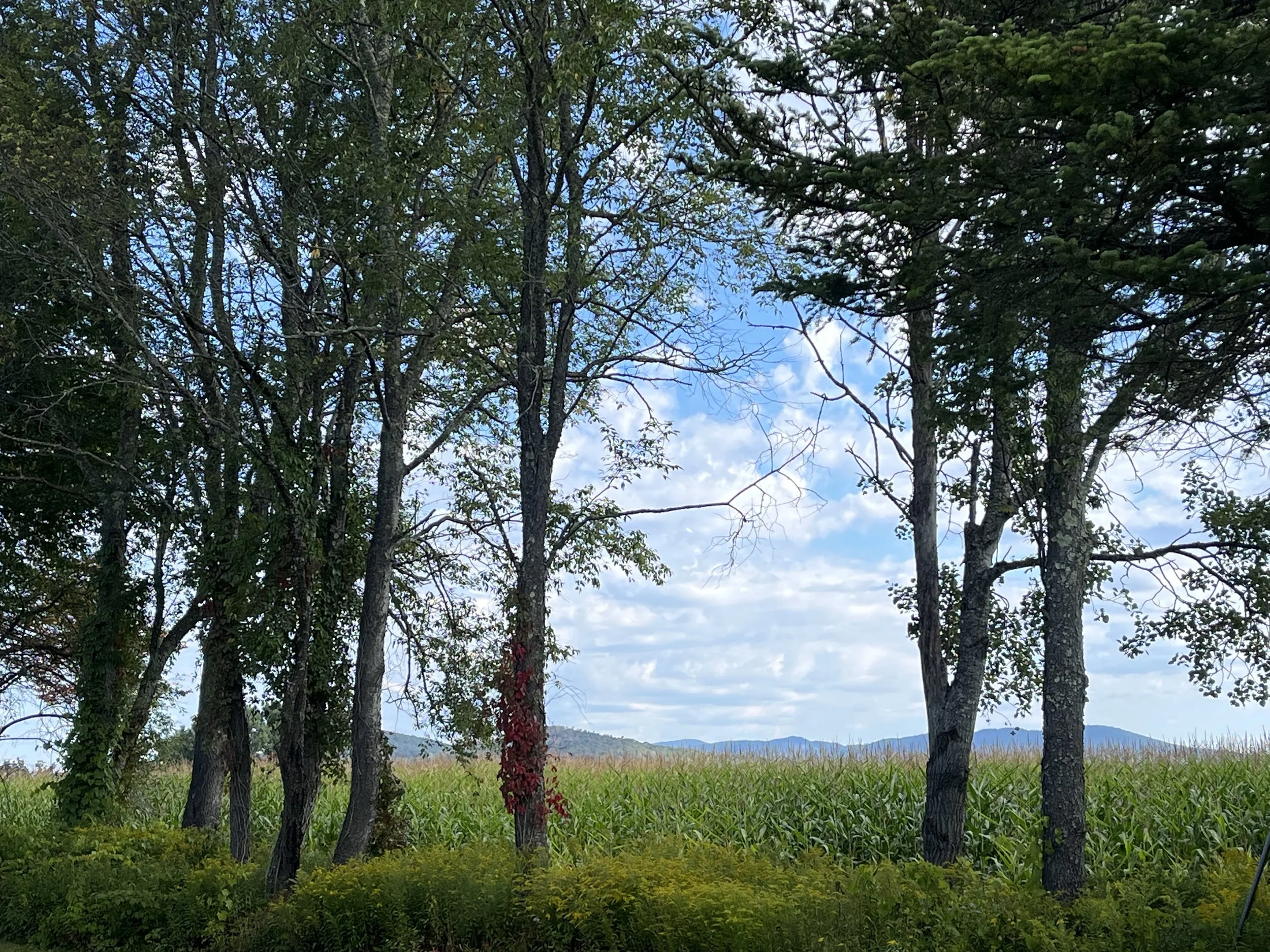
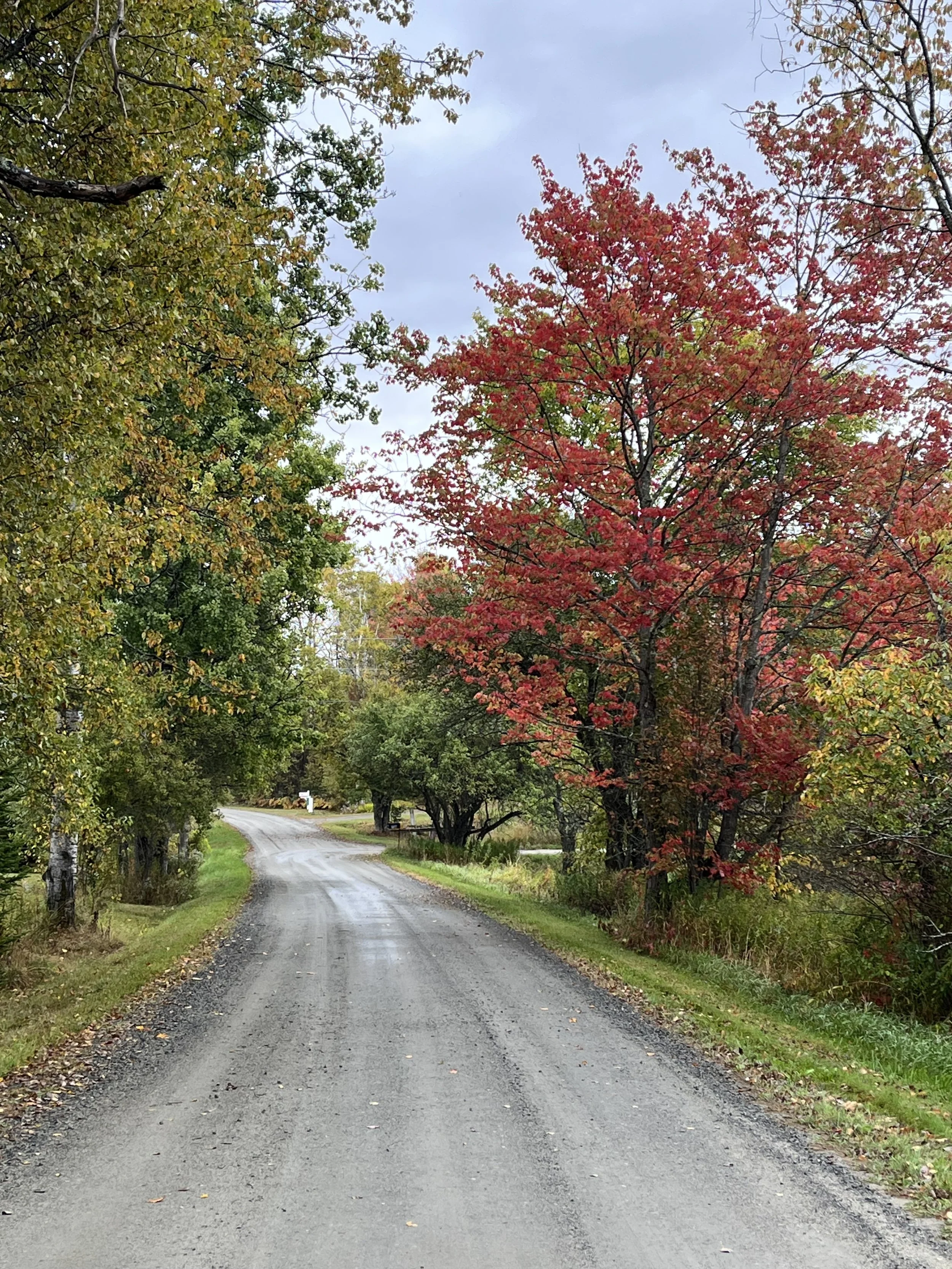
Each morning I take a walk. The dirt road rising up the ridge
stretches my legs, my aging knees, the lazy lower lungs, until
the rest of me—strength, courage, persistence—wakes up. Clouds
call for attention. Fragrances of cedar and spruce and wet soil
remind me: this body
holds and irrigates a brain, which sizzles, struggles, survives.
Yesterday’s grief grows no larger today. Face your challenges,
I tell myself, there’s good work ahead. When a chunk of white quartz
teases my left foot, I accept its offer, pick it up, carry this
reminder, because it can be
nearly two billion years old. Nothing I wrestle with compares
to a thousand times a thousand times a thousand, which is what
one billion means. Walk it down a dimension: The Strait of Hormuz
with its steep rock cliffs, its coastline pierced by mysterious valley,
formed a mere thirty-five million years ago
—mere? I write the line of zeroes, picture continental plates
sliding, colliding—what I recall of Persian history, of Greek gods,
the heroic and profitable sailing ships, it’s all slipping toward
this new fractured moment on the cliff edge of world war,
fragile within each day’s news.
Back up, I tell myself. Get some proportion. Fifty-five million
years ago, Sirenians evolved—water versions of gray elephants,
plant eaters, massive, the manatee and the dugong. There are about
seven thousand dugongs in the Strait of Hormuz, sleepy eyes,
childlike nostrils just above the surface
lazing in warm coastal waters. See where my chunk of quartz has led:
from sharp-edged crystal, to distant ocean, to ten-foot-long dugongs
I’ll never see in person. Dugongs had a Russian cousin, but the sea cow
dropped into extinction in twenty-seven years of hunting. When I reach
the end of my walk, I’m still
wondering about Sirenians. How many will vanish, if one mine explodes
in the newsworthy Strait of Hormuz? Breakfast cannot dispel grief,
though it’s anticipatory, future-led, off the timescale in the other direction—
the dugongs may survive. The pearl mussels? The seagrass? Quartz,
my question. A pebble in proportion.
Goodbye, goodbye. The “facts of life” are strange: not
so much the bodily positions that follow deep kisses, the force
surging, demanding a conjunction of parts and galaxies—
fold along the dotted line, insert penis or tongue here—
remember instead the po’faced embryo, eyes sealed,
mouth not yet craving salt, drifting weightless on its cord
of oxygen and pulse. I think of those four astronauts
(did you watch him lie on air? notice how her hair
drifted free in weightless delight?) tethered and tech’d
witnessing Earthrise for the first time. I suspect that each,
wedding ring or not, tends a long strand of connection
unreleased, unrelenting, distant prayer cupped around
fierce throbbing muscle in the chest. Outer-space bond
weightless as bodies, potent as umbilical. My mother said
if there is no fertilized egg implanting, the uterine lining
sloughs off: pours in five-day flood between your
thighs, and that’s the end for another month. We watched
Christa McAuliffe’s cells disperse in flame, in smoke,
toward galaxies only numbered, not named. Hic transit
Ovum Five Hundred, last potent dwarf star (very dwarf)
wishful, “I could have been your child.” Etymology
frustrates me, the mystic trembling curtains of menopause
undecorated by the sparkle of painted fingernails. Tiny
babies have tinier fingernails; some books tell the parent
“nibble the sharp edge away, safer than scissors”—love
intensified, exploding in the heart, dust of a secret galaxy
silent and glowing. Radiation pulses and enters, no,
has entered, those dim red passages within. Perhaps today
the last cancer cell rolls onto its back and dissolves. Perhaps
that happened last week, and today’s energy beam sears,
scorches, along a lovely line of vacancy. Goodbye, to the
technician who coaxes gently; goodbye, massive machine
carrying death and life aimed in fierce accurate arrows.
Goodbye, little cells who struggled urgently to multiply
and divide. Here is the math of zero, which is, of course,
infinity inverted. The space capsule spinning; interior
as free as flesh could ever long to be.
A woman spends her days
passing out compliments,
her face a round plate.
She has her life’s work to do.
She does this instead.
She was trained for this,
taught by her mother’s
mother's mouth.
She thinks the plate is gold,
the compliments nutritious–see how carefully
she peels and slices.
She hands out so many
she has to grow another orchard.
Her hunger increases.
My knife cuts are sloppy.
The blade tips towards my wrist.
Still my life to do.
Once our children grew, I removed their chairs
I thought our marriage wanted more room.
Instead our dead mothers eat dinner with us every night.
Mine conducts a symphony of exclamation points.
My husband’s mother demands he share his dessert.
He races to consume his portion, scrapes
the plate so long the porcelain winces.
Our dead fathers wait on us. Mine
like mist, tearstaining my face.
My husband’s impatiently.
He had work to do, he told everyone.
He had work to do, his memory tells everyone.
The kitchen stays crowded. We all starve.

On the plains, sound travels far.
Mercy does not.
Wind braids grass into sentences
the government never learned to read.
My uncle signs with hands
scarred by fences
that were never ours.
A clinic form says disabled
as if the land isn’t deaf
to petition,
as if history hasn’t been
lip-reading its lies for centuries.
At the clinic, they test my ears.
On the map, a red-lined boundary
tests our patience.
The verdict is familiar:
noncompliant, underserved,
statistically negligible.
I stand near the drum circle,
feel rhythm enter the chest
before the ear.
The beat knows me.
It does not ask for proof.
We translate to survive:
pulse into step,
anger into ceremony,
loss into something
the spine can carry.

My two names
vacillate.
A paper coin in sunlight
I am small and wooded
a bird who crawls a vagrant creature
from the back seat of my father’s car sees
trees blanketed in kudzu and dreams
of living soft and green.
A dryad’s home.
The plants I know and do not know
the birds I know and do not know
I am learning my legs again.
The scales have fallen from my eyes and the world is green and
green and green and green
(for Bob Dylan, The Other End, July 3, 1975)
but I can’t get it to stand still
long enough. Can’t pour it
into a cup without
the words going flat.
I remember the wake’s
white fury as the city slipped away,
polished faces staring in awe;
you recall café voices, cigarette tips
flaring, marquee lights,
the Mozart Requiem at St. Sulpice
and the faint applause
of drizzle as we stepped outside,
landing on everyone
just the same.
Our days were nothing but doors back then.
We could have gone anywhere—
Songs were journeys that never came
to a chorus. I couldn’t learn
to raise my hand; you never
learned to lower yours.
It worked out, somehow.
Our dreams wore new clothes
every time we stepped off the boat.
We could have rewritten the world
with the energy we carried
is all I wanted you to see;
what I needed to say—captured
only in basement tapes, bootlegged
in memory but never released.
For years, I could hear the turning of the key.
The click of things about to begin.
How I’d love to feel that now,
to meet you in the village hiss
one more time, nothing
but strangers again.
The childhood
you remember was different
from mine
though it shared the same
rooms, the same plates
and tables,
the same parents.
And then some.
Things happened.
Dad’s law, Mother’s dying
in secret. Hope held out
in hidden hands;
closed rooms, closets
we couldn’t open.
Never show your hand –
one of the laws.
Even when it’s empty.
But empty your pockets.
Let me see.
We rode our bikes
down the same tree-dappled
drives. Breathed the same poplar
breeze through south-facing screens,
the buttermilk pancake scents,
heard the same muffled sounds of mowers,
and silverware tapping next door,
the themes from Gilligan’s Island
and Brady Bunch.
For a while, you knew the same
nonsense words I knew.
Then the quiet. Unread mail piled up.
Ghosts from the old streets returned,
foreigners heavy in their own skin,
rubbing bellies: ‘Look, I got old.’
‘I went gray.’
But the pink and red hollyhocks
along the fence still manage
to start over each spring. You wondered
if we could do that, too.
I don’t know. We’re no-contact
immigrants now from a shared country.
You’ve changed your name to blend with strangers,
though you live in the same house
you did the last time we spoke
thirty-one years ago.
I’d like to visit sometime–
but your home is no longer
visible, your street does not appear
on any map I own.
Guarding my heart even from myself,
I returned to the temple. Memories return,
unwelcome, in this space. For so long
I had knelt here, a dutiful son before the altar
and braced for your fists to bruise.
I remembered blank eyes, as blood
dripped from my split lip to your altar, as you
held a razor of silence against my throat.
I remembered offering myself,
emptied and alone, as red ink ran down
the sharp line of the razor. How
I followed your pointed finger, aiming my bow
at every enemy you deemed unworthy. As ink
spilt to the upturned soil, I would wait
with my head bowed in the temple,
having raised my colourless hand
in obedience to your name. I waited
but your praise never came. Only the unspoken
desire for my blood to give up its ghost.
When I was young, I thought this wise:
to obey this unspoken edict, to walk
down that long heaven of light and
go blind to myself. Now wiser, I know
I should not give myself to devotion
or let centuries roll by in heaven
without respite. I should not harden
into halo, bearing no name but Devotion.
Yes, I could follow the myths, but I
deserved better than bravery. Respite
from tragedy’s scripture and its promise
of immortality. If we follow the myth—
my partner takes my place in the pantheon.
I perform penitence and then promise
I will see them again when the gods allow it.
Consider, however, that my place in this story
is more of a punishment than a freedom.
When I defy the gods, I choose rather than accept fate.
I step out of the story and its narrative tethers,
falling free. No obligations to others, only my own.
When I reappear, that was my first day on earth.
In the light limned world of the club where the mist machine
Has turned every person into blurred boundary,
Red halo, the men have come to dance,
Which is to say some are turning into music,
Their bodies becoming supplicant to the bassline
Even as others turn towards other bodies, an easy smile,
A light kiss on the mouth. The night is young and everyone
Is covering their phones with stickers. What happens
Here is not for the outside world. Here, in this mist-clad echo
We shed the bodies we know for shadow, let ourselves
Merge into the throng and tussle. Eyes closed, I am less
Of a person I once was. I shift with the ocean
Of hands on hips, shoulders, cheeks. If the night
Is a currency, we spend it here in mutual company.
I change with each person I say hello to, am offered
An opportunity in exchange. Here, in this church of desire
Men lift their alms to the dancers with their mouths.
Anticipation kindles in every body. There is nothing
Here to forgive. Later, all these gathered flames will return
To the nameless grids of online torsos and lonely stars.
But here, at least for now, we are bodiless in the long-held chorus
Of the songs chosen. A cluster of creation, allowed to be.
When you arrive in this city, you will see
it’s a different type of tactile we speak.
Not sign language per se. No sunlight
here pours the music academy child’s
voice from the throat crying
wolf and Miss Manners clipped
from pages right-bright with Eloise.
If the locals say we haunt the jungle
with our clandestine cells, how true
this would be. Here, wind picks up
our lives and displaces them
at a distance from they were otherwise
meant to be. But it’s best to play dead
with nursery rhymes cool
as ice cubes in the mouth, ghosts
of our springer spaniel licking
the toes, our empty juice boxes,
our plastic knives ridding the crust
from our baloney on rye,
scratch magic, red on blue ink
cross-out mess of Mad Libs
and swirling rainbow-milk bowls
where our fruity pebbles
once-upon-a-timed.
Now, she steadies my body
like a puppet requiring the most
delicate adjustments of its strings
with the zephyr-touch
of a palm between the blades,
a gesture that makes me want
to breathe, even into vandalized
interstitial waves of pain. Every so often,
I give a little for the whole lot I take,
knit my fingers into the pockets
between hers like a pastiche
of time-lapse lymph: sunspots, arthritis,
wrinkles, tremors, carefree kinked
careworn. We tangle this way each night
when darkness nets us
in its petrified amber.
We make an altar
out of the pitch-black
silence that binds
two knowing hands.
mike used to live under the boardwalk slugging schlitz
and hits of acid burying winston butts in the sand before
cruising the boards for familiar silhouettes and some food or cruising the
broads too cute in bikinis it was the seventies
and everything was sunshine cool man keep on truckin
and anyway fuck earl and his pussy kids moving in
and fuck fran for letting earl beat on her boys
like he did she never did really want
to be a mom in the first place so
she was free of mike at least and mike
was free in a way most people will never be
reclined in a naked nighttime float the beach
is so dark at night and the ocean is a portal to a holy
perpetuity an acceptance of whatever everything nothing
who cares how can he care when he can feel nothing
but the everything of himself a fleck on the continental shelf
at the mercy of this great mother and all of her gruesome glories made
sharpened and spineless and shaped to survive one time
lane in a state of evaporation asked mike what the best feeling in the
world was and lane laughed when his brother said relief but mike said
relief is equal to the pain which precedes it when we need it
we will beg to a god we may not even believe in and if we receive it
we are made whole once more by the grace of its deliverance
After Robert Hayden’s, “Those Winter Sundays”
Sunday morning, overcast,
free after breakfast, I am sitting in the middle
of my son’s playpen, to give him
space to move around me.
I can tell he is thinking, I am
too close. And it’s true: I can
easily reach out and touch him on the shoulder,
cotton-knit jersey shirt sleeve.
But I don’t. I follow his rebellious arm,
waving up in the air, long and thin.
I am content playing whatever game
this is, that he made up.
I work hard to imagine, he is too fast
for me to tag. All his energy
blazing, even though his belly is full
of milk sloshing around.
I wonder how he can still move,
fast as fly boy—he keeps one hand out
to steady himself, and then stops.
His eyes meet mine—a Déjà vu
moment. Just like that, I am pulled
inside the world of moments, soft,
fleeting, but otherwise undisturbed
as the day going on without me—
wet February outside the window,
raindrops sliding down, and further
softening a view of the neighborhood.
I am reminded of a daydream
on canvas: Reflections of The Blue Rain
by Leonid Afremov. A spectrum
of blue color values: Darkest navy
street blue to lightest nearly white
rain blue. I must get used to this life,
being a mother, not exactly wanted
but needed. Drawn back to the present
by those irresistible eyes, and full
lashes. My son’s penetrating gaze.
Always welcome, in my gaze,
settling. It is comforting to know
we are connected—we even share
the same self-questioning look.
And if I look away first, he will find
my face again—my eyes, dark brown
and safe to trust. It only takes one second
for his face to reappear, perfectly formed.
The way his eyes are unchanging,
deep blue, part gray, and where the colors
blend around the iris, flecked with silver.
Today I'm perusing the goods at Twice is Nice Thrift,
thinking about my mother’s belt—three inches
of polished leather and a quarter inch thick,
it lay coiled in the drawer of her cherry-wood dresser,
framed by white dime-store panties and pointy bras,
like a badge proving that she’d once been someone
other than my mother. It’s that same sorry story—
the one where war steals the boys,
grants women good jobs, then dismisses them
replaced by broken men. And I can barely stand it—
think of her tightening that belt, as red as an executive’s tie,
calves stretched firm in glossy pumps as she sprints
to catch the Manhattan bound train—take her place
in what she thought was the rest of her life.
Sometimes I would sneak into her room, wrap the belt
around me, press its steel tongue into my skin until
I felt I could be somebody too. After mother died
I argued with my sister. I said blood is blue
before it’s oxygenated, she said no it’s always red, as red
as mother’s belt and I recalled how mother taught me
to loop the strap between both fists, squeeze it to form a mouth,
give it a snap—make a sound loud enough
to crack down walls.
my eyes are stapled shut
by all the metals
refined by diapered
africans cowering
in corners from
fat white things
i cannot explain
my eyeball rolling
in a pattern of four
searching for
all the unruly
answers my heart
cannot tame
all the years of your
life waiting to be
overlooked
just so an evil
man can
metamorph
into another
unjust thing
i cannot explain
the honorable
mistrialing a rape case
armies of attachment
drawn apart
by a poor
jury of strangers
for what we all
dream of
during death will
forever
be withheld by
greed-riddled
blood-thirsty things
i cannot explain
illegal rain water collection
with the parchest of
men being jailed
for searching
for nourishment
the death of my
summer muse
over southern fields of
blooming flowers
basking in the
endless warmth of
august winds
and under each
of my fingertips is
the thing
i cannot explain
my individual
love for life
lying in lushness
dying slowly
a feeling i wish
to frame.

I watch my youngest son check the pressure
on the tires of his car
he attaches the nozzle, his grey eyes
intent only on the gauge
making sure it reaches the exact
pounds per square inch
imagine, a satellite leaving its orbit
hurtling towards earth and
landing squarely
in your care
his childhood
an unskippable cutscene—
a storyline we can't escape—
sure, there were laughs, even this morning
I saw him laugh a hands-off-the-handlebars-
skinned-knees kind of laugh
full of teeth and freedom, the way his brother
used to laugh
but there have been so many unspeakable
things I have had to tell him
so many mornings when I have taken
a boot heel to his youth
sometimes, as he stands above me
in the shape of a man, I forget
how to talk to him
but here in the gas station parking lot
on his knees, air compressor held
in the milky curve of his fingers
nails bitten to nubs
I can feel the weight of him, asleep
on my back
I stare deep into the crown of his head
happily failed by words—
what a feat this is
what a feat
like a child blindfolded and spun in circles
arms outstretched, donkey tail in hand
you jab at the air desperately feeling
not for the end of the donkey where the tail
belongs, not even for the donkey
but for the wall or for a body, any body
to make some sense of where you are
you grasp for anything that’s left
search for any unearthed gem
if you’re lucky his friends will tell you stories
before they disappear into their own lives
if you’re lucky someone will post a video
of your son and his friends
eating french fries at Al’s
laughing like this is any night
like this is the best night
they will (ever) have
Someone in the psych ward told me
I looked like Lady Gaga, plus, who wouldn’t
buy a book about fucking? Julia went down the drain
in order for Charli to brat between her x’s.
We wore green all summer. I puked up
my freshman year in a hospital bed and woke up
to someone saying but you seem so happy?
My party trick: all those nights out dancing.
The next time in the ward, I was given a packet
about substance abuse. The most helpful thing
about it was the staple. Like tying a knot with
a cherry stem, one learns to tweeze those suckers
out of paper, build an arsenal of tiny weapons.
I’ve always been clever like that, daddy told me so.
Father’s control resulted
in me a fury, a rash
inclination towards the wrongness
of things, late nights, slipping
from the window at dusk and back
in at dawn, a doll’s hair chopped, blonde locks
scuffy and stuck up after their cutting,
my balled fists, my stomping feet, and then
his stolen car.
But why not, when he took
each liberty to find the things
that made me funny,
my awkward shape, my crying
that he mimicked at the bedroom door—
his knuckles in grass, drunken
fits, my refusal. I ran,
ended up with a man in his image,
an elbow sometimes at my throat, a fierce
madness, and love—how I never
found it. How the wrongness failed
to warn me that when I’d find my father
at the cliff, he’d have jumped already,
and I’d stand there, screaming,
still scared he’d push me.
Now I feel like a list of every person
who’s touched me. Dark charcoal scars
on aspen offshoots with the letters and
loves and names. The ghost-white scars
on my thighs. It’s almost as if they were
carved for me. List of people who have
touched and touched, aspen scars proof
that they breathed the same air as trees.
Is it the same for me? / shake. / quake. /
I’m pasty pale, but I know they wanted.
Still don’t know what. The trees at least
are forced to bear names but mine hide
under clothes. There’s no point to quantifying
hurt anyways. Life felt easier when pain
meant an early freeze. Life felt real when I
could count each hurt, hold it in my hand,
the first green leaves to fall after frost.
Marcescence, the tree,
Sycamore Maple towering
Logan’s cemetery,
who I watch. My breath,
freezing midair.
I took too long to leave you.
Blind me
or don’t.
Cyclical shapes, your patterns
and resulting
mesmerization,
hallucinations in snow
brain colored, pink and gray,
I couldn’t fall,
not without you.
Marcescence, when the deciduous
opt to be crisp
like air in the cool.
Captures water for spring, or
maybe helps with loneliness,
like the trees imagine
leaves as birds,
companions after they’ve flown
south.
I’m lonely, and I held on.
Fault of my own
that I’m no tree,
sin on my part
that I want to hold
when seasons change
too fast for me
to notice.
I’m in the cemetery
with Sycamore.
When will they drop?
Leaves click
like rain freezing,
momentarily hitting against itself
midfall.
Marcescence, the leaves.
After Natasha Rao
Terrified by the thought that I am meant to survive.
By November, all the deciduous have left the year
behind (besides those observing marcescence).
Fallen leaves and the deer that eat them. Roly polies
turning thoughts into dirt. What do I have to offer?
A stretched out kind of yearning that catches sunlight
like green glass all year, needles that fall like shy rain
in a desert. I’ve watched the people I love fall from
themselves into dirt only to become nothing. My fall
becomes real in my mind. No matter the season, I can’t
help but open my coniferous mouth.
. the world grudgingly conforms to the shape we coerce upon it
. a burgeoned cell pushing out against its walls , taut against its
borders , not swollen but filling , tumoring towards blossoming
. our lives , our stories , this hour inside another groping from
the dark . the human body as meta-/phor an extension of earth
, and every death a passing translation into the toxic landscape
. start with the grate of incessant discourse within the nation
. every question answered with a question without an answer
, like an irritating leak without a bucket . a space where the
past festered and exhaled deflated decibels of denial rewritten
. the present blurred to almost ghost . a poltergeist rummaging
through the constituency of apathy . start with the stories , the
urgent voices , and distorted images that are denied , untold
, rewritten and unseen in the wider understanding of survival
in amerikkka , where what has supposedly ended , continues to
bleed through and disrupt the present moment . what pacifying
word in the English language can adequately convey the depth
of monumental loss after centuries of atrocity ? a collective
malaise of hands folded into the origami frame of indifference
, the excuses and justifications like weeds sprouting through the
concrete cracks . the ‘sivilized lines and grids and conscience
in retreat to echo chambers of isolated dread , despair , and
anger , that does not roar like rage restrained , but hack-/sawing
through our bodies , a sustained howl embittered by remorse
and shame . every transgression shares a fence with a neighbor
who smiles and waters his lawn . an optimism exhaled , hope-
ful into the now they never listen to . start with the past tense
of you can’t live there , in the hell no !! of never happiness
, no joy , only meanness , again and again , dressed in different
, new uniforms softening the horrors with cloned compliance
. a dysfluency of contempt and the silence is oh ! so deafening
, polished and moonstone old as a habitual choreography
of accommodation . the way it’s always been , that shouldn’t
exist anymore , is the lethargy where rage (the flame that
curls from wood , and a suffocation of smoke in toxic pursuit)
will not dignify silence always braced for impact , waiting
for the other shoe to drop , and the rotten core of the nation
pontificating plastic smiles and genuflecting before the tortured
body of hope . the awakened death of everything is first being
ripped from the womb . start with the hivemind of smartphones
, goggle algorithms , and social media threads . the digital and
artificial miasma created by influencers , cloned guest experts
, and the parroted 15-minute news cycle , every hour , on the
hour . there is always someone behind the wheel . as ominous
as a w[h]it[e]ness—the lies , as cliché as every false platitude
wrapped up in condescension ; says , we are an equal
opportunity employer ; says , we welcome BIPOC , LGBTQ+
and non-binary tangents of gendered expression ; says , we live
on Sioux , Apache , Crow , and Comanche land . speaks
a premeditated kind of platitudinal verbal litter . is God’s word
been weaponized against us as a means of indoctrinating us
into our own subjugation . start with a clutter of junk mail , and
deceitful telemarketers who proliferate when your credit score
reaches 800 , and everybody and they mama want to give you
something , for free !? and you , the potential for everything
possibly good , to be anything better than it is right now . but
your frustration and despair , like love that has nowhere to go
, and you , left (i know you hurting because you like it like this)
to incorporate loss into a new narrative optic , a suitable fiction
, weshallovercome , like once upon a time . . .
Taco Tuesday is just alliteration assimilation.
Why not introduce a sandia Sunday
or the phonetic white boy huevos Jueves.
My brother feels this way, a wrap is when
a gabacho refuses to say burro. (How many
realities are permitted?)
No abuela or tia ever rose before the roosters
to make wraps. El sabor may not have borders
but it does respect words:
a churro is a churro, the cocido is that,
and jamoncillo does not exist
in another idiom. I still don’t like flan.
The salsa is always served in its own bowl.
Red or green it comes alone. The salsa
is never called, “the spicy ketchup,”
or “the hot avocado stuff” or worse
“the tomato and pepper dish you
dip corn chips in.” Basta.
My Abuelo always added sugar to the salsa he made
and took to the railyard in Douglas where he worked.
Its pica is the history circling making sure everyone
stays seated at the table.
And frijoles are beans but with lard. And sometimes
with tortillas, eso es an entire meal. Notice no
one has started the entire frijole Friday event.
Because preparing los frijoles requires a type
of curandera magical power.
One may uncover a recipe but if the beans have not been
cleansed and then sorted one by one banishing the teeth
cracking small stones and the imperfect beans
then the frijoles will lack their potential.
The struggle requires a special food that fills the muscles
with faith and endurance and satisfies one’s pansa
so there is space left for faith but not grief.
Sobriety: Day 193
“I’m experiencing artesian conditions.
A breach of the confined aquifer is resulting
in uncontrolled flow,”
you say, using the language of
your profession as an environmental scientist
to express how you feel.
I like when you do this.
Like when you’d silently mouth “alluvial,”
water-deposited sediment,
in place of “I love you.”
But this uncontrolled flow is of tears
you can't stop as you tell me how
you pressed pause on our marriage
while I lost my mind
knowing when it resumed, it might not.
Your aquifer empties into a pillow,
the one you hide your face behind
whenever our seven year old enters the room.
Of course he notices.
He won’t process it now. It will
lie in the silt of a tailings pond my
mining operation leaves behind,
heavy metals and hydrocarbons leaching
into his porous body until he inherits
the work of cleaning up this superfund site.
You thought I was prairie
needing restoration. Invasive species to fight,
native plants to shepherd with deep roots and
staggered blooms. But I’ve been nitrates in your
groundwater. I’ve been the false spring of
climate change waking your pollinators
from dormancy early, condemning them
to deadly frost.
When your sobs smooth away
and you pause for eye contact,
I recognize what’s happening.
”I’m experiencing artesian conditions.”
you say. “A breach of the confined aquifer
is resulting in uncontrolled flow,”
and you laugh at your own cleverness,
giving me cover to do the same.
For a merciful moment
we’re back twenty years, a young couple
amused by each other, before the toxic
contaminate spills, the wildfires, the hurricanes
and hundred year floods, in a relationship
a couple degrees celsius cooler
than the one we find ourselves in now.
Thick sliced
light and ripe
tomato mottling
through the window
Our sweat swells
terracotta salt dish
sat on the sill cracks
black pepper speckles
shadows ‘cross that
perfect single
freckle
on your
bottom lip
Never more a patriot than when sandwich
making summer post meridian
linens billow on the table
laughing wide as pasture
arranging conscious sunspots
on the counter
You so careful
with the fragile
vase of dahlias
gifted
by our neighbor
Light so viscous
steam ribbons visible
off our homemade hour
glass syrup rises
so brittle
our kilter
the Persian blue
ceramic plate
spun atop
your finger
brought up
from the basement
just this morning
~
It is a poet’s training to be precise and ochre
all year round
tend to rain
alter recipes
adapt ratios
wet to dry
It is a poet’s training, too, to lug around
a severed tongue
still humming
in one hundred
percent humidity
~
Sometimes making lunch
I feel my ghost dislodge
and lurch to find you
clouding down my buckled
mouthful my jammed
kneecap holding
still our flag
at half-mast
Hilt of your chef’s knife
edged against my appetite
you stood behind my small
my elongated instinct
cut last night’s
lighting left
out on the
butcher’s
block
Your hands
pressed my hips
at the hinge
kneeling
field aflame
to harvest one
last storm
for supper
You leaned down
kissed my carotid
while you could.
Slip it to
your friend when
they least expect it
pass the note
across the landscape
let it linger
ring louder—
we know we know
the world
burns and the systems
rot and
the fire at the creek burns
too and a simple
common sparrow passes
between us
the fire and I and my friends
and I know and I know
I won’t live to see capitalism
collapse. I know it will
get worse before if
it ever gets better.
I know what’s
coming is
going
to kill
me
and kill me and kill me.
But someone slipped it to me
when I least expected
a note across the landscape
that reads “fire
at the creek tonight”
What’s meant for me? I walk the dirt road with my mother, past the pond with ducks and
coots and geese churning the water, cows standing at the shallow edges trying to stay
cool in the heat. Past the wild rose bushes, bright green swaths of farmland, hilltop
houses with metal roofs and chicken coops in the backyard. My mother says she walked
to the hospital on the day my brother was born because she had an appointment. Any
time now, the doctor said, and sent her home. She was back four hours later with labor
pains. She worked until the day I was born, teaching business classes to single moms,
high school students and recovering addicts at the community college. Even so, she only
took a few weeks off afterwards, eager to return to that world where she could lift a
finger to her lips and the whole room would go quiet, waiting for her to speak. I want to
ask if she’s ever miscarried, but I have a feeling the answer is no. Mom, I want to say,
I’m worried about everything. But there are birds in my throat, white doves, so I say
nothing.
A man in jeans, a black canvas jacket
and knit cap kneels on the sidewalk
hugging a small boy. The man’s back
is to the road and all I can see of the boy
is his face, his closed eyes, the pale moons
of his cheeks. I watch them in my rearview
mirror until they’re out of sight, and I like
to think they go on holding each other all
day as the sun follows its low winter arc
through the sky, as prongs of frost melt
on the grass and grow back again in the evening.
I can’t explain why their tenderness is important
to me. But I take a different route home from
work, not ready to be disappointed by
the empty sidewalk, by how they’ve let go,
how they’ve moved on.
the field lies empty, save for snow and an indeterminate shape in the distance, fox-like, or actually a fox
perhaps, out foxing, as foxes do. i might eclipse upon the shape, look closely, were i to abandon
my viewpoint, but sometimes point of view is all i have. instead, i raise two fingers of my hand.
i nearly wave. the fox, fox-like, it tilts its head, uncertain of the context
of the gesture. a greeting? threat? an invitation? i can only offer ciphers, shapes, a lyric
wrought with impressions, not enough words, never the right words, so much still lost in the translation.
i try to read the field, but the field has been emptied of referents. the translation
hesitates, the white space daunting, untranslatable, incomplete. make notes in the margins, suggests the fox.
do you sometimes scribble in your books? i ask, because i do. i won’t disrupt a lyric
but i’ll make fields of hearts and asterisks. i clarify what needs clarification. some time ago, i abandoned
the notion that stories had only the single author. my best frame of reference is dialog, context,
cake layers of meaning. vanilla? strawberry? rhubarb? would you like to try some? i open my hand.
inside the hand is a door, and then the hand also has food in it. it is full, my hand,
full and cold. it hurts. it is cold out, and the door in my hand opens to a room with no back wall. no translation
exists to explain what i have offered the fox in this empty field. it is purposefully vague, this invitation.
it’s only cake, i explain, everyone likes cake. the fox comes closer, flicks his tail and sniffs the air. more context,
he prods. what is that other thing, the thing drawn in your hand? where does it lead? asks the fox.
he sniffs again. something is turning around. i can smell it too. i don’t know, i admit, i abandoned
the urge to define it at some point. it is a door, though. i know that much. sometimes it offers a lyric
if i reach through the door with the right intention. sometimes it’s on point, the lyric,
sometimes only vaguely relevant, sometimes overly effusive. i shuffle my free hand
around in my pocket. i may have an old one lying around, i say, you could read it. they’re just scraps, abandoned
structures of feeling searching for application in a world without clear referents or frames. does that translate?
the fox smiles, is fox-like with his flickery tail. it is not an answer. you have a door in your hand, concludes the fox.
yes, i say, a door. a door and cake. but the cake is tasty. i’ve scribbled hearts all over the margins, but that context
is unimportant. the fox hmms. context is always important, he says, context portends future events. context
explains the larger story. i want to disagree, but i do not in fact disagree. so i say instead, yes, but the lyric
i’m holding is untranslatable, and i’m afraid there’s no margin for error. i would like to tell you a story about foxes.
in fact, i’m certain that there are many wonderful stories i could tell about foxes, but the lyric in my free hand
is only a recipe for cake, a cake with yellow hearts scribbled in the margins, and this translation
is largely a list of ingredients that i’ve alternately embraced and abandoned
over years of trying to perfect the baking or saying or presenting of this thing. here, this is what i’ve abandoned:
pretense, saying sorry for the sake of saying sorry, drinking too much, obligatory visits, outgrown contexts
that no longer explain my phenomena, and abandonment. i have abandoned abandonment and have translated
it instead into something substantive, a sort of vibrant witnessing, a house of bliss. here, i think i have the lyric
for that one, i say, and i reach into the sworl of the door in my hand. the pattern of the door unlocks, and my hand
opens with words like a drawer. read it, says the fox.
the things i’ve embraced defy translation. they arrive like breakers on the shore, frothed with foam. they abandon
pattern and rhythm and timing; even a fox couldn’t predict their arrivals. the only foreseeable context
is that they always arrive, the lyric always waxing on about love, and i collect every word in my warm, wet hands.
fox tuesday
collects miscellanea,
a pleasure of insubordinate text.
disparate words, a shelf
of marvels.
maybe a continental shelf.
things that subduct, subducting.
in increments, forces push
things
together.
a pleasure of text. perhaps
a flamboyance:
flamingos, also terribly noisy
also a joyful insubordination
of pink noise
effusive and alive.
i would also add:
rainwater
seashells, grit, the smell of horses
without having to ride them.
you may think that i have forgotten about
foxes
but no. this is only
the tuesday section
when i collect miscellanea.
fox wednesday
and i collect voices.
i wonder what it sounds like
to turn on
the sjónvarp útvarp
other pink flamboyances
of noise.
or maybe forvitni
though i did not intend to veer
into abstraction so soon.
maybe hugmynd
which sounds like a thought
to fold into.
maybe hönd
but to turn this one over
perhaps, not quite on
or not yet but
to ask what it looks like
on the inside
when it holds something.
fox thursday
still the heady hum of voices
but i think we need a fox in here.
i like it best when fox
leaves words on my doorstep.
my dog does this too
but with possums
my cat with lizards.
i prefer the words.
fox is
prescient, knows what sounds
i will like. fox entombs,
conflates, makes remonstrations
or perhaps simply names
my remonstrations
as such
since that’s kind of
what they are.
allavega,
fox is not a philistine though he may say
that he presents as one.
however, this would be
a terrible
misreading.
there is no fox on friday in this poem.
friday is when i am often writing
to fox. fridays are
tiring. even the sounds
in my own language
fail to cohere.
the worst of subductions,
everything crashing
in swollen increments. i sometimes
sleep early
on fridays.
fox saturday
is more rested,
asks please to become a poem.
okay, i say: one should never
refuse what saturday
requests.
i will give fox my words this time, but not
the usual retinue:
my ephemera, my litany, my esoterica.
instead a different page from the
atlas obscura:
a chimera perhaps, to populate
his cities of myth.
maybe cephalopod: things
that change color while dreaming.
maybe abalone dreams.
maybe halcyon
with its gauzy midafternoon haze,
its effusive
and insubordinate plumage
with its calm winds
that wind out exquisitely
over my sea
After Li-Young Lee’s “Eating Alone”
In the brackets where the raspberries
mold is a history of all my mother ever said.
Meanwhile, a fish sobs scales from my hands
to the linoleum. A lemon tangs brighter
than a voice and the water boils fast. I am
bowing in the entryway to this sanctum.
Not what they say about women and kitchens.
My work is in the peeling of bone. Hours praying
over a stock pot humming my soul into milky
reflection. Scallion and ginger thinner than paper
of the letter in the house I write to me. No,
I am not making a sandwich. I am taking
the world upon my chopping board. Bending it over.
Collapsing it to tender. Juicing between the teeth
on a Thursday afternoon. Or what is to say that
carrots cannot offer in such sweet fracture. I grow
basil under the light of my own moon in the same pot
as four Thai chilis glowing red and wanting.
By the eastern wall underneath my mulberry
tree the silkworms begin to bud.